

Last updated October 31, 2026
 Architectural shingles
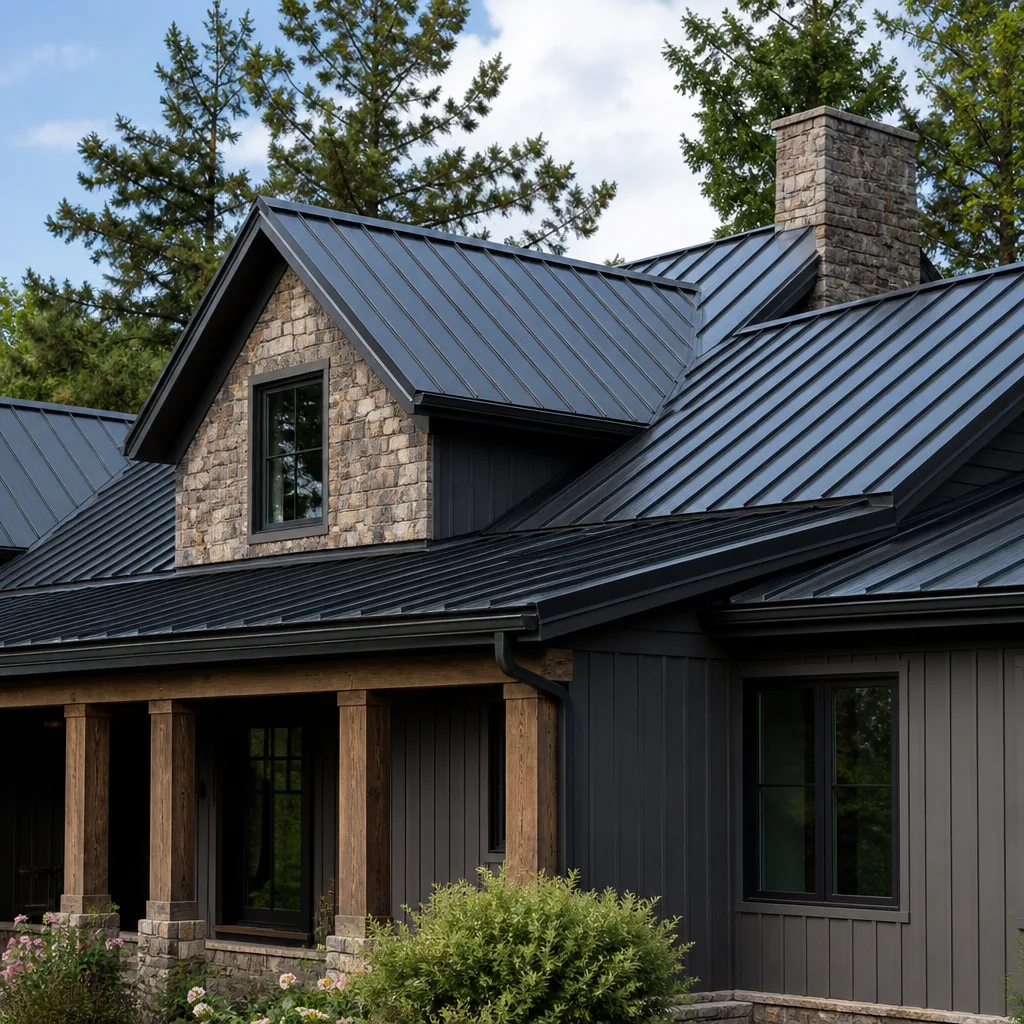 Metal roofing
 Tile roofing
 GAF
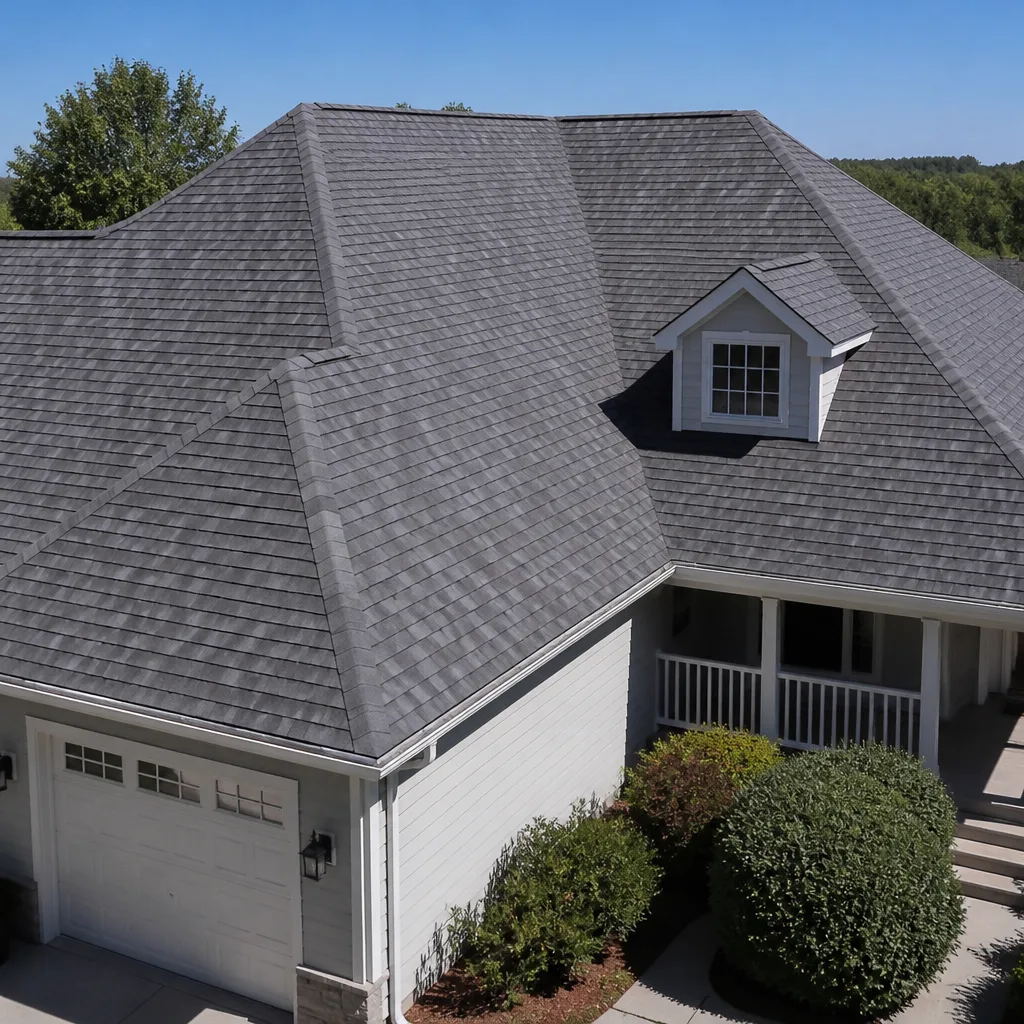 Owens Corning
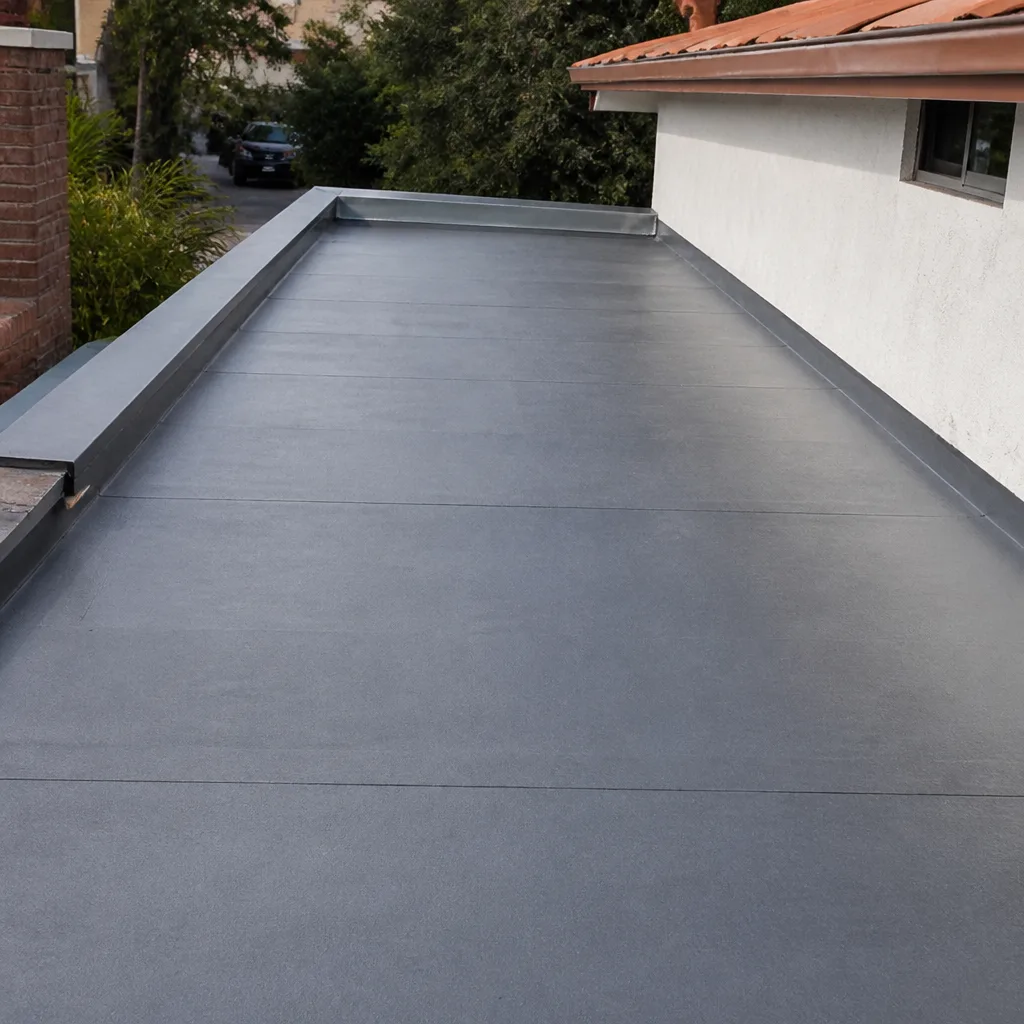
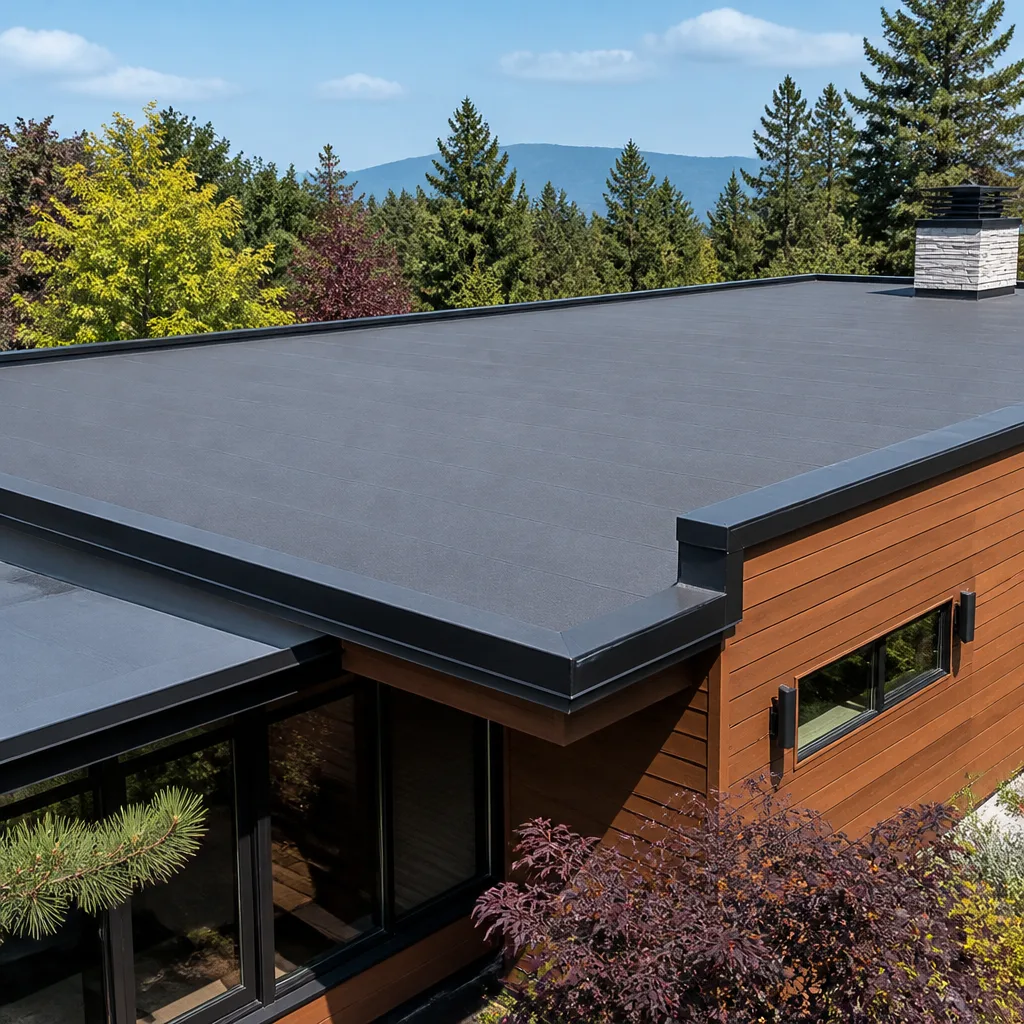 Flat & low-slope
Free roof inspection with deck photos before we talk money - GAF and Owens Corning certified installation
The Complete Roof Repair Guide for Tustin Homeowners
Most Tustin roofs don’t fail at the field shingles. They fail at the penetrations and ridge line first, because that’s where wind-driven heat stress concentrates. If you’re patching field shingles and the ridge cap is cracked, you’ve already worked in the wrong order. This guide maps the actual failure sequence we see across Tustin neighborhoods, from the Santiago wind corridor to the thermal cycling that comes with inland Orange County heat swings. By the end, you’ll know exactly where your roof sits in that sequence, what repair materials actually hold up, and when a repair genuinely extends your roof’s life versus when it’s just buying time.
Quick Answer
Roof repair in Tustin typically costs between $350 and $1,400 for most mid-range fixes, with the right repair sequence being ridge line and penetrations first, then valleys, then field shingles. Tustin’s position in the Santiago wind corridor means ridge caps, pipe boots, and flashing deteriorate two to three times faster than the field shingles, so inspection and repair must start at the top of the roof and work down, not the other way around.
Styles & brands we work with
Table of Contents
- The Tustin Failure Sequence: Why Ridge and Penetrations Go First
- How the Santa Ana Wind Corridor Changes Everything
- The Correct Inspection Order for a Tustin Roof
- Thermal Cycling and What It Does to Repair Materials
- Reading Your Roof’s Age From Granule Patterns
- Repair vs. Replace: The 5 – 8 Year Question
- Which Repair Materials Actually Hold Up in Tustin
- Common Mistakes to Avoid
- When to Call a Professional
- Frequently Asked Questions
The Tustin Failure Sequence: Why Ridge and Penetrations Go First
Every roof fails in a sequence. The sequence is not random, and it’s not the same in every city. In Tustin, the sequence is predictable enough that we can usually tell you what’s wrong with a roof before we climb the ladder, just by knowing the neighborhood, the roof age, and the material type.
Here’s the sequence we see repeated across Tustin Ranch, North Tustin, Old Town, and the hillside communities:
- Ridge cap shingles crack first. The ridge line is the highest point on the roof, fully exposed to Santa Ana winds and the most direct sun. Ridge cap shingles are bent over the peak, which concentrates stress along the fold line. After five to seven years of Tustin’s wind and heat cycling, those fold lines start cracking.
- Pipe boots and vent flashing degrade next. The rubber or neoprene gaskets around plumbing vents, exhaust stacks, and HVAC penetrations are the softest materials on any Tustin roof. UV exposure and thermal expansion cycles break down the gasket material until it cracks and pulls away from the pipe. Water follows.
- Valley metal starts to lift and corrode. Tustin doesn’t get heavy rainfall, but what it does get tends to arrive fast and run off quickly. Valleys concentrate water flow, and when valley metal lifts even slightly at the edge, water gets underneath and starts rotting the decking.
- Field shingles lose granules and begin to curl. By the time field shingles are visibly failing, the ridge, penetrations, and valleys have usually been leaking or degrading for years. Field shingle failure is a late-stage symptom, not an early warning.
Understanding this sequence matters because it changes what roof repair should mean for your Tustin home. A repair that only addresses visible field damage while ignoring the ridge and penetrations is incomplete. It’s patching the symptom while the cause keeps working.
This is why we inspect before we recommend. At Bellwether Roof Repair home, our inspection-first approach means we map the full failure sequence on your roof before quoting any repair scope. You should know what’s actually wrong, not just what’s visible from the street.
How the Santa Ana Wind Corridor Changes Everything
Tustin sits in a specific geographic position that amplifies roof wear in ways that cities ten miles west don’t experience. The Santa Ana winds funnel through the Santa Ana Canyon and spread across the Tustin plain, hitting Tustin with sustained wind speeds that routinely reach 30 to 50 mph during fall and winter events.
What that wind does to a roof is mechanical, not cosmetic. Here’s what we mean:
- Wind-driven rain gets under shingles that would otherwise shed water fine. A shingle lap that works in Yorba Linda’s calmer air fails in Tustin when 40 mph gusts push water sideways under the leading edge.
- Ridge cap shingles take direct lateral force. Wind hits the ridge line at the highest point of the roof, where there’s nothing to break it. Ridge caps that are merely cracked from age get fully unsealed by wind, opening a direct water channel into the attic.
- Gutter and flashing components work loose. Screws back out, nails lift, and metal edges catch wind like tiny sails. The repetitive loading from season after season of Santa Ana events fatigues fasteners that would hold for decades in a calmer climate.
- Debris accumulates at valleys and penetrations. Tustin’s wind carries leaf litter, branch fragments, and fine dust that settles at drainage transitions and creates dams that hold water against the roof surface.
The wind effect is worse on hillside homes in North Tustin and in the older neighborhoods with mature tree canopies. The trees generate additional leaf load, and the elevated terrain catches more wind than the flatland areas below the 5 freeway.
If you’re comparing Tustin roof wear to what you see in Irvine or Lake Forest, stop. Same county, different roof environment. The wind corridor is the single biggest variable, and it changes the repair priorities entirely.
The Correct Inspection Order for a Tustin Roof
Most roof inspection advice tells you to walk the roof and look for missing shingles. That’s a field-first approach, and it’s backwards for Tustin’s failure sequence. We inspect ridge to penetrations to valleys to field. Always. Here’s why.
When you start at the field, you see the most visible damage last in the sequence. You might find a few curled shingles and think the roof is in decent shape, while the ridge line is actively channeling water into the attic. The field looks acceptable because it fails late. The ridge looks wrecked because it fails early. If you start with the field, you misread the urgency.
The correct sequence:
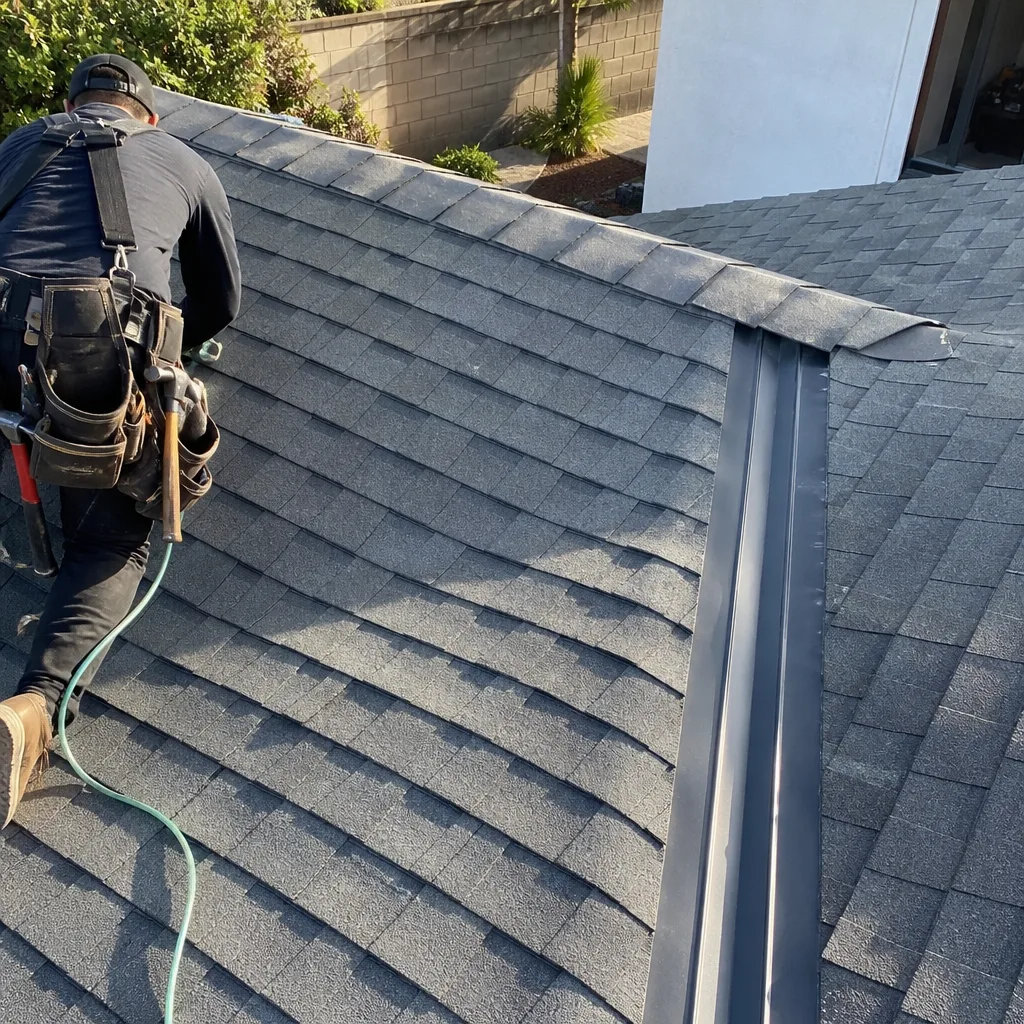
- Ridge line. Walk or ladder up to where you can see the ridge cap shingles. Look for cracks along the fold line, missing granules, lifted edges, and exposed nail heads. Check both the main ridge and any hip ridges.
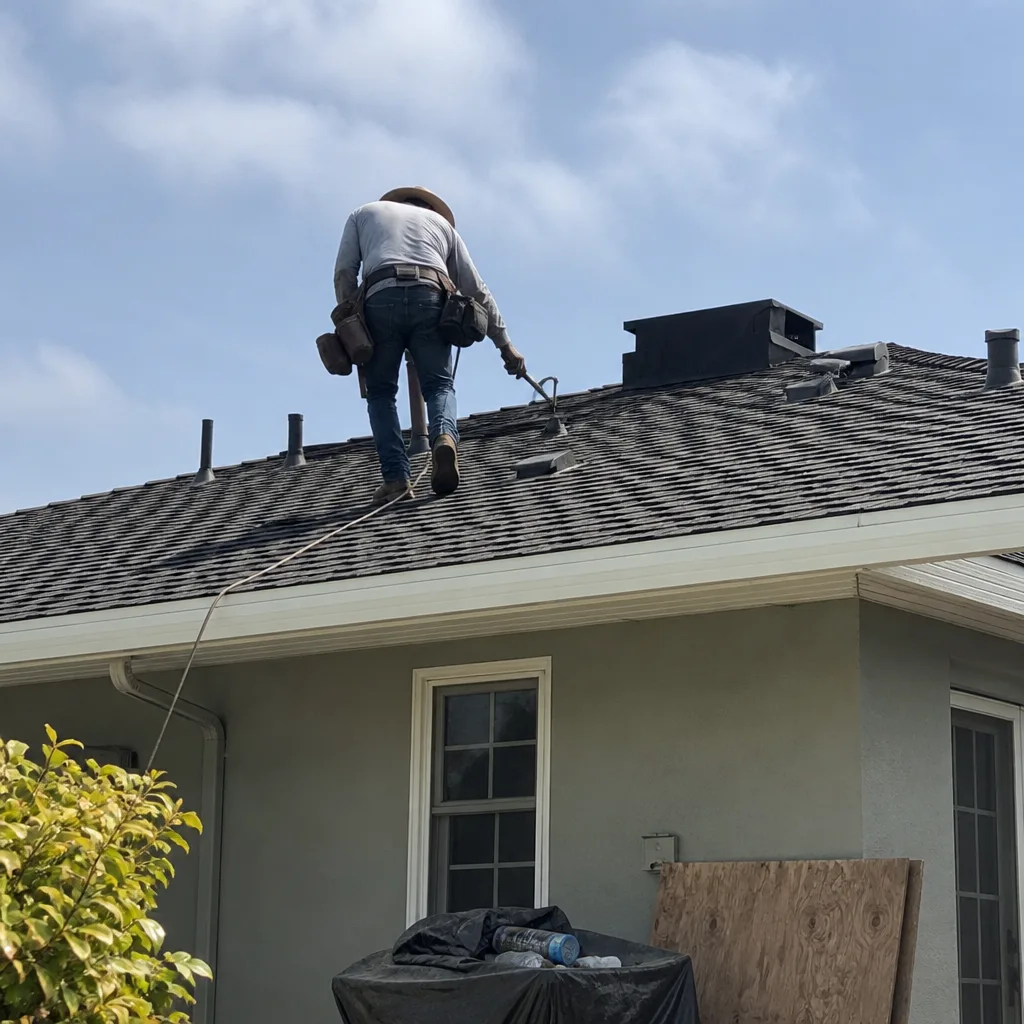
- Penetrations. Every pipe boot, vent, chimney, and attic exhaust. Look for cracked rubber gaskets, rusted flashing, lifted caulk, and gaps where the storm collar has slipped.
- Valleys. Where two roof planes meet, check for metal that’s lifting, corroded, or buried under debris. Run your eye down the valley line and look for granule wash that indicates concentrated water flow.
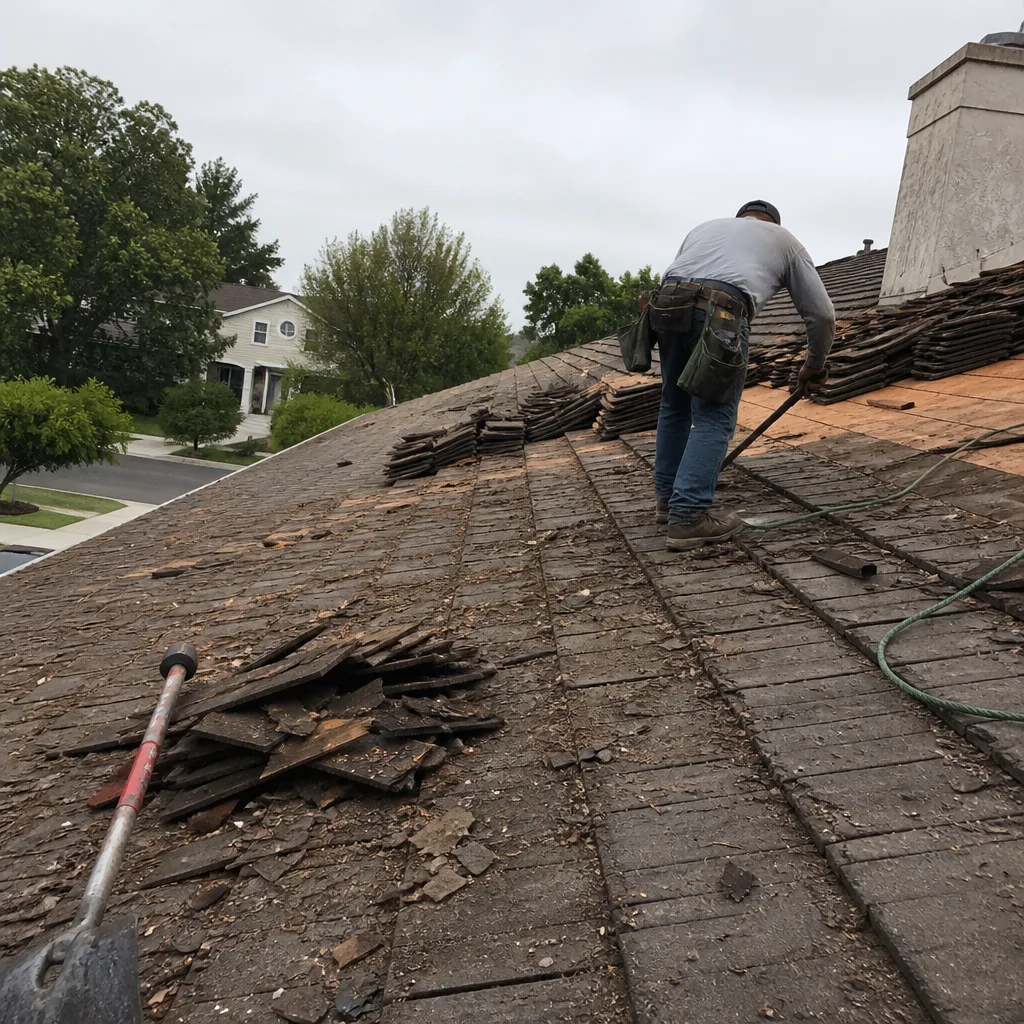
- Field shingles. Only now check the broad roof surface. Look for curling, granule loss, cracking, and wind-lifted shingles. By this point, you’ll have context for what you’re seeing.
Reversing this order wastes diagnostic time and produces a false sense of roof health. A field-first inspection on a Tustin roof is how homeowners end up patching shingles while water pours through an ignored ridge gap.
If you don’t want to climb up yourself, Roof Inspection in Yorba Linda covers the same methodology we use for our Tustin inspections. We inspect before we recommend, and the inspection follows this sequence every time.
Thermal Cycling and What It Does to Repair Materials
Tustin’s inland location means hot days and significantly cooler nights. A typical summer day might hit 90°F and drop to 55°F after dark. That’s a 35 to 40 degree daily swing, repeated hundreds of times per year. Roof surfaces get even hotter than ambient air, often reaching 140°F or more on a summer afternoon, then cooling rapidly after sunset.
Every material on your roof expands and contracts with those temperature changes. The problem is that different materials expand at different rates. Shingles expand at one rate. Metal flashing expands at another. Caulk and sealant expand at a third. Rubber pipe boots expand at a fourth.
Over time, those differential expansion rates tear sealant bonds apart. Caulk pulls away from metal. Rubber gaskets crack at the flex points. Adhesive strips on shingles lose their bond. The repair that uses the wrong material for a Tustin thermal environment fails faster than the original component it replaced.
We’ve seen this play out hundreds of times. A homeowner patches a pipe boot with a cheap rubber collar. Two seasons later, the collar is split around the pipe because it couldn’t handle the expansion cycle. The original material had the same problem, but it lasted seven years. The cheap fix lasted two.
The thermal cycling effect is concentrated at the same places the wind hits hardest: ridge lines, hips, and penetrations. The materials that live at those locations get double-stressed. They’re taking wind load and expansion stress simultaneously. That’s why roof repair material selection matters more in Tustin than in a coastal city with less daily temperature swing.
Roofing is all we do, and one of the reasons we track material performance in Tustin specifically is because the inland temperature profile is different enough to change what fails. A product that works fine in Seal Beach or Huntington Beach can be a two-season failure at Tustin’s elevation and thermal exposure.
Reading Your Roof’s Age From Granule Patterns
Install dates are useful, but they assume the shingles were installed correctly and that the manufacturer’s expected lifespan applies. Neither is guaranteed. Granule patterns tell you what’s actually happening on the roof, regardless of what the paperwork says.
Granules are the mineral coating on the top of every shingle. They protect the asphalt underneath from UV degradation. When granules come off, the shingle starts dying, and that death follows a consistent pattern you can read.
Here’s what we look for:
- Even granule loss across entire shingles: This is normal UV aging. The roof is simply getting old. On a 15-year-old roof in Tustin, even granule loss means the shingles have 5 to 8 years left if nothing else is failing.
- Granule loss concentrated at shingle edges: This indicates wind lift and flap. The shingles are working loose at the leading edges, and the mechanical flex is wearing the granules off first where the shingle moves most.
- Granule loss in vertical streaks below ridge lines: Water is running down the roof in concentrated sheets, washing granules downhill. This often means the ridge cap is shedding granules and the runoff is accelerating field wear below it.
- Granule loss concentrated around penetrations: The thermal cycling is strongest near metal and rubber penetrations. If granules are missing in a circle around a pipe boot, the differential expansion is locally overheating or flexing the shingles around the penetration.
- Bare spots with exposed asphalt: The shingle is in terminal decline. Exposed asphalt oxidizes quickly, becomes brittle, and cracks. If you see bare spots across multiple shingles, the roof is past the point where repair extends life meaningfully.
Granule patterns don’t lie about roof age. A 10-year-old roof in Tustin that was installed poorly can show granule loss patterns that look like 20-year wear. A 20-year-old roof that was installed correctly can look surprisingly good, especially if it’s a higher-end shingle.
When we’re assessing whether repair is worth it, granule distribution is one of the first things we look at. It tells us how the roof has actually aged, not how old it should be. Manufacturers like Owens Corning and IKO engineer different granule adhesion profiles into their product tiers, which is one reason material choice matters at install time, not just at repair time.
Repair vs. Replace: The 5 – 8 Year Question
The most honest question a Tustin homeowner can ask is this: does repairing this roof extend its life by five to eight years, or am I spending money to delay a replacement I’ll need anyway in two or three years?
Here’s the framework we use to answer that question, and it’s the same framework we recommend you use when evaluating any contractor’s recommendation, as covered in our How to Hire a Roofing Contractor in Tustin: A Step-by-Step Guide:
Repair extends the roof by 5 – 8 years when:
- The failure is localized. Ridge caps, pipe boots, or flashing are damaged, but the field shingles show even granule wear and no curling. The roof’s broad surface still has meaningful life.
- The decking is dry. The repair targets components that failed before water got through. No rot, no soft spots, no mold. The damage is weather-side, not structure-side.
- The roof is under 15 years old. A well-maintained composition shingle roof in Tustin can reach 20 to 25 years. If the roof is 10 to 12 years old and failing at the ridge, fixing the ridge is a legitimate lifespan extension.
- The repair addresses the actual failure mode. If wind is the problem, the repair includes resecuring and resealing, not just replacing what came off. If thermal cycling is the problem, the materials handle the expansion.
Repair is a short-term spend when:
- Field shingles are curling across a third or more of the roof. Curling is the terminal symptom of shingle aging. Once the field goes, the roof is done.
- Granule loss is exposing asphalt on multiple shingles. The UV protection is gone. The shingles will crack within a season or two, regardless of repairs elsewhere.
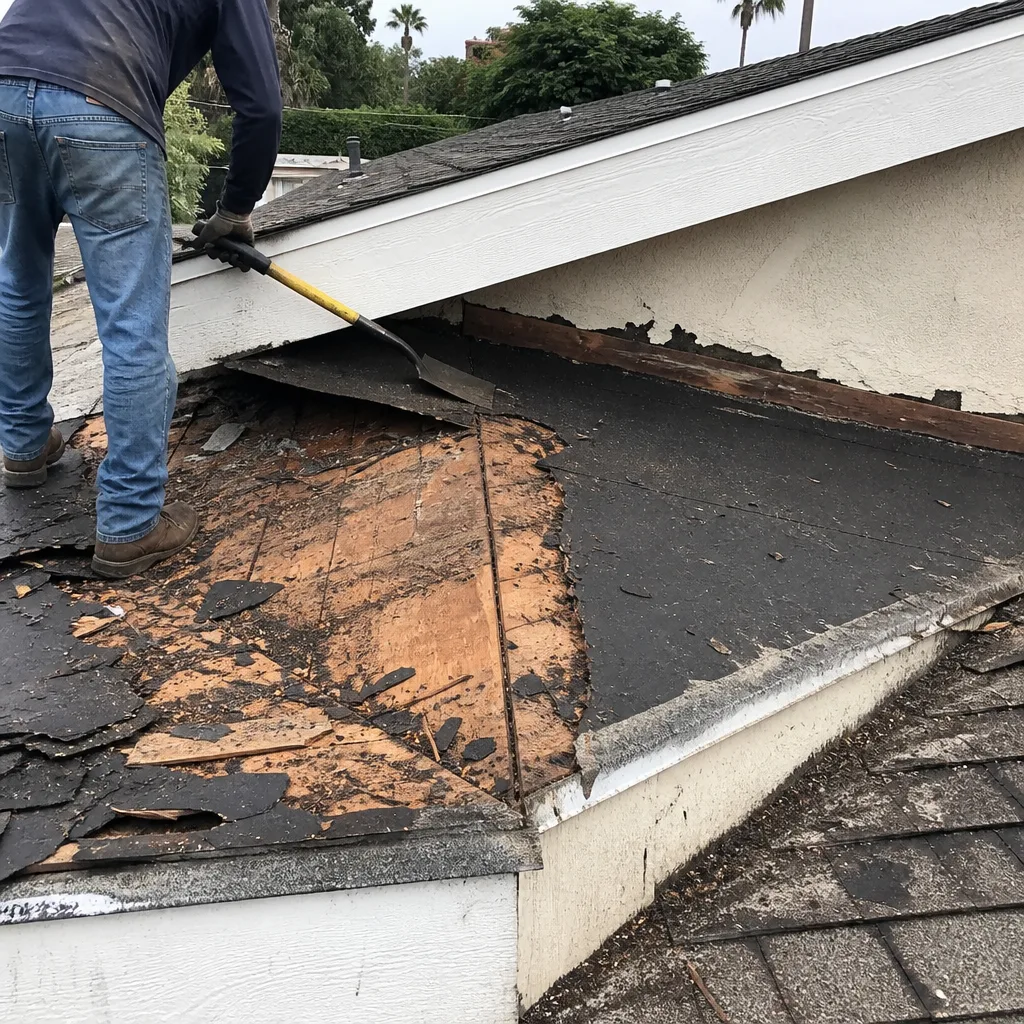
- The decking shows water damage. Once water has been entering the attic and soaking the structure, the problem is under the shingles. Repairing the surface doesn’t fix what’s already damaged.
- Multiple failure types are present simultaneously. Failing ridge caps plus failing pipe boots plus failing valleys means the roof as a system is exhausted. Repairing one component while the others are also failing is triage, not restoration.
The 5 – 8 year rule isn’t precise, but it’s a useful filter. If a repair can’t plausibly get you five more years, you’re spending money on delay, not extension. And delay has a real cost: the money you spend patching could have gone toward the replacement you’ll need anyway.
Our three-service model exists because the answer changes over a roof’s life. Roof Repair in Yorba Linda can’t address what a full roof replacement can. Roof Replacement in Yorba Linda can’t be justified if repair would honestly buy five more useful years. A proper roof inspection is what determines which one is right. Repair when repair is right, replace when replace is right.
Which Repair Materials Actually Hold Up in Tustin
Tustin’s thermal swings and the Santa Ana wind corridor mean some repair materials simply last longer than others here. Here’s what we’ve learned from years of tracking repair outcomes across Orange County’s inland cities, and specifically what holds up in this specific climate.
Materials that hold up well:
- EPDM pipe boots with reinforced bases. These handle the expansion cycles around plumbing stacks far better than thin rubber collars. The reinforced base resists the pull-away that cheap boots experience.
- Polyurethane-based sealants. Better flexibility range than silicone or acrylic caulks, which harden and crack under repeated thermal cycling. Polyurethane keeps its bond longer at Tustin’s temperature extremes.
- Aluminum valley metal with proper lap. Galvanized steel can work, but aluminum resists the corrosion that Tustin’s occasional heavy rain and persistent humidity create at valley troughs.
- Manufacturer-matched ridge caps. When ridge cap shingles need replacement, using the actual ridge cap product from the same manufacturer as the field shingles matters. Atlas and Tamko both make dedicated ridge cap lines engineered to flex better than field shingles bent over a peak.
Materials that fail within two seasons:
- Generic rubber collars from the home center shelf. These are one-size-fits-all and handle nothing well. In Tustin’s thermal environment, they split at the flex point within 18 to 24 months.
- Acrylic caulk over flashing gaps. Acrylic hardens as it cures, then movement from thermal expansion ruptures the bond. The repair looks fine for six months and leaks after two summers.
- Field shingles used as ridge cap replacements. Standard shingles can’t handle the fold at the ridge. They crack along the bend within a year or two, especially under Santa Ana wind load.
- Thin adhesive-backed patches. Peel-and-stick patches work for temporary stabilization but break down quickly under Tustin’s UV intensity and heat. A patch that survives in a milder climate dies young here.
The seven manufacturers we work with, including Owens Corning, IKO, Atlas, and Tamko, all make repair-grade components designed for specific failure modes. Seven manufacturers, one standard. The right material for your roof depends on what failed and why, and brand-agnostic access to multiple lines gives us honest options instead of whatever one brand happens to sell.
Common Mistakes to Avoid
- Patching field shingles while the ridge line is active. If the ridge cap is cracked and water is entering through the peak, replacing a few wind-lifted shingles down in the field does nothing for the leak. Work the sequence: ridge first, then everything downstream.
- Using the wrong sealant. Tustin’s thermal swings will crack acrylic and silicone sealants within two seasons. Use polyurethane-based products or, better yet, have the repair done with proper flashing replacement instead of sealant bridges.
- Ignoring granule patterns when deciding repair vs. replacement. Install dates lie. Granule patterns don’t. A 12-year-old roof can be structurally older than a 20-year-old roof. Read the shingles, not the paperwork.
- Replacing pipe boots without checking the flashing underneath. The rubber gasket might be cracked, but the metal flashing base may also be compromised. Replacing only the rubber while leaving corroded flashing sets up the next failure.
- Assuming a coastal repair recommendation works inland. Materials and approaches that work in Newport Beach or Huntington Beach face different stress in Tustin. What holds up at 75°F with marine layer works differently at 90°F with Santa Ana winds.
- Skipping the inspection before scaling a repair. Every repair decision made without understanding the full failure sequence is a guess. You might fix the visible problem and leave the actual leak untouched. Inspect before you recommend, and inspect before you repair.
When to Call a Professional
Some roof conditions are safe to evaluate from the ground. Others need a professional, and knowing the difference matters. Call a professional when the ridge line shows visible cracking or missing material, when you see water staining on ceilings or attic framing, when granule loss has exposed asphalt on multiple shingles, when flashing around chimneys or walls has lifted away from the surface, or when you can’t safely reach the area you need to inspect.
Roof work at elevation is genuinely dangerous. A fall from a Tustin roofline is a life-changing injury, and walking a roof without proper footwear, fall protection, and experience is not worth the inspection you get. Bellwether Roof Repair offers free estimates in Tustin. Call (833) 824-0047.
Frequently Asked Questions
Roof repair in Tustin typically runs between $350 and $1,400 for most mid-range fixes, with simple pipe boot replacements at the low end and ridge cap or valley repairs at the higher end. Larger repairs that involve decking replacement or multiple failure types can run higher. Call (833) 824-0047 for an exact quote, estimates are free.
You can repair simple ground-level issues like gutter reattachment, but anything that requires walking the roof surface should be left to professionals who carry proper liability insurance and fall protection equipment, as we explain in our DIY vs Professional Roofing: The Tustin Homeowner’s Decision Guide. The risk of a fall is not worth the money saved on a pipe boot replacement.
A correctly installed composition shingle roof in Tustin typically lasts 20 to 25 years, assuming the ridge line and penetrations are maintained along the way. The Santa Ana wind corridor and inland thermal cycling shorten that lifespan compared to coastal Orange County cities if maintenance is deferred.
Ridge cap shingle replacement is the most common repair we perform in Tustin, driven by wind and thermal stress concentrating at the roof’s highest point. The failure sequence on a Tustin roof almost always starts at the ridge.
Minor repairs like pipe boot replacement, small shingle patches, and sealant work generally do not require a permit in Tustin. Repairs that involve structural decking replacement or significant roof area may fall under permit requirements. A licensed contractor will know which work triggers a permit and will pull the right paperwork when required.
Use the 5 – 8 year test: if a repair can plausibly extend your roof’s life by five or more years, it’s worth doing. If the field shingles are curling across a third or more of the roof, granule loss has exposed asphalt everywhere, or the decking is wet, you’re likely past the point where repair makes financial sense. Call (833) 824-0047 for an honest assessment.
The Bottom Line
Tustin roofs fail in a predictable sequence: ridge first, penetrations second, valleys third, field last. The Santa Ana wind corridor accelerates the top-of-roof failures, and inland thermal cycling makes the repair materials you choose matter more than the repair itself. Inspect in the right order, use materials built for this climate, and apply the 5 – 8 year test to every repair decision. If you get those three things right, you’ll spend money on repairs that actually extend roof life instead of delaying an inevitable replacement. For more guides & resources, visit our blog. Bellwether Roof Repair serves Tustin with a roofing-only focus, inspection-first process, and access to materials from seven major manufacturers. Call (833) 824-0047 to schedule your free estimate.
Written by the team at Bellwether Roof Repair, serving Tustin since 2018.
See the difference
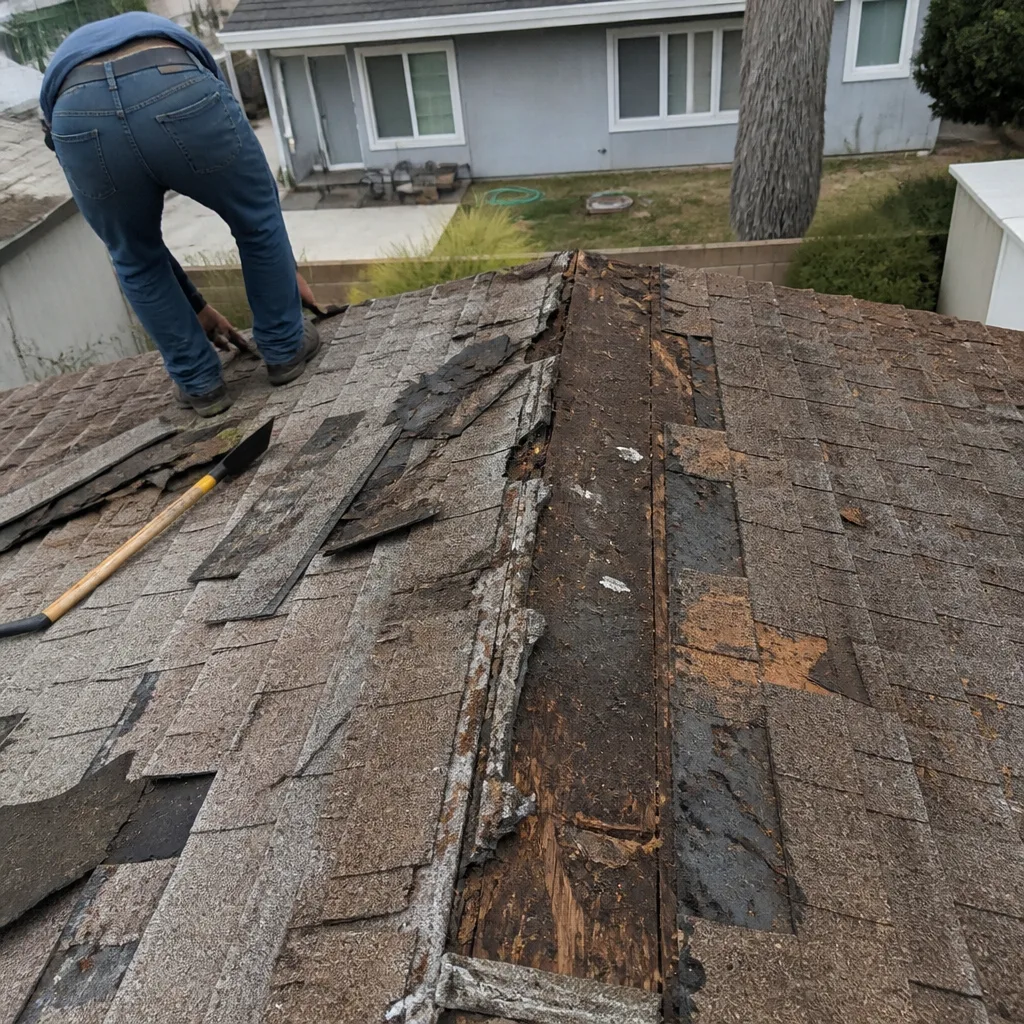 Before
 After
 Before
 After
 Before
 After