
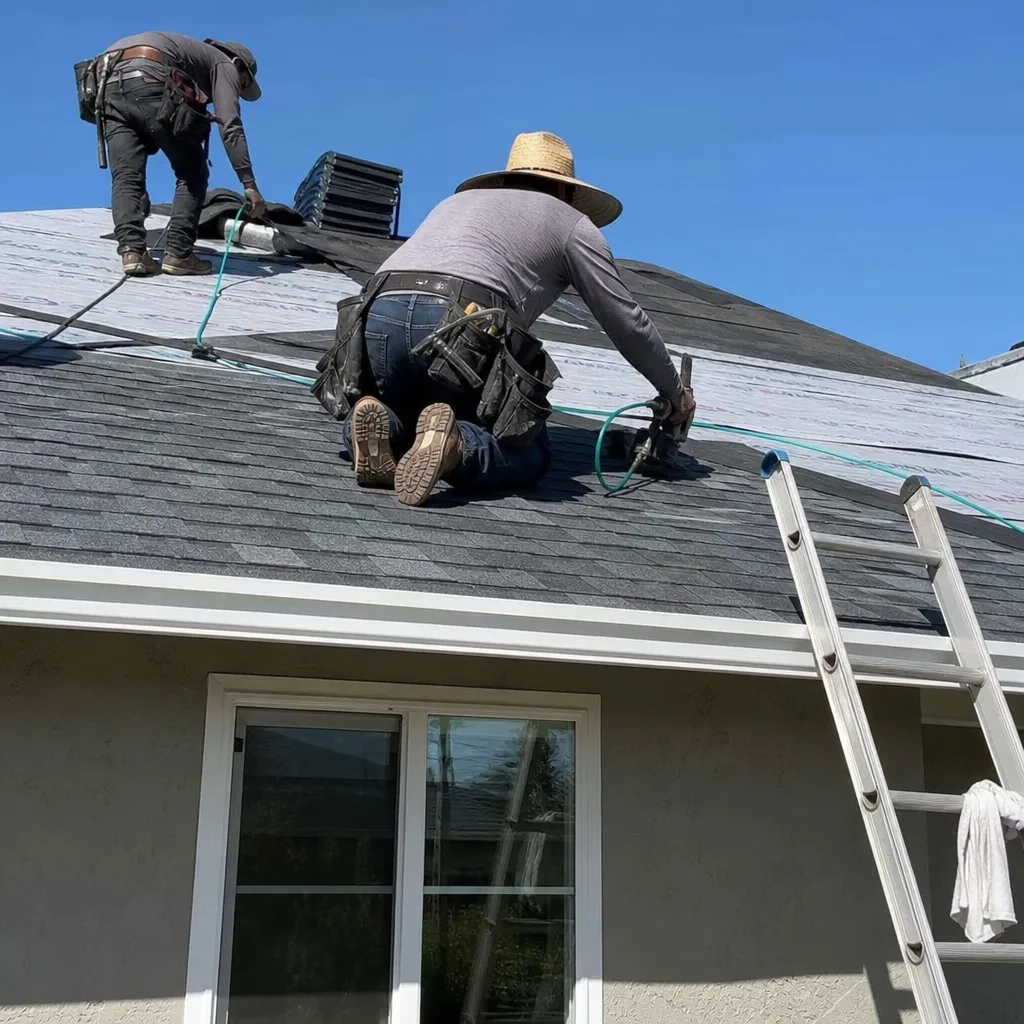
Last updated October 31, 2026
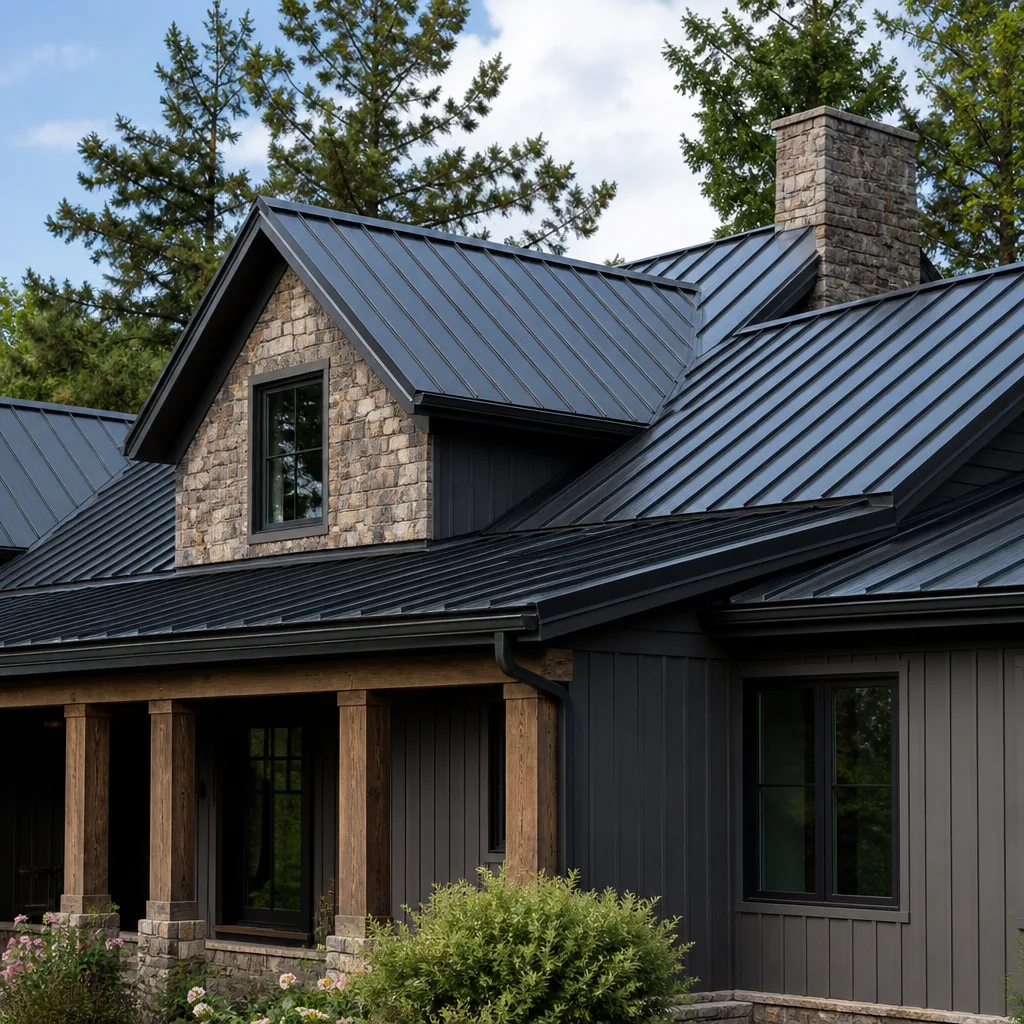 Metal roofing
 Architectural shingles
 Tile roofing
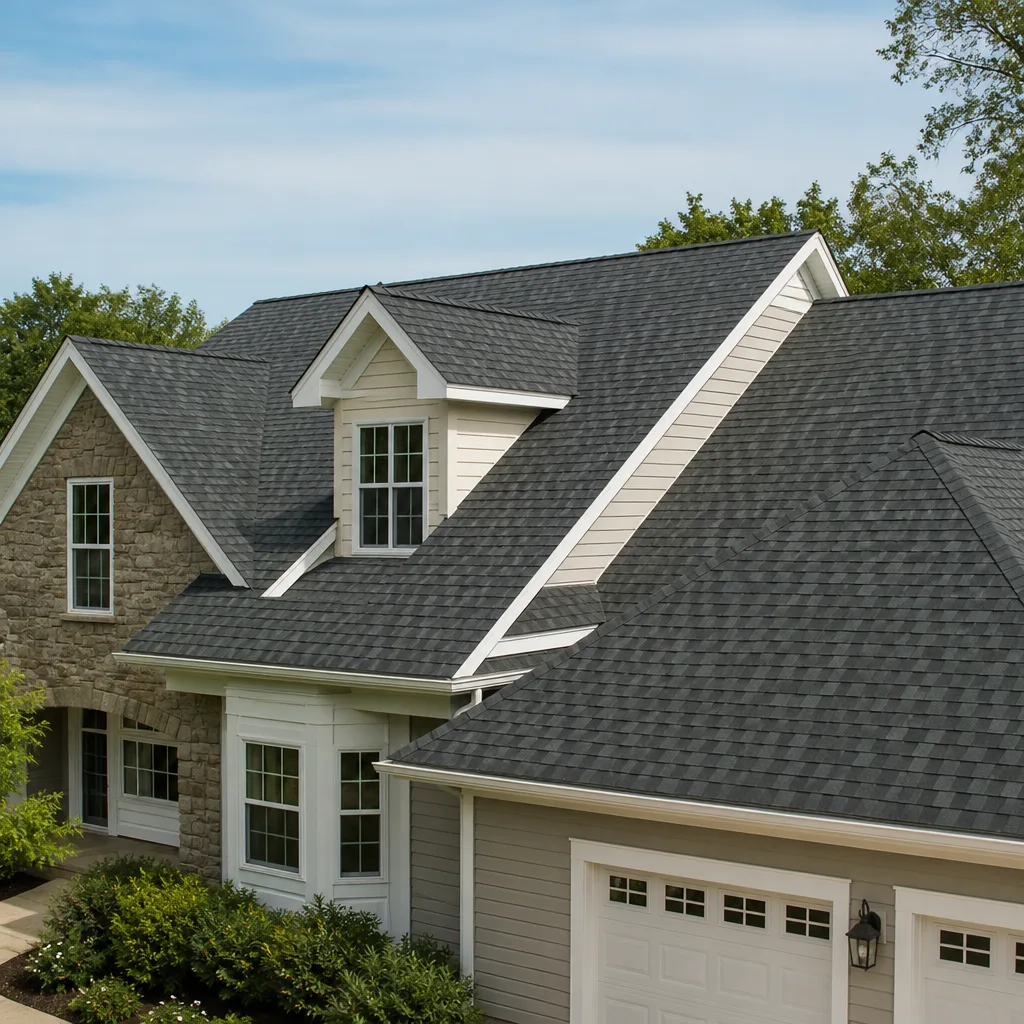 GAF
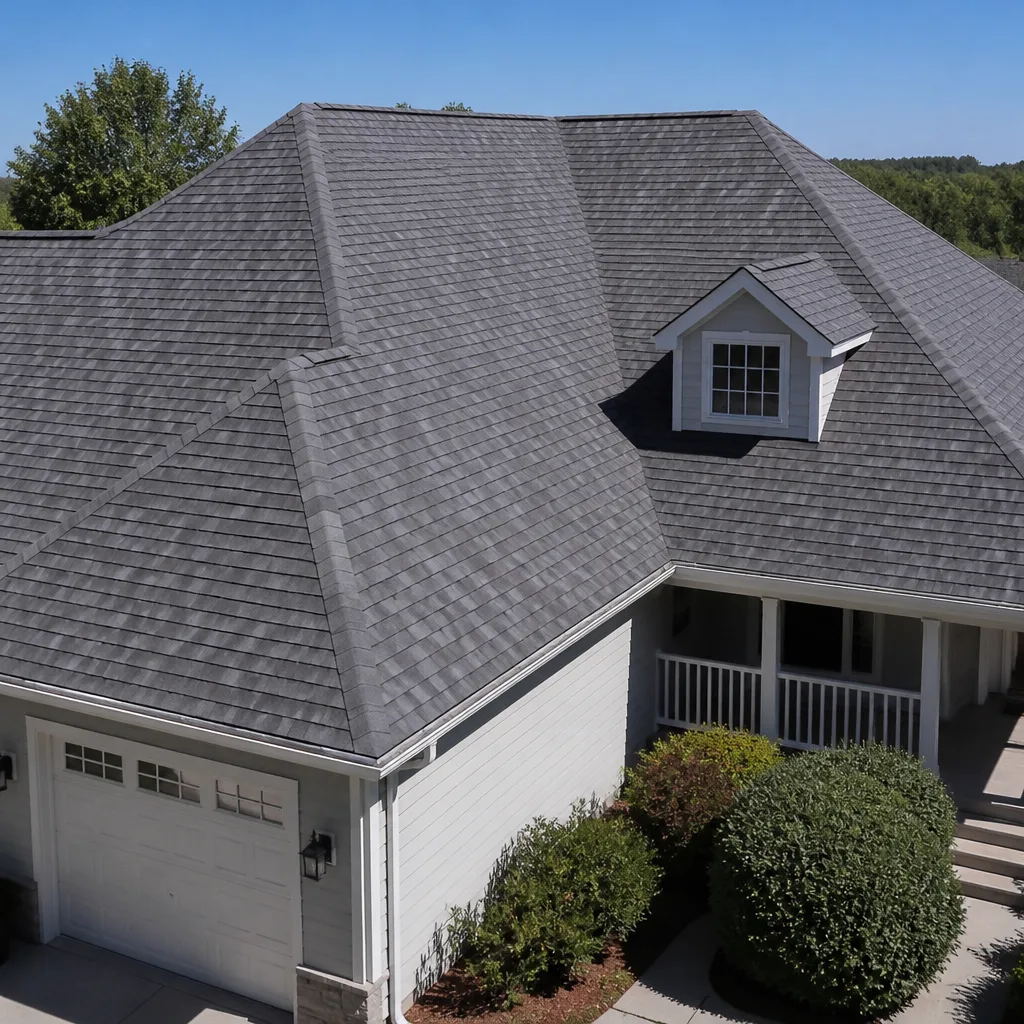 Owens Corning
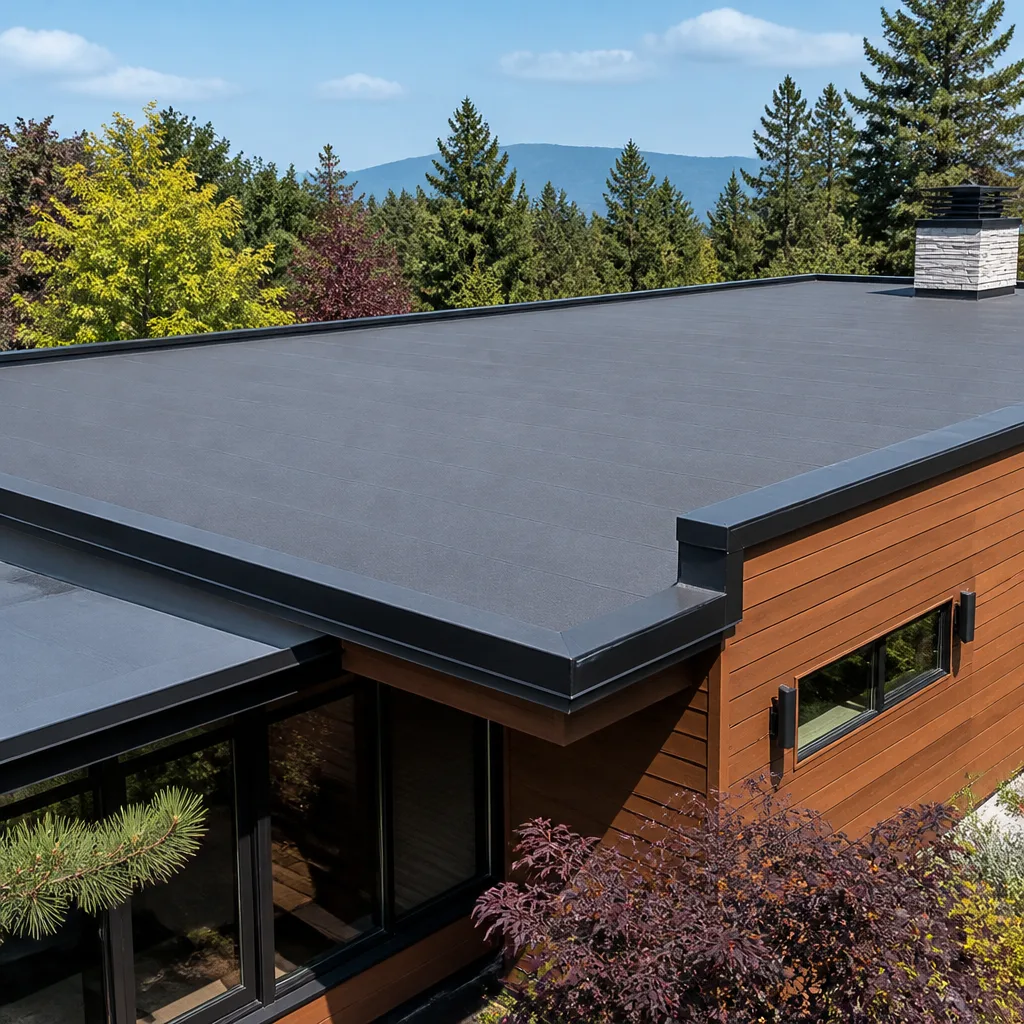 Flat & low-slope
Free roof inspection with deck photos before we talk money - GAF and Owens Corning certified installation
DIY vs Professional Roofing: The Tustin Homeowner’s Decision Guide
California’s contractor licensing law makes it illegal to hire an unlicensed individual for roofing work over $500, yet it places no restriction on a homeowner working on their own roof. That asymmetry creates a strange reality in Tustin: a homeowner can legally do work that a hired handyman cannot. But legality is not the same as wisdom. This guide cuts through the ambiguity. You’ll learn exactly which roofing tasks a competent Tustin homeowner can handle without consequence, which ones trigger permit, insurance, or warranty landmines, and why some decisions that look like savings on Saturday morning turn into five-figure expenses by Tuesday afternoon.
Styles & brands we work with
Quick Answer
DIY roofing in Tustin makes sense for a narrow set of low-risk tasks: replacing a handful of missing shingles, clearing gutters and valleys, and resealing small flashing gaps. It becomes a poor decision the moment the work involves structural underlayment, full roof sections, any permit requirement under California Title 24, or anything that could affect an insurance claim—points covered in our Roof Repair Maintenance Checklist for Tustin Homeowners. The line is not about skill. It’s about liability, documentation, and what happens when the work fails.
Table of Contents
- What DIY Roofing Is Legally Safe in Tustin
- Why Full Re-Roofs Are a Permit Problem, Not a Skill Problem
- The Warranty Cost of DIY: What Ten Years Really Looks Like
- How DIY Work Affects Insurance Claims in Orange County
- The Partial DIY Framework: Where Homeowner Prep Actually Saves Money
- Tustin Climate and Roof Wear: What You’re Actually Fighting
- Common Mistakes to Avoid
- When to Call a Professional
- Frequently Asked Questions
- The Bottom Line
What DIY Roofing Is Legally Safe in Tustin
The State of California draws a bright line at $500 for contractor work, but for homeowners working on their own property, the governing constraint is the building code, not the contractor licensing board. Tustin, like the rest of Orange County, enforces the California Residential Code (CRC) with local amendments. Homeowners may perform work on their own residence without a contractor’s license, but any work requiring a permit must still be permitted and inspected, regardless of who performs it.
Three tasks fall into the genuinely reasonable DIY category for a careful Tustin homeowner:
- Replacing individual missing or broken shingles (fewer than 10). The failure risk is low if you match the shingle type and the roof is walkable. The main risk in Tustin is working on a hot composite shingle surface in summer, which softens and tears even under careful foot placement. Do this work in the morning during June through September.
- Clearing gutters, downspouts, and valley debris. This is maintenance, not roofing, but it prevents the most common Tustin roof problem: standing water in valleys during the rare but intense winter storm weeks. Santa Ana winds in October and November load gutters with eucalyptus and pepper tree debris within days. A homeowner with a stable ladder and a hose can clear this safely.
- Sealing small flashing gaps around vents and pipe boots with roofing cement or sealant. This is a stopgap, not a repair. It buys time before a proper flashing replacement. It works when the gap is smaller than a quarter-inch and the surrounding material is sound.
None of these tasks require a permit in Tustin. None carry meaningful code liability. None void a warranty when done correctly and documented. That’s the entire list. Everything beyond this crosses into territory where the decision math changes.
For an objective condition assessment before any repair decision, a professional roof inspection in Yorba Linda gives you a documented baseline. In our experience, Tustin homeowners who get an inspection before attempting DIY work spend less time correcting false starts.
Why Full Re-Roofs Are a Permit Problem, Not a Skill Problem
A full re-roof in Tustin requires a building permit. California’s Title 24 energy code and the CRC set minimum standards for roofing materials, attic ventilation, and, for some roof types, cool-roof reflectivity requirements that differ by climate zone. Tustin sits in Climate Zone 8, which means any new roofing material must meet specific solar reflectance and thermal emittance standards unless the project qualifies for an exception. A homeowner who re-roofs without a permit and without Title 24 compliance creates a documentation problem that follows the house.
Here is the sequence of consequences, in order:
- Unpermitted work is discoverable at resale. California law requires sellers to disclose unpermitted work on the property. A title report that flags a recently replaced roof with no permit on file can stall escrow or force a price concession.
- Homeowners insurance may deny coverage for a loss traced to unpermitted work. This is not speculative. Adjusters in Orange County routinely ask for permit records when evaluating roof claims. No permit, no covered loss, in many cases.
- Local code enforcement can require tear-off and verification. If Tustin building officials become aware of unpermitted roof work, the homeowner can face a stop-work order and a requirement to expose the roof structure for inspection at their own cost.
- Title 24 noncompliance can prevent final sign-off. Even a well-executed re-roof that does not meet cool-roof or attic ventilation requirements will fail inspection. The homeowner then pays twice: once for the work, once to redo it correctly.
The skill to install shingles is not the obstacle. Coverage under the right permit and the inspection trail is the obstacle. A Tustin homeowner who pulls a permit, installs the roof correctly, and passes inspection has done something rare. Most who attempt it discover that the permit process alone, with Title 24 documentation requirements and the need for a HERS rater on certain energy measures, eliminates the cost advantage they were chasing.
A full re-roof is fundamentally a documentation and verification event more than a construction event. That’s why roof replacement in Yorba Linda and Tustin is handled as a permitted project with a paper trail from start to finish. The roof is only half the deliverable. The permit record is the other half.
The Warranty Cost of DIY: What Ten Years Really Looks Like
Manufacturer material warranties for asphalt shingles from GAF, CertainTeed, and Owens Corning carry conditions that DIY work frequently violates. The most common clauses require installation by a licensed contractor and adherence to the manufacturer’s published installation specifications. A homeowner-installed roof generally voids the manufacturer’s material warranty from day one.
Here is what that exposure looks like in dollar terms over a ten-year window on a typical 2,200-square-foot Tustin home:
- Shingle material cost for a full re-roof: $3,800 to $7,500 depending on the product line.
- Manufacturer warranty coverage lost: 100% for material defects. If a batch of shingles fails prematurely due to a manufacturing flaw, the manufacturer has no obligation to the homeowner who self-installed.
- Labor warranty lost: Professional roofers in California are required to provide workmanship warranties. A homeowner has no workmanship warranty on their own work. If installation errors cause a leak, the full cost of diagnosis and repair lands on the homeowner.
- Ten-year cost of roof leaks attributable to installation errors: In our experience across Tustin, installation-error leaks average $800 to $2,400 per incident to diagnose and repair once water has penetrated the deck. Two incidents over ten years is not uncommon for amateur installations.
A homeowner who self-installs a roof with CertainTeed shingles and has a material defect in year four has no claim. The same roof installed by a licensed contractor has a material defect claim that results in replacement shingles at no cost. The warranty is not a marketing brochure. It’s an asset with real dollar value attached to it.
Some Tustin homeowners assume the “savings” on DIY installation is the whole story. It isn’t. The real calculation is: DIY installation savings minus the forfeited warranty value minus the expected cost of installation-error leaks spread over ten years. For many reasonably priced professional projects, that math does not favor DIY.
The brand question matters too. A homeowner with access to seven manufacturers through a company like Bellwether Roof Repair can choose the right product for the home’s specific exposure, slope, and budget. A DIY shopper at a big-box store chooses from whichever limited product line is on the shelf. The material decision drives long-term performance more than installation technique in many cases.
How DIY Work Affects Insurance Claims in Orange County
Homeowners insurance in Orange County covers sudden and accidental damage. It does not cover damage caused by wear and tear, neglect, or faulty workmanship. The distinction between those two categories is exactly where DIY roof work gets complicated.
Consider a common Tustin scenario. A homeowner replaces six shingles after a Santa Ana wind event. Six months later, a winter storm drops two inches of rain in a day. Water enters at the point of the previous repair. The insurance adjuster arrives and finds evidence of an amateur repair at the leak site. The adjuster’s report likely attributes the damage to faulty workmanship at the repair, not to the storm itself. The claim is denied or reduced.
Here’s what the adjuster looks for:
- Mismatched shingle type or color indicating a non-professional patch.
- Improper nail placement or missing nails visible from the attic or after shingle lift.
- Sealant used in place of proper flashing repair, which signals a stopgap that failed.
- No contractor invoice or work order documenting who performed the previous repair and when.
The documentation gap is often the deciding factor. A professional repair comes with an invoice, a description of work, and in many cases before-and-after photos. A DIY repair comes with nothing. When an adjuster must choose between covered storm damage and owner-caused damage, absent documentation tips the scale toward a denial.
For routine roof repair in Yorba Linda and Tustin, the paperwork is part of the repair. It’s not an upsell. It’s the evidence trail that protects the homeowner in a future claim.
The Partial DIY Framework: Where Homeowner Prep Actually Saves Money
There is a middle path between full DIY and full professional work. It applies to re-roof projects where the homeowner wants to reduce total cost without assuming liability for the roof system itself. The framework is simple: the homeowner handles non-roofing prep work, the contractor handles everything on the roof and everything documented.
Here is a How to Hire a Roofing Contractor in Tustin: A Step-by-Step Guide framework that some homeowners use effectively:
- Step 1: Get a professional inspection and a written scope of work. This establishes the baseline. The inspection identifies what actually needs replacement, not what a homeowner guesses needs replacement. Bellwether’s inspection-first model is built exactly for this: homeowners know what they’re paying for and why before any repair or replacement commitment is made.
- Step 2: Negotiate a line-item contract that separates roofing labor from prep labor. A reputable contractor will itemize. Homeowner tasks like moving patio furniture, protecting landscaping with tarps, clearing attic access, and staging the job site are genuinely useful and genuinely safe.
- Step 3: Handle the prep work yourself before the crew arrives. This can realistically reduce project cost by $300 to $800 on a typical Tustin re-roof, depending on the site condition and the amount of landscaping protection required.
- Step 4: Let the contractor handle every step on the roof: tear-off, underlayment, flashing, shingle installation, ridge venting. This preserves the manufacturer warranty and the permit record.
- Step 5: Request a final inspection walkthrough and a signed completion document. This closes the documentation loop.
This framework is not a gimmick. It’s a legitimate negotiation that recognizes the homeowner’s time and labor value without stripping away the legal and financial protections of professional installation. The contractor still owns the roof system. The homeowner owns the prep. Both parties get what they want.
Tustin Climate and Roof Wear: What You’re Actually Fighting
Tustin has a specific climate profile that shapes roof maintenance differently than coastal Orange County cities or inland areas further east. The city sits in a transition zone: warm enough for significant UV exposure, close enough to the coast for occasional marine layer influence, and exposed to the Santa Ana wind corridor that funnels through the foothills between Tustin and Irvine Regional Park.
What this means for roofs in Tustin:
- UV degradation drives aging, not rain. Composite shingles in Tustin lose granules and become brittle from sun exposure. This is a slow process, but it’s relentless. A south-facing slope ages faster than a north-facing slope on the same roof.
- Santa Ana winds lift loose shingles and drive debris into valleys. The October-November wind season is when we see the most calls for missing shingles and valley blockages. Most of those shingles were already compromised by age or previous poor installation; the wind just found the weak point.
- Winter rain events are intense but brief. Tustin averages about 14 inches of rain per year, mostly concentrated in a handful of storm events. This means small leaks can go undetected during long dry spells and then become dramatic when the first real storm arrives.
- Tile roofs, common in older Tustin tracts built in the 1970s through 1990s, have specific underlayment replacement cycles. The tile itself often remains sound while the underlayment beneath it fails. Homeowners who assume a tile roof needs no attention until tiles break are often surprised by leaks from degraded underlayment that’s been invisible for years.
This climate profile is why inspection matters. A roof that looks intact from the street in July may be one storm away from an interior leak. And the specific wear patterns of Tustin roofs are well understood by a roofing-only contractor like Bellwether, because we see the same patterns repeat across the city’s tract home neighborhoods, from Tustin Meadows to Columbus Square to the hillside areas around Lemon Heights.
Common Mistakes to Avoid
- Using the wrong shingle for the roof’s slope. Tustin homes vary from nearly flat modern designs to steep hillside lots near Peters Canyon. Each slope range requires different materials and installation methods. A DIY shopper buying “standard” shingles for a low-slope roof has already made a code violation.
- Ignoring the permit requirement on a full re-roof. Homeowners sometimes rationalize that “it’s my house” and skip the permit. The resale and insurance consequences in California make this the most expensive shortcut available.
- Assuming a tile roof doesn’t need attention. The tile itself may be fine while the underlayment beneath it is failing. This is the single most common false assumption we encounter in Tustin’s older housing stock.
- Patching leaks from the interior without fixing the exterior source. Caulking a ceiling stain or painting over water damage inside the house does nothing to stop the water entry. The roof leak continues until the roof is addressed.
- Waiting for visible damage before acting. By the time a roof leak is visible on an interior ceiling, water has already saturated insulation, soaked through drywall, and potentially affected electrical fixtures. The repair cost has multiplied.
- Choosing a material based on price alone. A homeowner who picks the cheapest available shingle for a Tustin roof is making a ten-year decision on a same-day budget. With access to GAF, CertainTeed, Owens Corning, and other manufacturers, a product-neutral contractor can show what each tier actually buys in performance terms.
When to Call a Professional
Any of these conditions warrant a professional evaluation immediately: visible sagging or deflection in the roof plane, water stains on ceilings or walls after rain, missing shingles over a conditioned living space, cracked or displaced tile exposing underlayment, granule loss so heavy that gutters fill with grit after every rain, or any roof section older than 20 years with no inspection record. These are not DIY territory. They are conditions that require a documented inspection and a professional repair decision. Bellwether Roof Repair offers free estimates in Tustin. Call (833) 824-0047 to schedule one.
Frequently Asked Questions
Yes. California law permits homeowners to perform work on their own residence without a contractor’s license, including roofing work. However, any work requiring a permit must still be permitted and inspected by the City of Tustin. A full re-roof always requires a permit, and Title 24 energy code compliance applies regardless of who installs the roof.
In almost all cases, no. Manufacturer material warranties from GAF, CertainTeed, Owens Corning, and others require installation by a licensed contractor following the manufacturer’s published specifications. Homeowner installation voids the material warranty. The dollar exposure of that forfeiture over ten years is significant, often exceeding the apparent savings of DIY installation.
Replacing fewer than ten individual missing shingles, clearing gutters and downspouts, and sealing small flashing gaps with roofing cement are the three tasks a careful homeowner can handle without significant risk or warranty consequence. Anything beyond this list crosses into liability, code, insurance, or warranty territory where professional work is the better decision.
They may, and they will likely investigate if you file a claim for a roof-related loss. Adjusters look for signs of amateur work, including mismatched materials, improper nailing, and sealant used as a substitute for proper flashing repair. No contractor invoice or work order further weakens your position. If the adjuster determines the damage resulted from your workmanship rather than the storm, the claim can be denied.
Handling homeowner-side prep work like moving outdoor furniture, protecting landscaping, clearing the attic access, and staging the site can realistically reduce a Tustin re-roof project by $300 to $800. This is the legitimate savings model: you handle the prep, the licensed contractor handles everything on the roof and everything documented.
Yes. The City of Tustin requires a building permit for full roof replacement. The project must comply with California Building Code standards and Title 24 energy requirements, including cool-roof standards for Climate Zone 8. The permit and the inspection record protect you at resale and in insurance matters. Call (833) 824-0047 to ask about the specific permit requirements for your Tustin property.
The Bottom Line
The DIY vs. professional roofing decision in Tustin is not a referendum on your competence. It’s a calculation of consequence. Minor maintenance tasks are genuinely DIY-appropriate and safe. Full re-roofs and structural repairs are documentation-heavy, permit-bound work where the legal and financial exposure outweighs any labor savings. The warranty forfeiture alone, measured over a ten-year window, often erases the entire DIY advantage. A partial-DIY framework, where you handle prep and a licensed contractor handles the roof and the paperwork, captures real savings without sacrificing protection. Roofing is all we do at Bellwether. We inspect before we recommend. If you’re uncertain where your roof sits on this spectrum, explore our more guides & resources or call (833) 824-0047 for a free estimate in Tustin.
Written by the team at Bellwether Roof Repair, serving Tustin since 2018.
See the difference
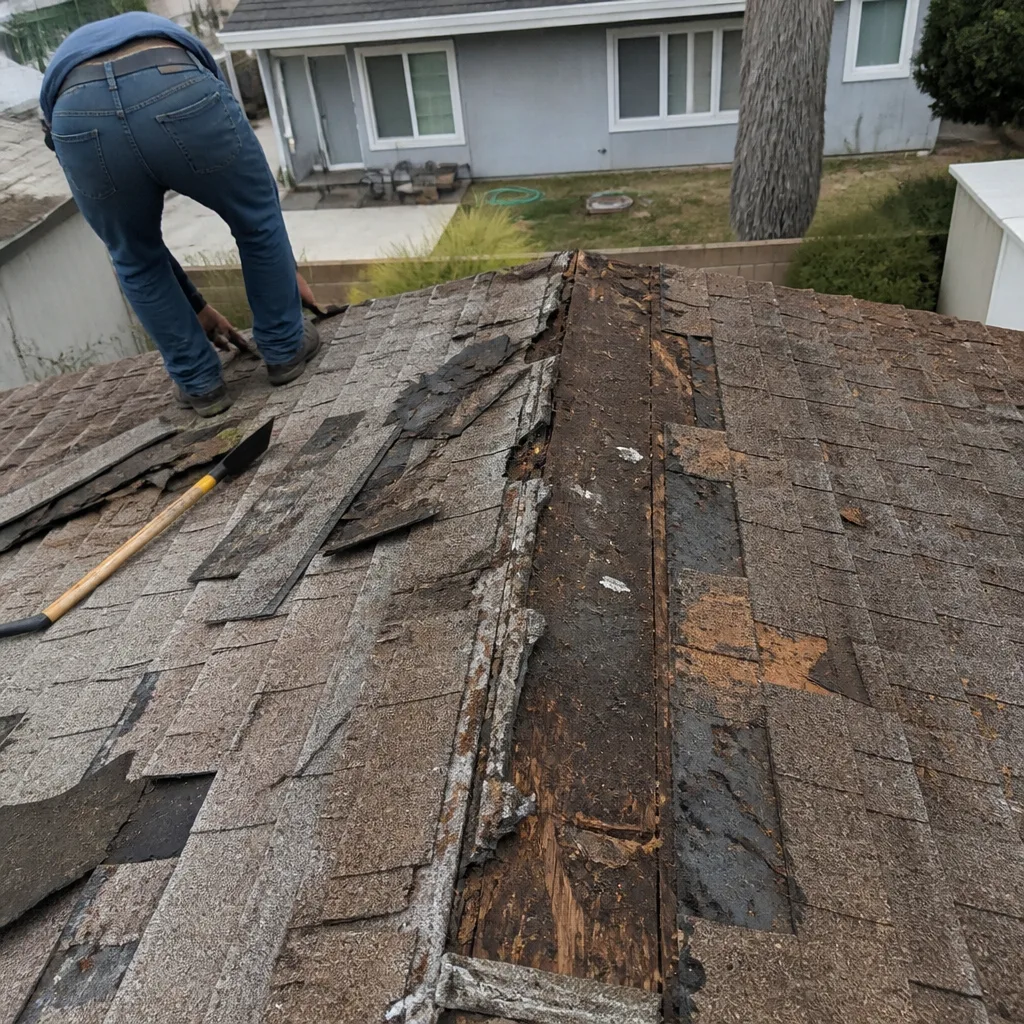 Before
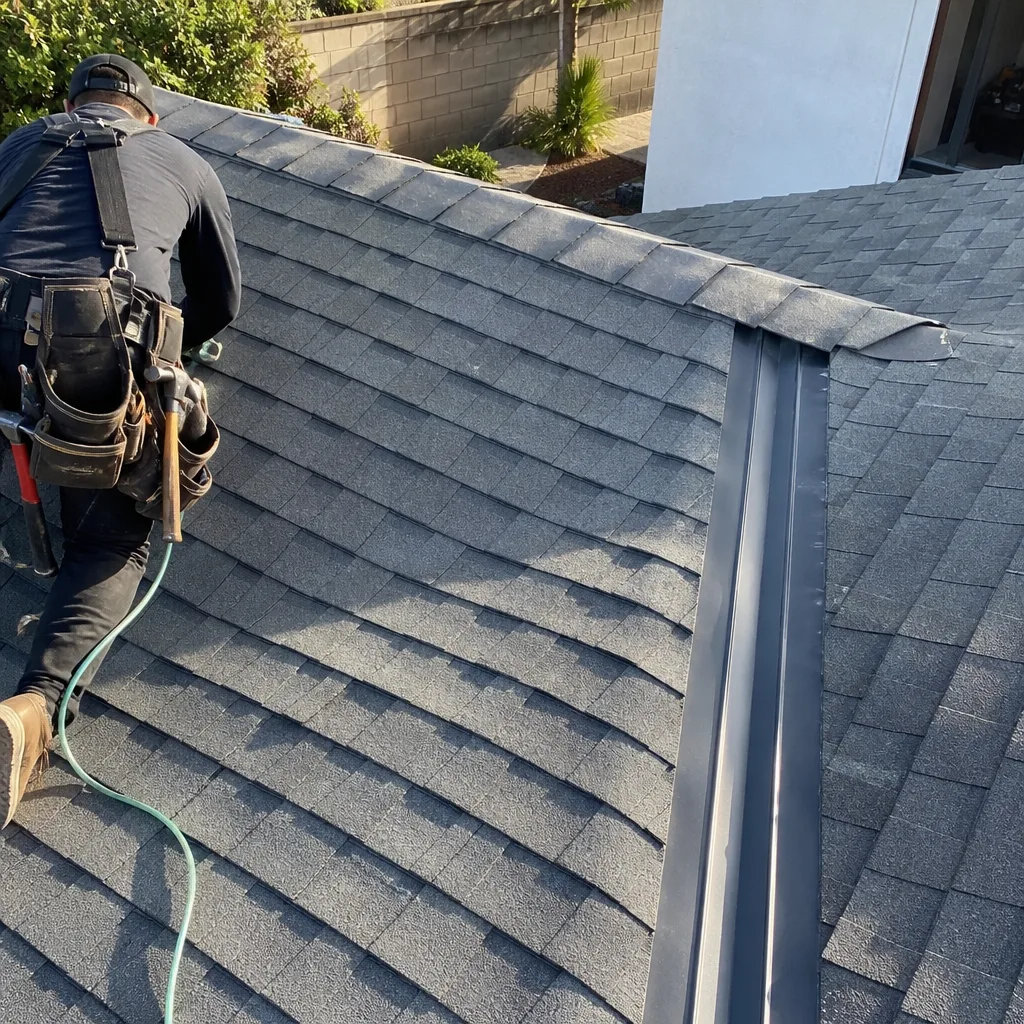 After
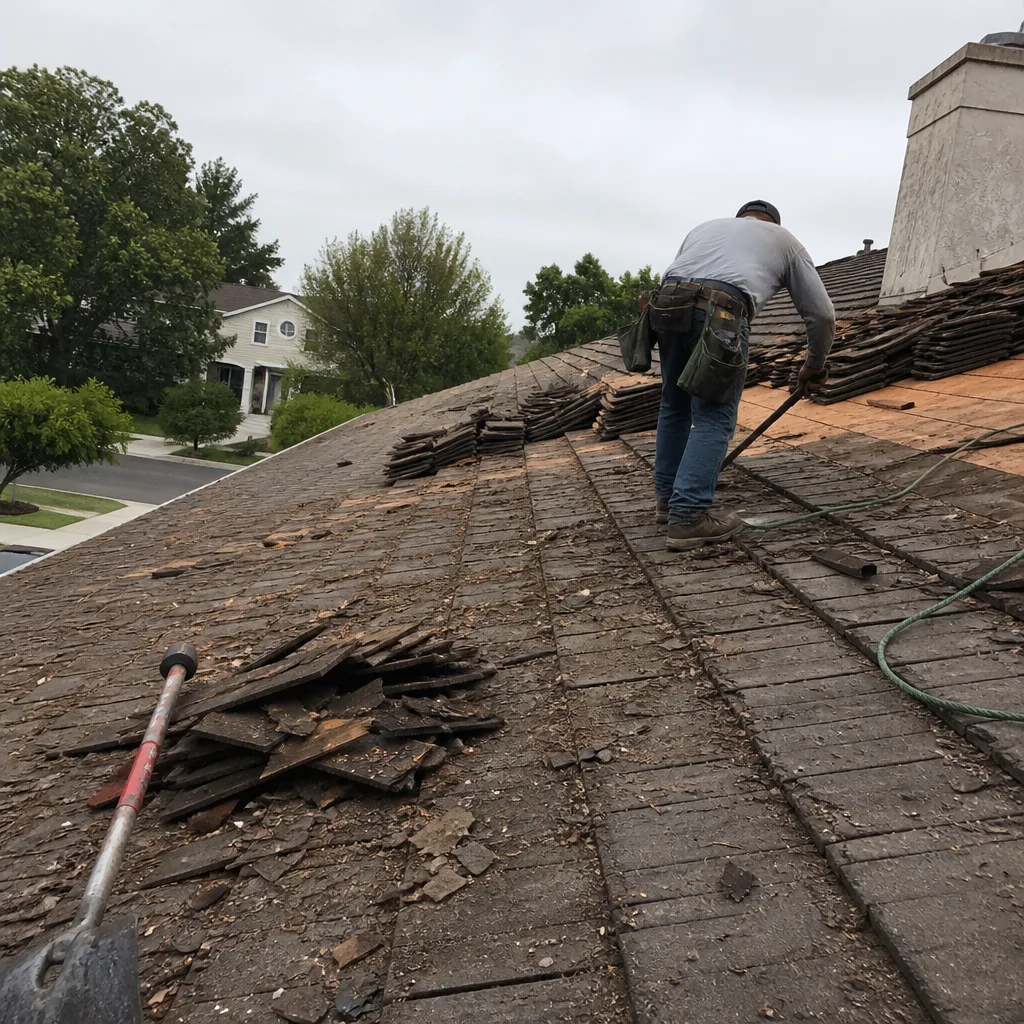 Before
 After
 Before
 After