
Last updated October 31, 2026
 Architectural shingles
 Metal roofing
 Tile roofing
 GAF
 Owens Corning
 Flat & low-slope
Free roof inspection with deck photos before we talk money - GAF and Owens Corning certified installation
Roof Repair Maintenance Checklist for Tustin Homeowners
In Tustin, the roof failure that generates the most avoidable repair calls isn’t the dramatic one. It’s not the tree limb through the decking or the wind-torn shingle. It’s the cracked pipe boot flashing, a $14 rubber collar that fails silently two to four years after installation and only announces itself during the three or four heavy rain events inland Orange County gets each winter. This guide walks through a maintenance checklist built around what actually causes leaks, claim disputes, and callbacks on Tustin roofs, not what looks thorough in Roof Repair Troubleshooting: Common Problems and How to Fix Them or other generic resources. You’ll learn which five components deserve attention every fall, how to inspect concrete tile from the ground, and what documentation habits protect you when an insurance adjuster asks what you’ve been doing to maintain the roof.
Styles & brands we work with
Quick Answer
A Tustin homeowner’s roof maintenance checklist should prioritize five failure points: pipe boots and penetration flashings, valley metal debris accumulation, concrete tile crack patterns, the September-to-November repair window, and documented inspection history. Walk the checklist every fall before the Pacific storm track activates, and you’ll catch most issues while they’re still $300 repairs instead of $4,000 interior claims.
Table of Contents
- Pipe Boots and Penetration Flashings: The Number One Deferred Failure
- Valley Metal Inspection: Eucalyptus, Pepper Trees, and Debris
- Assessing Concrete Tile Condition from the Ground
- The September – November Timing Window
- Documentation Habits That Protect Insurance Claims
- Gutter and Downspout Maintenance in Tustin’s Microclimate
- Attic Inspection After Rain: What to Look For
- Common Mistakes to Avoid
Pipe Boots and Penetration Flashings: The Number One Deferred Failure
Every roof has penetrations: plumbing vents, furnace flues, attic fans, sometimes satellite dish mounts or old antenna brackets. Each penetration requires a flashing system to keep water out. In Tustin, the overwhelming majority of homes built between 1980 and 2010 use polyurethane pipe boots on plumbing vents. Polyurethane has a known failure timeline in Southern California’s UV and heat conditions. We consistently see cracking, splitting, and shrinking start around year seven or eight, with outright failure by year ten to twelve. The Tustin summer sun bakes these boots at surface temperatures that routinely exceed 150 degrees. The material dries, loses its plasticizers, and starts splitting along the seams.
What makes this failure dangerous isn’t the component itself. It’s the timing. A split pipe boot leaks only during sustained rain, and Tustin gets very little of that. The leak may happen once in November, once in January, once in March. Between rains, the water dries, the stain stays faint, and the homeowner forgets. The next rainfall reactivates the same leak, and now the roof decking around the penetration has been exposed to moisture for two or three annual cycles. By the time the homeowner notices a ceiling stain, the decking may already have rot.
Inspection protocol:
- Identify every roof penetration from the ground. You can do this by counting: every PVC or cast-iron pipe sticking through the roof, every metal flue cap, every fan housing. A typical Tustin single-story home has three to seven penetrations.
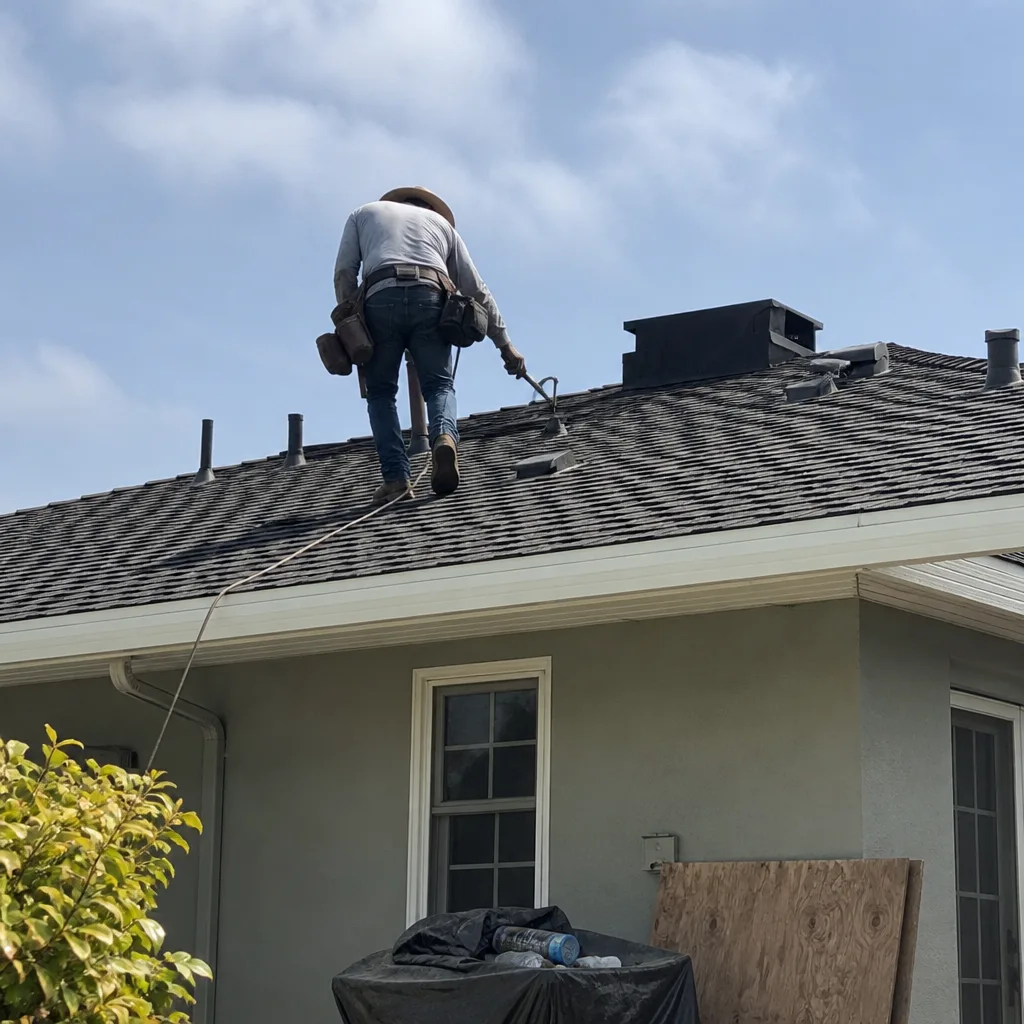
- Inspect each boot from the roof or with binoculars from the ground. On a polyurethane boot, look for hairline cracks radiating from the pipe collar, any sign that the rubber has shrunk away from the pipe, or a chalky, faded appearance that indicates the material has lost its flexibility.
- If you can safely access the attic, check for daylight around vent pipes. On a sunny day, any gap between the boot and the pipe will show as a sliver of light. That gap is a water entry point, even if it looks small.
- Replace polyurethane boots before year ten. If your Tustin home was built in the 1980s, 1990s, or 2000s and still has the original boots, assume they’re at or beyond the end of their service life. Replacement is a low-cost, same-day roof repair that costs a fraction of a roof deck replacement.
Roof Repair services are all we do, and this is the repair we do most in Tustin’s established neighborhoods. The fix is usually straightforward: remove the old boot, install a new one with proper sealant, and verify the flashing apron underneath is still sound. The cost is modest. The avoided damage isn’t.
Valley Metal Inspection: Eucalyptus, Pepper Trees, and Debris
Roof valleys are the channels where two roof slopes meet. On most Tustin homes, these valleys are lined with metal panels, typically galvanized steel or aluminum. Their job is to move water down and off the roof quickly. They do that job well unless debris blocks the flow.
Tustin’s mature tree canopy is a defining feature of neighborhoods like Old Town Tustin, Tustin Meadows, and the areas near Peters Canyon. Eucalyptus and pepper trees are common. Both species shed continuously, not just in fall. Eucalyptus bark strips are long, fibrous, and almost designed to snag on roof penetrations and valley metal. Pepper tree leaves are small and thin, which lets them slip under shingle edges and pack into valley seams. Over time, the debris forms a dam in the valley. Water backs up, rises above the valley metal’s edges, and runs sideways under the shingles or tile.
Maintenance steps for Tustin homeowners:
- Inspect valleys twice a year. Once in spring after the winter rains, once in late summer before the fall fire-season winds start dropping debris in larger volumes.
- Clear debris by hand or with a leaf blower, not a pressure washer. Pressure washing valley metal can peel protective coatings and drive water under the surrounding roofing material. Use a soft brush or a blower on low setting.
- Check for scratches, rust, and exposed fasteners. Valley metal in Tustin typically shows wear first at the lowest point where water concentrates. Look for rust blooms, especially on galvanized steel that’s lost its zinc layer.
- If you see rust, call before it becomes a leak. Valley metal replacement is a local roof repair that involves setting new metal into the valley and relaying the surrounding material. It’s much cheaper than repairing water damage in two rooms below the valley.
We inspect before we recommend. When we’re called to a Tustin home for a valley issue, the first thing we establish is whether the metal itself failed or the maintenance did. That distinction matters because it tells the homeowner whether the fix is a one-time repair or a habit change.
Assessing Concrete Tile Condition from the Ground
Concrete tile is the dominant roofing material on Tustin homes, particularly in the ranch-style neighborhoods developed from the 1960s through the 1990s. Tustin concrete tile holds up well to the inland climate, but it’s not indestructible. Impact damage, thermal cycling, and foot traffic all take a toll over decades.
You can assess most tile conditions from the ground with a pair of binoculars. Here’s what separates normal weathering from actual problems.
Normal weathering patterns:
- Surface efflorescence: white, chalky mineral deposits on the tile surface. Cosmetic only, not structural.
- Edge spalling: small chips along tile edges where the concrete has eroded slightly. Common on tile edges exposed to repeated wet-dry cycles. Not a leak risk unless the spalling removes more than a quarter of the tile’s surface.
- Color fading: UV light changes the appearance of tile coatings over thirty to fifty years. Purely aesthetic.
Problem patterns that warrant a roof inspection:
- Longitudinal cracks running the full length of a tile. These indicate the tile has failed structurally. A cracked tile in the field of the roof can still provide some water-shedding, but in a valley or at a penetration, it’s an active leak risk.
- Missing corners on tiles near roof edges or ridges. These are typically impact damage from falling branches or past foot traffic. At edges, a missing corner exposes the underlayment to UV and water.
- Sagging or visible deflection in the tile line. This is rarely the tile’s fault. It usually means the underlayment or decking below has moisture damage or the battens have failed. This condition calls for professional evaluation, not just re-setting a tile.
- Displaced tiles after a storm. A single shifted tile can break the water-shedding continuity of the whole slope. If water gets under the tile system, the felt underlayment is the last line of defense, and on older Tustin roofs, it may already be past its service life.
When we assess Tustin concrete tile roofs, we look at tile condition as one part of a system that includes underlayment, battens, flashings, and ventilation. Tile can look serviceable from the ground while the underlayment below has failed. That’s why we recommend an inspection before any repair or replacement commitment is made. The Roof Inspection in Yorba Linda process we follow gives homeowners the same objective baseline: a documented condition report before any financial decision.
For Tustin homeowners looking at tile roofs, one material point is worth noting. If tile replacement ever becomes necessary, brand access matters more than homeowners expect. Not all concrete tile is manufactured to the same dimensional tolerance. A tile from one manufacturer may not interlock correctly with a different brand’s profile. Companies like Boral produce tile in specific profiles that are widely spec’d in Southern California. Our access to multiple manufacturers means we can match the existing tile profile rather than telling a homeowner they need to replace the entire roof over a small repair. The right material for your roof means matching what’s on it, not what’s convenient to source.
The September – November Timing Window
There is a specific window each year when Tustin roof repair makes the most sense, and it’s not spring. It’s September through November.
Why this window?
1. The Pacific storm track activates in late fall. Southern California’s wet season runs roughly November through April. By late September, we’re usually two or three months out from the first significant rain event. That’s enough time to identify problems, schedule repair, and complete the work before the first storm, but not so much time that the roof degrades further while you wait.
2. Summer’s heat has already done its damage. The expansion and contraction cycles of Tustin’s summer, when roof surface temperatures swing fifty or sixty degrees between day and night, are what cause most component failures. Polyurethane pipe boots crack during summer. Sealant beads lose adhesion. Tile they may shift due to thermal movement. By September, the damage is done and visible.
3. Early fall weather is ideal for installation and sealant curing. Most roofing sealants, adhesives, and some membrane products cure best between 50 and 80 degrees with low humidity. Tustin’s October and November daytime temperatures sit right in that range. Work done in this window achieves better adhesion than work done in the heat of July or the cool of January.
4. Contractor availability in October is better than in January. Emergency roof leak calls spike during the first heavy rain of the season. By December and January, every roofing contractor in Orange County is booked with urgent repairs. The homeowner who schedules a maintenance inspection in October gets attention and deliberate work. The homeowner who waits until a January storm exposes a pipe boot leak is one of fifty calls that week.
Our recommendation for Tustin homeowners: put a recurring calendar reminder on the last week of September. Walk the checklist in this guide. If you find anything questionable, call for the inspection then, before the rain does the inspecting for you.
Documentation Habits That Protect Insurance Claims
Every homeowner’s insurance policy includes an expectation that the homeowner maintains the property. When a roof leak claim is filed, the adjuster’s first question is often whether the damage resulted from a covered peril like a windstorm or from deferred maintenance. If the damage is judged to be the result of neglect, the claim may be denied or reduced.
Documentation is the homeowner’s best defense. Here’s the habit set we recommend for Tustin homeowners:
- Keep a simple maintenance log. A three-ring binder or a notes file works. Log the date of every roof inspection, every repair, every cleaning, and every professional assessment. Include what was found and what was done.
- Take photos every time you or a contractor accesses the roof. Date-stamped photos before and after maintenance create an evidence trail. A photo of good valley conditions in September is powerful documentation if a claim is filed in February.
- Save every invoice and work order. Even minor repairs are evidence of maintenance. A $400 pipe boot replacement receipt from 2023 is proof the homeowner was maintaining the roof in 2023, which makes a 2025 claim stronger.
- Get a professional inspection report before major storms. An inspection from a roofing contractor creates a dated, independent condition assessment. If a wind event damages the roof later, you have baseline documentation of the roof’s pre-storm condition.
- Note the date and circumstances of any storm event that may have caused damage. Insurance policies typically cover sudden, accidental damage from specific events. Writing down “January 9, heavy wind, tree branch fell on northeast corner of roof” at the time makes the eventual claim far cleaner.
For homes in Tustin’s established neighborhoods, this documentation habit matters more because the homes are older. A homeowner with a thirty-year-old roof and no maintenance records is a weak position against an adjuster arguing deferred maintenance. The same roof with ten years of logged inspections and repairs tells a different story. We’ve seen this play out in claims discussions. The paperwork makes the difference. This is also why we inspect before we recommend: the inspection report creates a baseline that protects the homeowner’s financial interests, whether or not any repair is ever needed.
Gutter and Downspout Maintenance in Tustin’s Microclimate
Gutters and downspouts aren’t technically part of the roof, but they’re inseparable from roof performance in Tustin. The inland microclimate produces long dry stretches punctuated by short, intense rain bursts. When rain comes, it comes hard. A clogged gutter in that scenario doesn’t just overflow; it sends water over the fascia and into the soffit, eaves, and wall assemblies.
Tustin-specific gutter maintenance checklist:
- Clean gutters twice a year minimum. Do it once in late fall after most leaf drop and once in late spring after the pepper trees’ heaviest shedding period.
- Inspect gutter spikes and hangers. The weight of wet debris can pull gutters away from the roofline. Check that gutters are still pitched toward downspouts.
- Check downspout discharge points. In Tustin, many homes direct downspouts onto pavers or planters. Make sure water flows away from the foundation. Downspout extensions are a cheap fix for the erosion and foundation issues we see in older neighborhoods.
- Watch for eucalyptus debris in gutters. Eucalyptus leaves are small enough to slip through many gutter guards, but they pack tightly when wet. A gutter that looks clear from the ground may have a dense mat of compacted leaves inside.
Gutter maintenance is one of those tasks homeowners either keep up with or forget entirely. The homes that forget are the ones where we find rotted fascia boards and damaged soffit framing when a leak is finally noticed. For more on how repairs fit into a broader roof care strategy, see the Roof Repair in Yorba Linda page, which covers the same inspection-first philosophy we apply here in Tustin.
Attic Inspection After Rain: What to Look For
The attic is the best diagnostic tool a Tustin homeowner has and the least used. After any rain event, a quick attic inspection reveals leaks that haven’t yet shown up on the ceiling. Here’s how to use it.
Timing: Check the attic twelve to twenty-four hours after the rain stops. That gives water time to migrate through the roof assembly but not enough time for the evidence to dry.
What to look for:
- Wet or stained insulation. Dark spots on fiberglass or cellulose insulation indicate water intrusion. Touch is the test: dry insulation feels fluffy, wet insulation feels heavy and compacted.
- Water stains on rafters or decking. Look for dark streaks, water rings, or a darkening of the wood. Fresh leaks have soft, damp wood. Older leaks leave a crystallized residue or a visible stain line.
- Rust on metal fasteners or nail heads. Rusted roof nails protruding through the decking indicate moisture has been present, even if the leak has since dried.
- Daylight visible through the decking. On a bright day, pinpricks of light through gaps in the roof deck are direct evidence that water has a path from the roof surface to the attic. This is especially common at pipe penetrations where boots have failed.
- Mold or mildew odor. A musty attic smell that persists after rain suggests chronic moisture exposure, even if no active leak is visible.
One Tustin-specific quirk: many homes built in the 1970s and 1980s have minimal attic ventilation. The ceiling of a Tustin attic in August can reach well past 130 degrees. That heat bakes the underside of the roof deck, reducing the wood’s resilience over decades. It also makes attic inspections in summer uncomfortable, which is one reason they don’t happen. The fall and winter months are the practical time to get into the attic. Bring a flashlight and a good dust mask.
Common Mistakes to Avoid
- Waiting for a leak to appear before acting. By the time water shows up on a Tustin ceiling, it has usually already saturated the decking, insulation, and possibly the drywall. A roof that shows no interior signs may still have active component failures.
- Pressure washing concrete tile. A pressure washer directs water under the tile, damaging the underlayment. It also erodes tile surface coatings. Use a gentle rinse or better yet, nothing but inspection and hand-clearing.
- Sealing over cracked pipe boots instead of replacing them. Sealant does not bond reliably to degraded polyurethane. A cracked boot needs replacement, not topping. Delaying the replacement by a year is gambling against rain.
- Ignoring valleys until water backs up. Valley debris accumulation is a maintenance item, not a repair item. Twice-yearly clearing prevents the sideways water intrusion that causes expensive interior damage.
- Assuming concrete tile means a maintenance-free roof. Tile sheds water, but the underlayment below it is the actual waterproof barrier. Underlayment degrades on its own timeline, and older Tustin roofs may have underlayment that’s past its service life even if the tile looks fine.
- Filing a claim without documentation. A denied claim due to alleged deferred maintenance is far harder to appeal after the fact than an initial claim with a maintenance log attached. Document before you need it.
- Using a general contractor for roof work by default. Roofing failures have specific causes and specific solutions. A specialist sees the pattern in minutes that a generalist may miss. Repair when repair is right, replace when replace is right, but start with someone whose only trade is the roof.
When to Call a Professional
Some roof conditions are safe to observe and document from the ground. Others require a professional. Call a roofing contractor if you see: cracked or displaced concrete tiles near roof penetrations or valleys; any sign of water staining on ceilings or walls after rain; rust or visible deterioration on valley metal; pipe boots that are chalky, cracking, or shrunk away from the pipe; sagging in any roof plane; or evidence in the attic of ongoing moisture. If you’re not comfortable walking the roof itself, don’t. A ground-level inspection with binoculars catches most component failures, and a professional inspection catches what binoculars miss.
Bellwether Roof Repair offers free estimates in Tustin. Call (833) 824-0047 to schedule an inspection or discuss any of the items on this checklist. We inspect before we recommend, and we’ll give you a straight answer about what the roof needs, whether that’s a same-day repair or simply a documented baseline for next year.
Frequently Asked Questions
Twice a year is the practical minimum for Tustin homeowners: once in spring after the wet season ends and once in September or October before the next wet season begins. The fall inspection is the more important of the two because it gives you the window to make repairs before the Pacific storm track activates. If you only do one inspection per year, make it the fall one.
Roof repair costs in Tustin vary by component and extent. Minor fixes like a pipe boot replacement or a small flashing repair typically run $250 to $600. Valley metal replacement or a localized underlayment repair may run $800 to $2,500 depending on access and the surrounding material. Larger repairs that involve decking replacement or multiple roof penetrations can exceed $3,000. The most accurate way to understand pricing for your specific roof is to have a contractor inspect it. Bellwether Roof Repair provides free estimates. Call (833) 824-0047 to schedule yours.
Yes. On Tustin concrete tile roofs, leaks frequently occur with no visible tile damage at all. The tile is the first layer of water-shedding, but the underlayment below is what actually keeps water out. Underlayment fails on its own timeline, typically twenty-five to forty years depending on material and install conditions. Flashing failures at pipe penetrations, chimneys, and walls also cause leaks with intact tile everywhere else. If you have an unexplained leak on a tile roof, the tile condition tells you very little. An inspection is the diagnostic step.
The optimal repair window for Tustin is September through November. By late September, the summer’s heat has already done its annual damage to sealants, pipe boots, and underlayment, so existing problems are visible. The weather in October and November is mild enough for sealants and adhesives to cure properly. And scheduling in fall means repairs are complete before the winter rain season, when roofing contractors are overwhelmed with emergency leak calls. Call (833) 824-0047 in September or October and you’ll be ahead of the storm track.
Pipe boot flashings fail at a predictably high rate on Tustin homes because of the material and the climate. Most Tustin homes built from the 1980s through the 2000s used polyurethane pipe boots. Polyurethane degrades under intense UV exposure and high surface temperatures, both of which Tustin summers supply in abundance. The material cracks and shrinks around year seven or eight and has typically failed by year ten to twelve. Because Tustin gets only a handful of heavy rain events per year, these failures often go unnoticed for two to four years, leaking only during the brief storms. If your home is in that age range and the boots are original, replacement is overdue.
Generally no. Homeowners insurance covers sudden, accidental damage from covered perils like wind, hail, or a fallen tree. It does not cover damage that results from gradual deterioration or deferred maintenance. A roof that leaks because a pipe boot degraded over ten years is a maintenance issue, not an insurance claim. This is why the documentation habits in this guide matter: a homeowner with dated inspection reports and maintenance receipts has a much stronger position if an adjuster questions whether damage was sudden or gradual.
The Bottom Line
The Tustin roof maintenance checklist boils down to five actions: inspect pipe boots and replace any polyurethane boot past year eight; clear and inspect valley metal twice a year; learn the difference between normal concrete tile weathering and actual failure; schedule any needed repair in the September-to-November window; and document everything. The roof on a Tustin home is a system, not a surface, and the failure that costs $4,000 usually started as a $14 component that wasn’t checked. Roofing is all we do at Bellwether. We work across seven manufacturers including IKO and Atlas so we can pair the right product with the right application, and we inspect before we recommend so you never pay for work the roof doesn’t need. For a roof repair, replacement, or inspection in Tustin, call (833) 824-0047. Estimates are free. For more on our approach, start at Bellwether Roof Repair home, or see our Roof Replacement in Yorba Linda page for how we apply the same inspection-first standard to full replacements.
Written by the team at Bellwether Roof Repair, serving Tustin since 2018. Explore more guides & resources on our blog.
See the difference
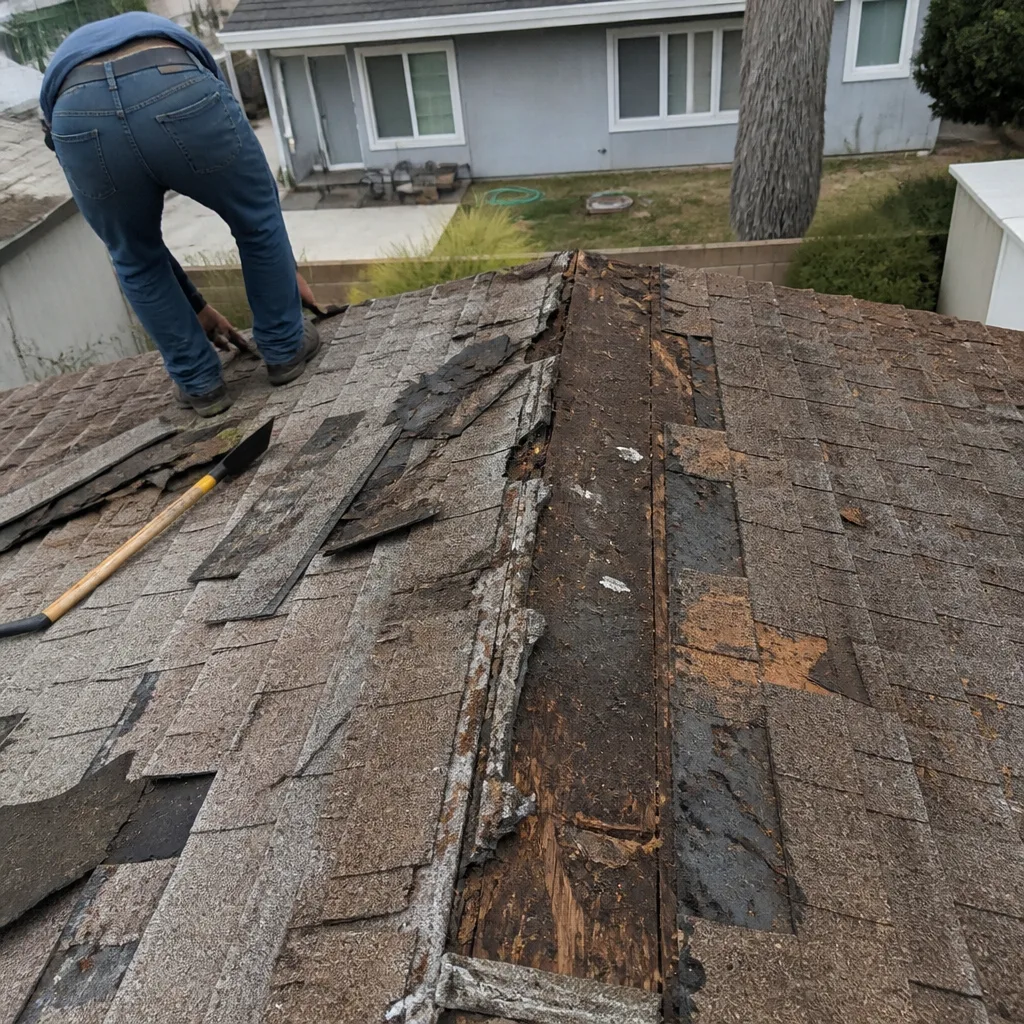 Before
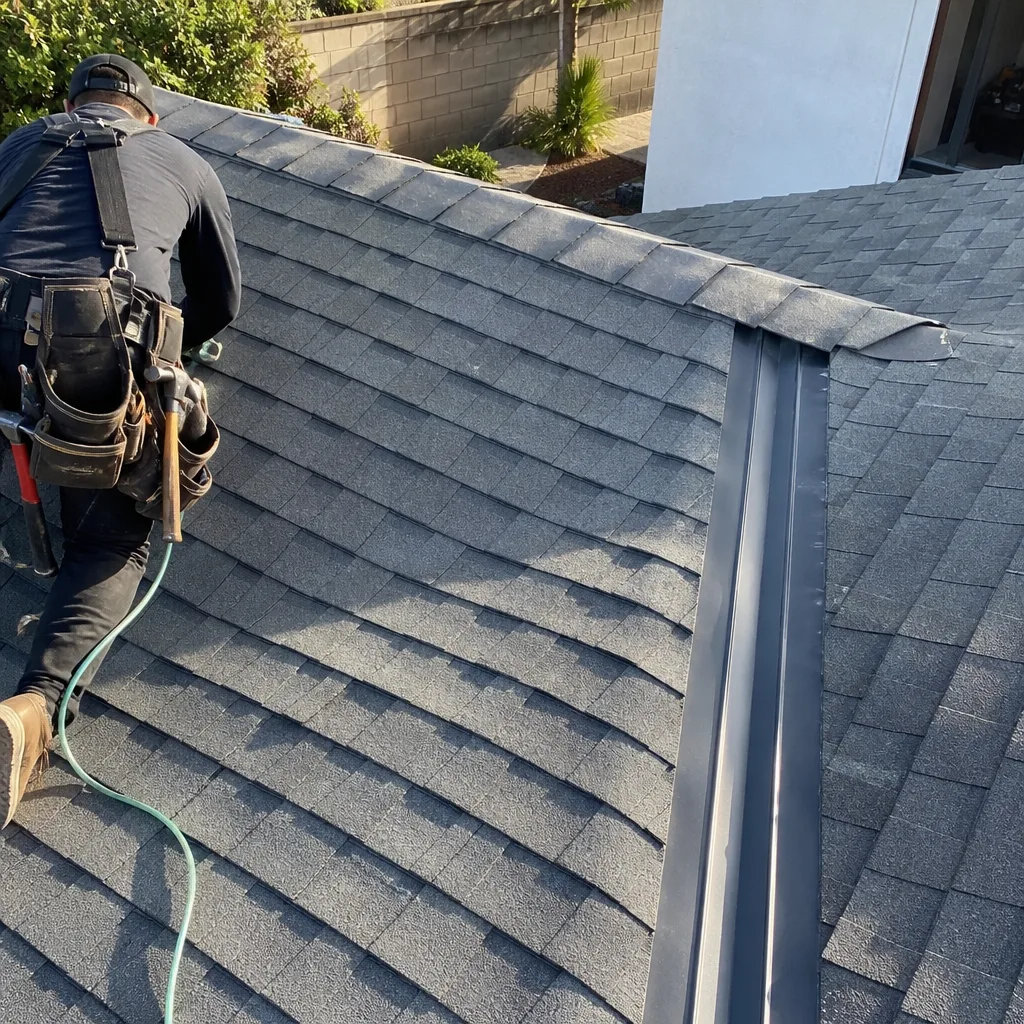 After
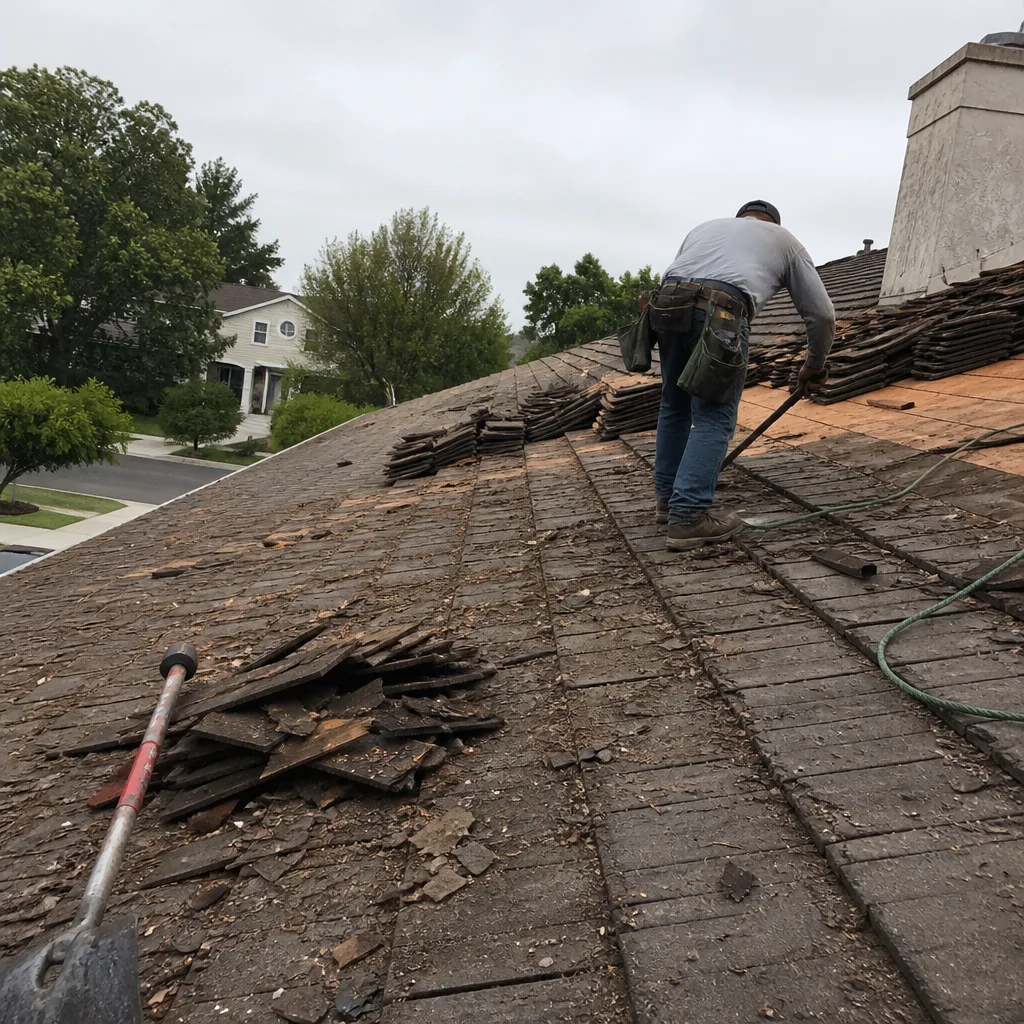 Before
 After
 Before
 After