
Last updated October 31, 2026
 Metal roofing
 Architectural shingles
 Tile roofing
 GAF
 Owens Corning
 Flat & low-slope
Free roof inspection with deck photos before we talk money - GAF and Owens Corning certified installation
Roofing Warning Signs: A Tustin Homeowner’s Reference Guide
Granule loss in a gutter is usually listed as a warning sign, and that’s true. But the *pattern* of that loss tells you more than the loss itself ever will. Uniform light shedding across a north slope is normal aging. Concentrated dark mineral deposits under one valley can mean you have months, not years, before a leak opens through the mat. Most roofing guides skip the pattern because pattern-reading requires time on actual Tustin roofs, looking at how our specific sun angles and heat cycles break down asphalt, concrete tile, and flashing systems in sequence. For a broader overview, see our The Complete Guide to Roofing in Tustin. This guide is organized around the warning signs Tustin homeowners spot early but misread for one to three years, the exact window when an inexpensive repair turns into a five-figure replacement. You’ll learn how to read granule loss, map interior stains back to exterior roof zones, catch chimney flashing failure before water enters the living space, and recognize the tipping point where repair stops making economic sense.
Quick Answer
The most expensive roofing damage in Tustin starts as subtle, chronically misread signs: concentrated granule deposits under a single valley, rafter staining that follows a 14-degree angle, efflorescence blooming on chimney brick, and hairline cracks running perpendicular across concrete tiles. Tustin’s UV exposure, summer attic temperatures that routinely exceed 140°F, and the marine-layer-to-heat-cycle pattern accelerate these failures faster than generic guides suggest. If you see any of these signs, get a roof inspection before the next rainy season. Bellwether Roof Repair offers free estimates in Tustin. Call (833) 824-0047.
Styles & brands we work with
Table of Contents
- Granule Loss Patterns: What Your Gutters Are Actually Telling You
- Attic Warning Signs: Mapping Interior Damage to Exterior Roof Zones
- Chimney Flashing Failure: Efflorescence and Mortar Joint Cracking
- Early Concrete Tile Failure in Tustin’s Heat Cycle
- Repair vs. Replace: The Tipping-Point Indicators
- Common Mistakes to Avoid
- When to Call a Professional
- Frequently Asked Questions
Granule Loss Patterns: What Your Gutters Are Actually Telling You
Asphalt shingles shed granules from the day they’re installed. The question is never whether you’re losing granules, but whether the loss is uniform, concentrated, or accelerating beyond what the shingle’s age would predict. In Tustin, where UV index routinely hits 10 and 11 through summer, granule loss runs faster on south-facing and west-facing slopes than on north-facing ones. That’s expected. What’s not expected, and what most guides miss entirely, is the difference between scattered granules and granule slurry.
Scattered granules in your gutter look like light salt-and-pepper sprinkling across the trough. They’re mixed with dirt, leaf debris, and small twigs. This is normal weathering. The shingle is shedding its outermost layer of loose ceramic-coated granules that never fully bonded during manufacturing. Most shingles shed 2-5% of their surface granules in the first year alone, and the rate levels off after that. In Tustin, that first-year shed tends to be slightly higher due to thermal expansion cycling between cool marine-layer mornings and 95°F-plus afternoons. Scattered granules, by themselves, signal nothing urgent.
Granule slurry is different. You’ll see it as a dark, concentrated line of mineral material in the gutter directly beneath a valley, a wall intersection, or a skylight. When you run your finger through it, it feels like coarse sand at the bottom of a riverbed, not individual granules scattered on leaf surfaces. Slurry forms when water is channeling across the roof and carrying granules with it. That channelization means a concentrated water path already exists. The shingle mat is losing its UV protective layer along that exact line. In our experience on Tustin roofs, a slurry line under a valley means the shingles feeding that valley have already lost 60-80% of their protective granule layer. You typically have one rainy season, sometimes two, before the underlying fiberglass mat begins to degrade and water intrudes.
The slope location matters too. South and west slopes in Tustin get the most intense UV hours, particularly between 10 a.m. and 3 p.m. from May through September. When you see granule loss concentrated on those slopes, you’re likely seeing accelerated UV degradation rather than manufacturing defect. If the north slope shows similar wear, you may have a ventilation problem, because north slopes in Southern California should age more slowly. A north slope that’s weathering at the same rate as the south side tells you attic heat is attacking the shingle from underneath. We’ll get into that more in the attic section below.
When we inspect roofs in Tustin’s older neighborhoods like Tustin Meadows or the areas around Bryan Avenue, we often find gutters that haven’t been cleaned in two or three years. For a full maintenance schedule, read our Seasonal Roofing Care for Tustin: Year-Round Homeowner’s Guide. The debris accumulates, traps moisture against the gutter lip, and accelerates shingle edge deterioration. But even a clean gutter can reveal slurry lines. Read the pattern before you conclude the roof is fine.
Attic Warning Signs: Mapping Interior Damage to Exterior Roof Zones
Most Tustin homeowners never go into their attic until a ceiling stain appears. By then, water has already penetrated the roof deck, saturated insulation, and begun wicking along framing members. The attic warning signs below are visible for months, sometimes years, before drywall ever shows a spot. Learning to read them is the highest-ROI roof maintenance habit in our trade.
Start with staining patterns on rafters and sheathing. Dark stains that follow a straight vertical line down a rafter usually indicate a leak at a roof penetration above: a pipe boot, an attic vent, or a satellite dish mount. Water runs down the rafter because gravity. The stain widens where the rafter contacts the sheathing, then narrows again where the rafter meets the ceiling joist. When we see this in Tustin attics, the culprit is typically a cracked pipe boot on a south-facing slope. The rubber collar around plumbing vents degrades from UV exposure, splits at the seams, and allows water to track down the pipe and onto the nearest rafter.
Stains that follow a horizontal line across the underside of the sheathing, particularly in a row of panels, usually point to a different problem: a valley failure. Valleys collect water from two roof planes and funnel it down a concentrated channel. When valley metal or valley flashing corrodes or separates, water spreads sideways under the shingles, and the staining appears horizontally across the sheathing panels. In our inspection process, we map these horizontal stain lines back to the exterior valley location using measurements from the ridge and gable ends. That mapping tells us which valley needs replacement before we recommend anything else.
Then there’s insulation compression. When insulation gets wet, it loses its loft. A compressed, matted patch of fiberglass batting in a Tustin attic is not a sign that someone stepped on it. It’s a sign that water has been dripping onto that exact spot, saturating the batting, and weight plus moisture has flattened it. The area directly above the compressed insulation is your leak zone. Look up. If the sheathing above it shows dark discoloration, you’ve confirmed the water path.
Rafter discoloration without obvious staining deserves attention too. In Tustin attics with poor ventilation, rafter tops near the ridge can develop a grayish-dark appearance from sustained high heat and humidity. This isn’t water intrusion; it’s thermal stress. But it tells you the attic is not breathing. Stacked heat weakens shingle underlayment from below and can reduce shingle service life by 20-30%. A roofing inspection that evaluates attic ventilation, not just surface shingle condition, is the only way to catch this before it shortens your roof’s lifespan.
Chimney Flashing Failure: Efflorescence and Mortar Joint Cracking
Before any water enters the living space around a Tustin chimney, two things happen on the exterior: efflorescence blooms on the brick face, and mortar joints develop vertical or diagonal cracks at specific stress points. Both get ignored because neither looks urgent. Both are early-stage flashing failure signals.
Efflorescence is the white, chalky mineral deposit that appears on chimney brick. It forms when water migrates through the masonry, dissolves salts inside the brick and mortar, carries them to the surface, and evaporates, leaving the salts behind. In Tustin’s cycle of damp marine mornings and hot dry afternoons, efflorescence cycles in visible waves. It may appear after a rainy January, fade in the dry summer, then bloom again the following winter. Homeowners assume it’s cosmetic. What it actually tells you is that water is entering the chimney system somewhere above and moving through the masonry.
The entry point is almost always flashing. Base flashing and counterflashing are the layered metal joints where the chimney meets the roof surface. Step flashing runs up each side of the chimney, counterflashing is set into the mortar joints, and apron flashing directs water down the slope. When any of these layers separate, lift, or corrode, water gets behind them and soaks into the brick. Over time, that water dissolves the mortar’s binding lime, which then recrystallizes as efflorescence on the surface. The white bloom you’re seeing is the mortar’s structural material leaving the system.
Mortar joint cracking follows the same cause. A chimney in Tustin expands and contracts daily. The south face heats more than the north. The cap cools faster than the body. The metal flashing expands at a different rate than the brick. Over 15 to 20 years, those differential movements open hairline cracks in the mortar at the base corners of the chimney, right where the flashing is supposed to seal. Once a crack runs through a joint that’s holding counterflashing, the flashing loses its mechanical grip. Now you have two problems: compromised flashing and fractured masonry, both feeding water into the system.
The fix before water enters the living space is straightforward: remove the old flashing, repoint the cracked mortar joints, install new base and counterflashing with proper step wedges, and seal the transitions. Waiting until you see a ceiling stain below the chimney means the water has traveled through the roof deck, insulation, and drywall, and you’re now looking at deck repair, mold remediation, and possibly framing replacement. A roof inspection that includes chimney flashing evaluation is the way to catch this early.
Early Concrete Tile Failure in Tustin’s Heat Cycle
Concrete tile roofs in Tustin handle UV better than asphalt shingles, but they fail differently, and the early failure signs are subtle enough that most homeowners don’t recognize them until a tile breaks underfoot. You never walk a concrete tile roof without a trained roofer who knows how to distribute weight across the tiles, so your primary warning sign comes from what you can see from the ground or from a ladder at the eaves.
The first thing to understand about Tustin’s heat cycle is that concrete tile expands and contracts more dramatically here than in cooler coastal climates. Our summer daytime highs regularly exceed 90°F, and our nighttime lows can dip into the 50s in summer. That’s a 40-degree swing, and the tile surface in direct sun gets hotter than the air. A dark-colored concrete tile can reach 140°F on a July afternoon, then cool to 60°F by 2 a.m. That 80-degree cycle, repeated daily for decades, creates thermal stress fractures.
Hairline cracks running perpendicular to the tile’s long axis, visible from the ground as fine dark lines, are the earliest sign. They typically appear first on south-facing and west-facing slopes, the same slopes that show accelerated shingle wear. A single hairline crack in a single tile is not an emergency. But it’s a signal. Water is already getting into that crack during rain, and in the winter, when temperatures drop toward freezing (yes, Tustin does get occasional frost mornings), that water expands and widens the crack. We recommend monitoring hairline cracks for one season, but only after a roofer has confirmed on the roof that the crack hasn’t already compromised the tile’s structural integrity. Some hairline cracks are surface-level only; some go through the tile’s full cross-section. You can’t tell from the ground.
Delamination is different. You’ll see it as a flaking, peeling, or spalling surface on the tile face, often in patches rather than linear cracks. Delamination means the cement binder in the tile is breaking down and the aggregate is separating from the surface. Once delamination starts, the tile has lost its water-shedding surface. Water soaks into the tile body, and the tile becomes heavier, more brittle, and more prone to catastrophic fracture. In Tustin’s heat, delamination accelerates because the surface layer heats and cools faster than the tile’s core, creating shear stress at the interface. This requires replacement of the affected tiles; monitoring is no longer appropriate.
Color fade is the least urgent signal but still a signal. Concrete tiles lose pigment through UV exposure and surface erosion. A tile that’s significantly lighter than it was when installed, with no cracking and no delamination, is still structurally sound. But it’s wearing. Its water resistance is diminishing as the surface erodes. And if you have a tile roof that’s faded unevenly, with south and west slopes lighter than the rest, that’s evidence the most exposed tiles are aging faster than the protected ones. No immediate action is required for color fade alone, but it tells you the roof is entering the second half of its life. Plan accordingly.
If you’re in one of Tustin’s concrete tile neighborhoods, particularly the developments from the 1980s and 1990s that used lighter-weight tile systems, and you’re seeing any combination of these signs, have the roof evaluated. The brands we install, including Boral and Eagle tile systems where applicable, are selected based on what the home’s existing structure and exposure actually require, not what a manufacturer quota dictates. Learn more in our Choosing the Right Roofing Brand: A Buyer’s Guide for Tustin.
Repair vs. Replace: The Tipping-Point Indicators Contractors Rarely Volunteer
Every roofing contractor in Tustin can tell you when a roof is visibly failed. Fewer can tell you when a roof has crossed the line from repairable to economically non-repairable, because that conversation risks losing the repair job. We’ll have it anyway.
Here’s the framework. A warning sign calls for repair when: the underlying roof deck is sound, the failure is localized to a single zone or component, and the remaining service life of the surrounding materials is at least five years. A warning sign signals replacement when: the deck is compromised in multiple areas, the failure is systemic across multiple slopes, or the cost of repairing the current failure plus the predictable failures over the next three years exceeds 40% of the cost of a new roof.
Those tipping-point indicators are measurable. Here’s what they look like in Tustin:
- Brittleness test on shingle tabs. When a shingle loses its granule layer and the underlying asphalt has been exposed to Tustin UV for two or more summers, the shingle mat turns brittle. A roofer lifts a shingle tab. If it cracks rather than flexes, the shingles on that slope have lost their elasticity. You can patch individual shingles, but the surrounding shingles will continue to crack with every wind event. Repair becomes whack-a-mole.
- Multiple valley slurry lines. One valley with granule slurry means a localized failure. Two or more valleys showing slurry lines mean the roof’s water-channeling system is failing across the structure. Replacing two valleys out of four, plus the shingles feeding each valley, typically costs 50-60% of what it would cost to replace the entire field. You’re better off replacing.
- Deck rot discovered during a repair. When a roofer cuts back shingles to replace a valley or flashing and finds soft, dark, or delaminating plywood, that’s a structural failure, not just a surface failure. If the deck rot extends more than one rafter bay beyond the repair zone, you’re looking at deck replacement. At that point, the roof is no longer a water-shedding system; it’s a structural problem with a shingle covering.
- Flashing that’s been re-sealed more than twice. Flashing that fails once is normal aging. Flashing that fails a second time in the same spot tells you the underlying problem wasn’t fully addressed, or the surrounding materials are shifting. If a previous contractor re-sealed your chimney or skylight flashing and it’s leaking again within three years, stop patching. The flashing system needs full removal and reinstallation, and if the surrounding shingles or tiles are also at end-of-life, you’re at the replace threshold.
We repair when repair is right and we replace when replace is right. The difference between us and a contractor who sells one or the other exclusively is that we have no financial incentive to push you toward replacement. Our roof repair service and roof replacement service are both part of the same business because roofs have life cycles, and your roof is at whatever point in its cycle it’s at. We inspect before we recommend, so you’ll know exactly which side of the line you’re on.
Common Mistakes to Avoid
- Ignoring the first slurry line. We’ve seen Tustin homeowners rationalize granule buildup under a valley as “the gutter just needs cleaning.” By the time the ceiling stain appears, the deck beneath that valley has been wet for months. One slurry line is an inexpensive repair. Two is a roof replacement conversation.
- Painting over efflorescence. Sealing or painting chimney brick to hide the white bloom traps moisture inside the masonry and accelerates mortar degradation. The efflorescence is a symptom. The flashing failure is the disease. Fix the flashing, then clean the brick.
- Replacing individual cracked concrete tiles without checking the underlayment. A cracked tile lets water through, but the underlayment below it is the actual waterproof layer. If that underlayment is original to a 1990s Tustin tile roof, it may already be degraded. Replacing the tile hides the problem; it doesn’t fix it.
- Using sealant as a flashing repair. Caulk and roofing mastic applied over failing flashing lasts 12 to 18 months in Tustin’s heat before UV breaks it down. What looks like a $40 fix turns into a $700 flashing replacement plus whatever water damage accumulated during the diy fix period.
- Skipping the attic during a roof evaluation. Any roofer who quotes you a roof repair or replacement without going into the attic is guessing. The attic tells the story the roof surface can’t. If a contractor’s evaluation is exterior-only, get a second opinion.
- Waiting for the “right time” to inspect. The right time to inspect a Tustin roof is before the winter rains, not during a leak, and not in the spring after the damage is done. September and October are ideal. Attics are cooler, the roof is dry, and you have time to make a decision before the first storm.
- Assuming new homes don’t need inspection. Tustin has new development, and new roofs do fail. Installation defects, incorrectly flashed penetrations, and improperly seated pipe boots show up within the first two years. A new roof is not an excuse to skip vigilance.
When to Call a Professional
Call a roofer when you see granule slurry concentrated under a valley or along a wall line, when your attic shows rafter staining or compressed insulation that you can’t explain, when your chimney brick develops white efflorescence that returns after rain, or when your concrete tiles show anything beyond isolated hairline cracking. You should also call if your roof is over 12 years old and you’ve never had it evaluated by a roofing-only contractor. Most of what we’ve described above is visible to a homeowner who knows what to look for, but confirming the severity requires trained eyes and sometimes a ladder. Bellwether Roof Repair offers free estimates in Tustin. Call (833) 824-0047 to schedule yours. We inspect before we recommend, so you’ll know exactly what you’re dealing with.
Frequently Asked Questions
Scattered granules mixed with leaf debris across the full gutter length are normal weathering. Concentrated dark mineral slurry beneath a valley or wall line means water is channeling across a specific path and carrying the shingle’s protective layer away. That’s a warning sign. Call (833) 824-0047 for an inspection; estimates are free.
You’ll see dark stains running vertically down a rafter (usually from a penetration leak like a pipe boot) or horizontally across sheathing panels (usually from a valley failure). Wet insulation compresses and mats down. The area directly above those stains is your leak zone on the roof surface above.
Yes. Efflorescence means water is moving through the chimney masonry, and in most Tustin homes, the water entry point is failed base or counterflashing where the chimney meets the roof. Treating the efflorescence without addressing the flashing will not solve the problem.
Minor repairs like a single pipe boot replacement or a small flashing re-seal typically run $300 to $600. Valley replacement or larger flashing repairs run $600 to $1,500. Deck repair or multiple-zone repairs go higher. These ranges vary by roof type and access. Call (833) 824-0047 for an exact quote based on your roof; the estimate is free.
We don’t recommend it. Concrete tiles crack under point loads when walked incorrectly, and the tiles themselves may already be compromised. A trained roofer knows how to distribute weight using the tile’s centerline and can identify cracks that are only visible from on the roof. The visual inspection from the ground is your job.
Every two to three years for a roof under 10 years old, and annually for a roof over 15 years old. Tustin’s UV exposure and summer attic heat accelerate wear faster than the national average, so the interval matters more here than in other climates. For a more detailed breakdown, see our Bellwether Roof Repair home page and the inspection details on our Roof Inspection in Yorba Linda page.
The Bottom Line
The warning signs that cost Tustin homeowners the most money are the ones that look minor: granule slurry under one valley, a white bloom on chimney brick, a hairline crack in a south-facing tile, a compressed patch of attic insulation. Each one, read correctly, tells you exactly where the roof is failing and how much time you have to act. Read incorrectly, each one becomes a structural problem over one to three years. The pattern matters more than the presence. The attic matters as much as the surface. And the repair-versus-replace decision should be made on measurable indicators, not contractor incentive. If you’re seeing any of the signs in this guide, start with an inspection. Bellwether Roof Repair serves Tustin with roofing repair, replacement, and inspection, and we inspect before we recommend. Call (833) 824-0047 to schedule your free estimate.
Written by the team at Bellwether Roof Repair, serving Tustin since 2018. Explore more guides & resources on our blog.
See the difference
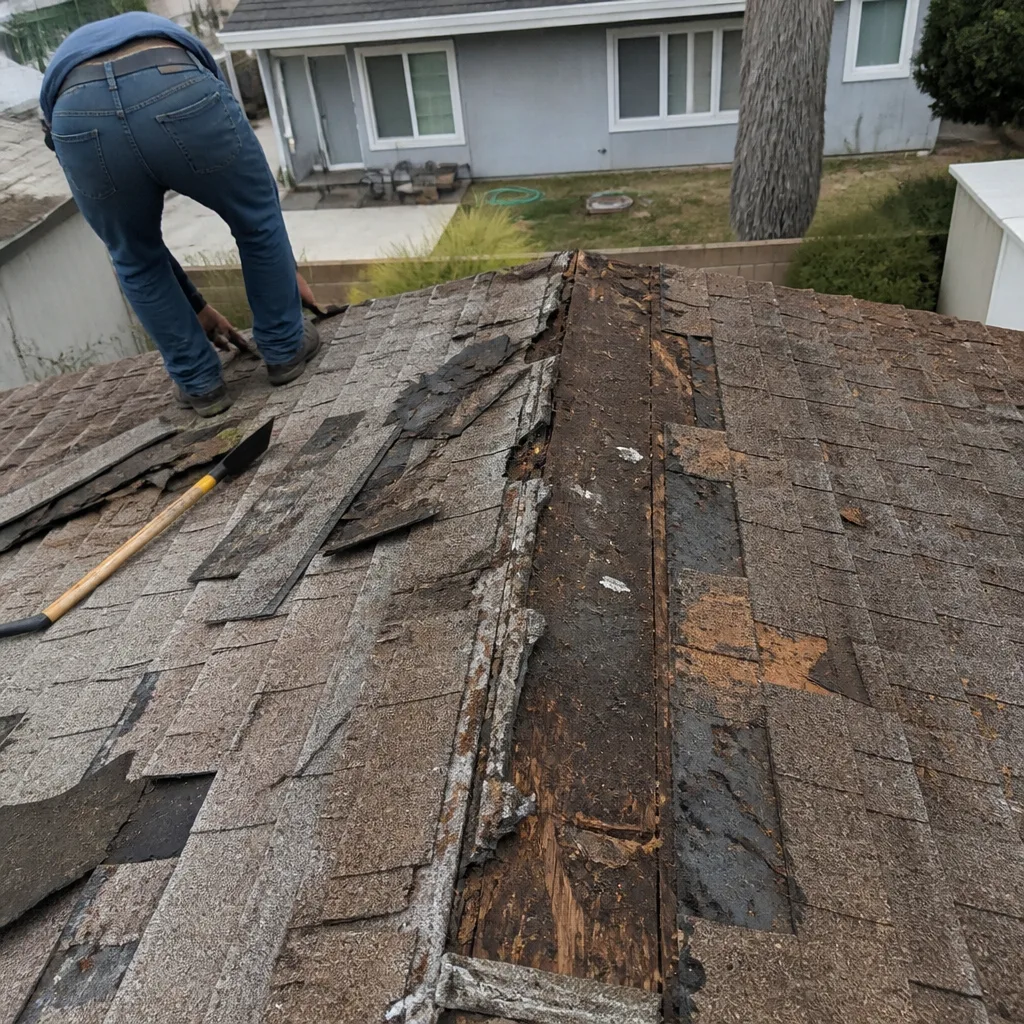 Before
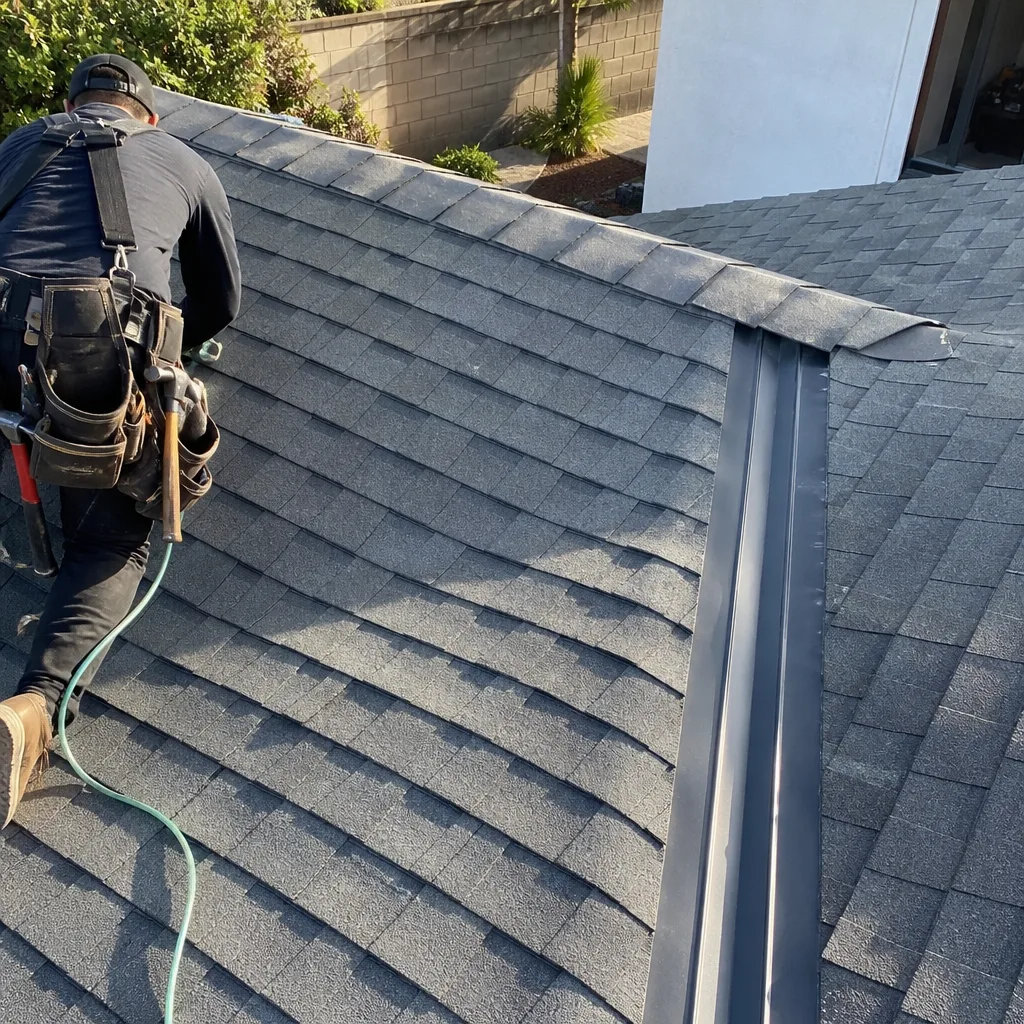 After
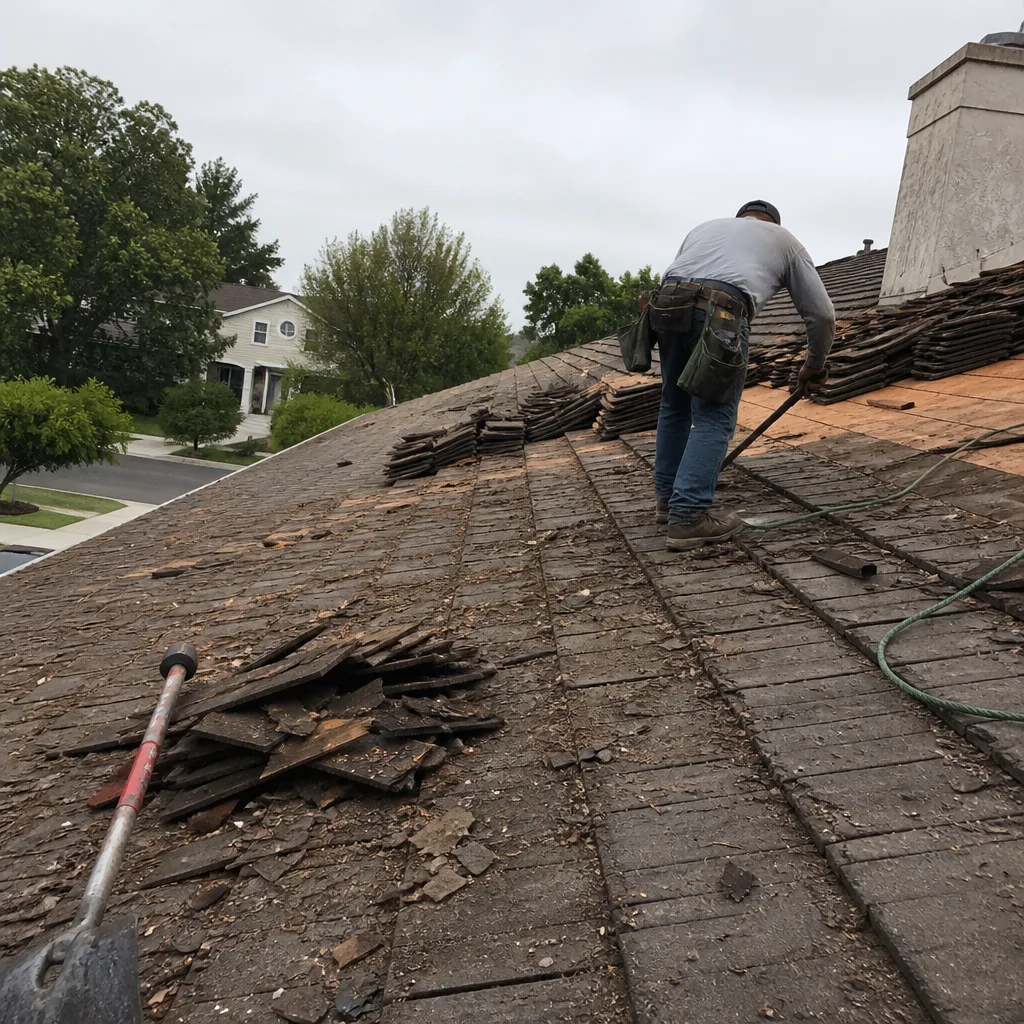 Before
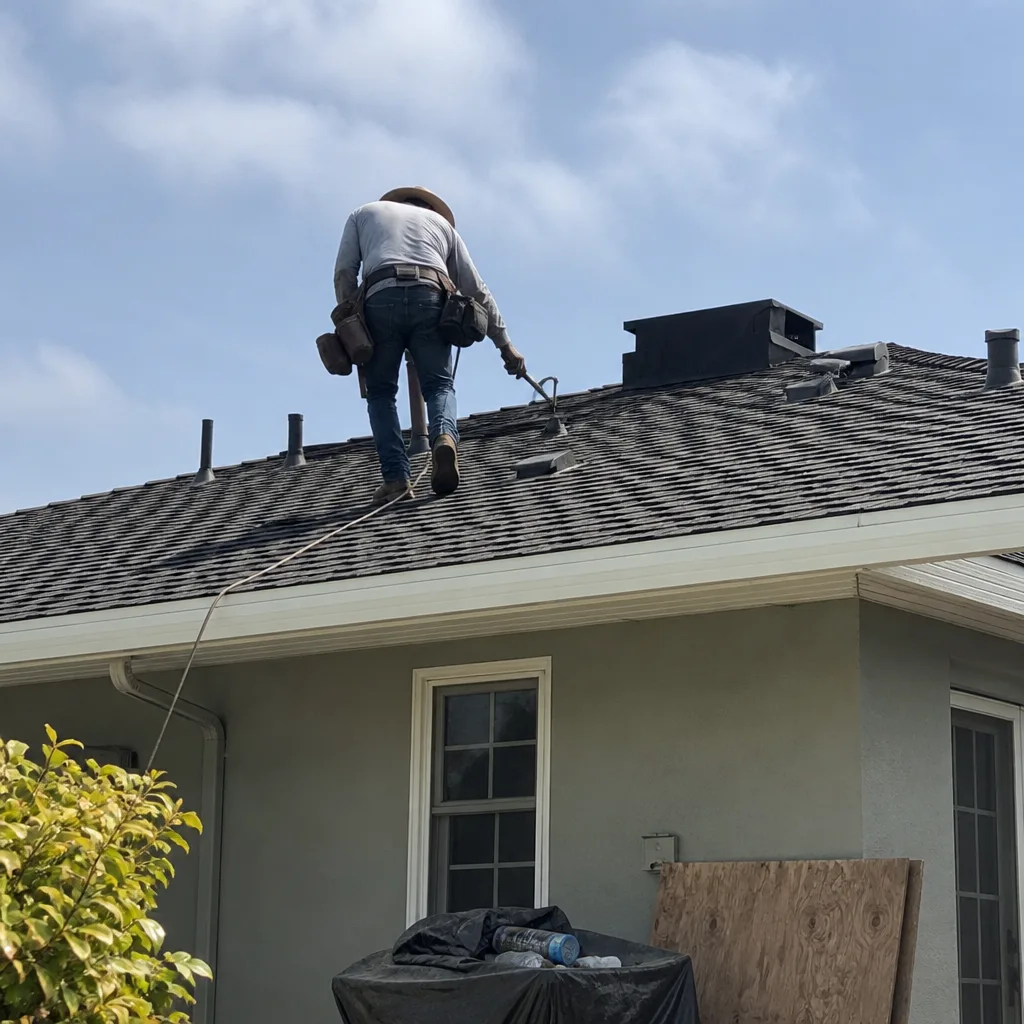 After
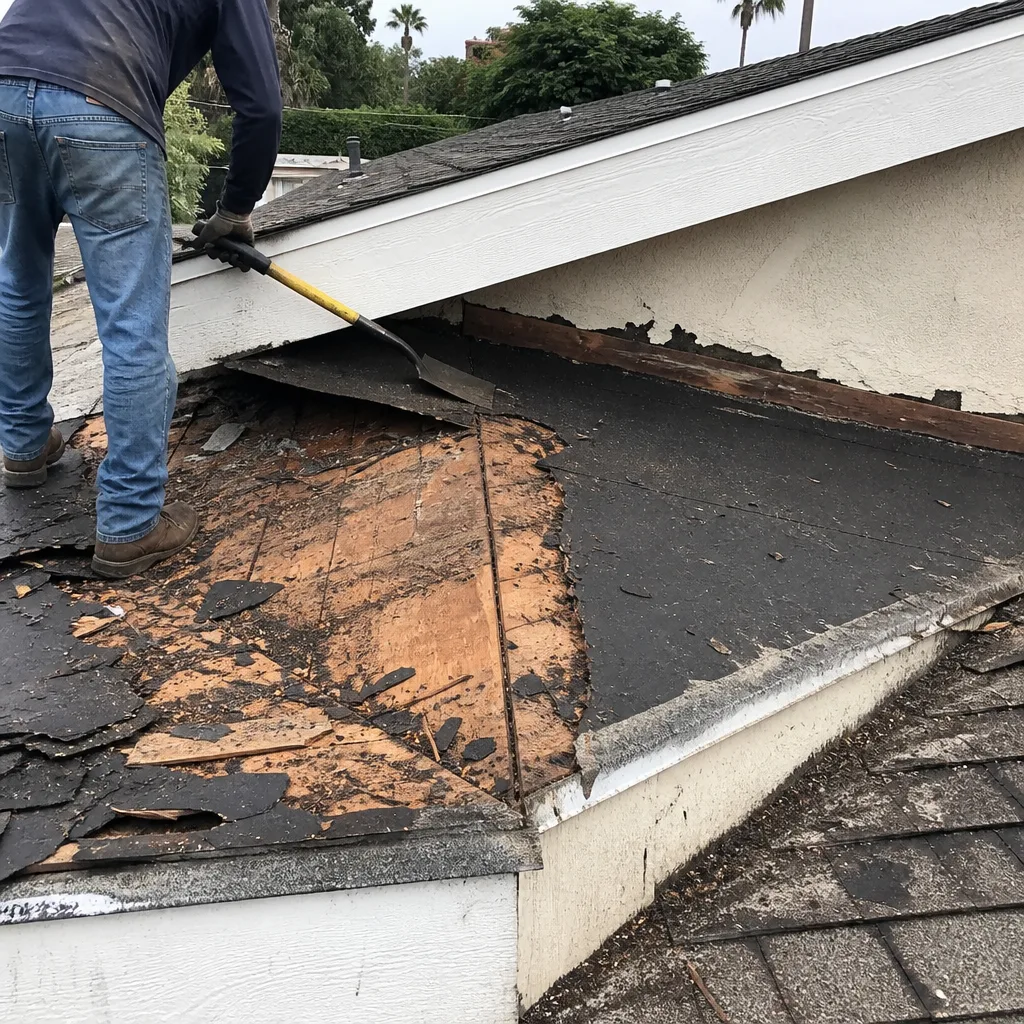 Before
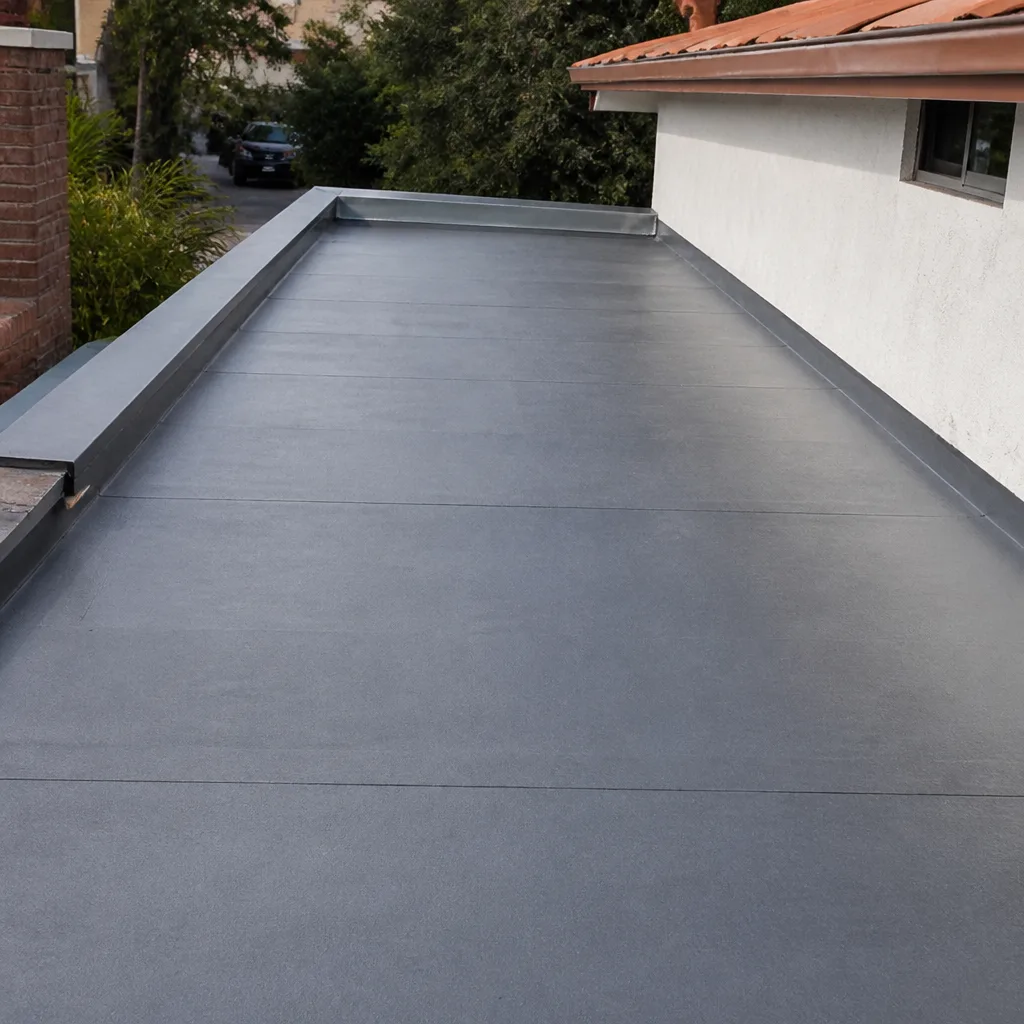 After