Last updated October 31, 2026
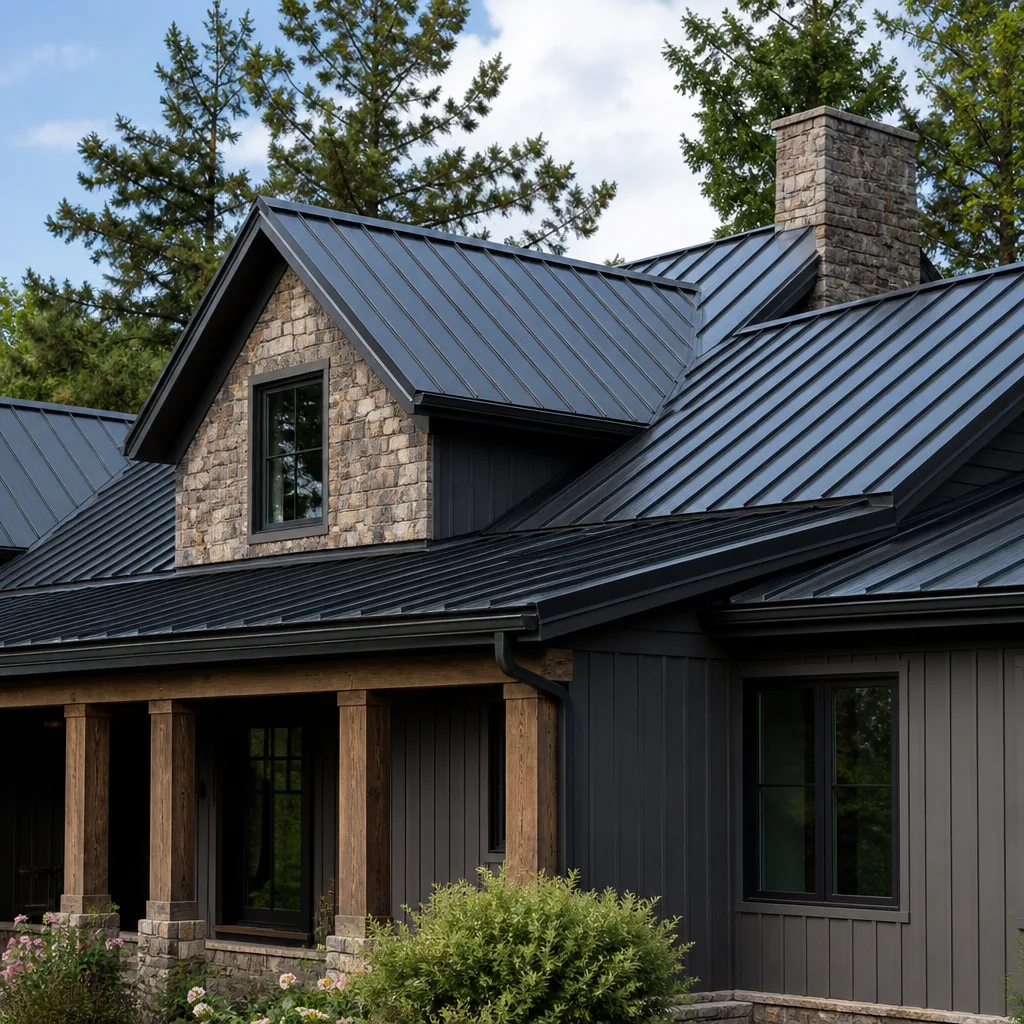 Metal roofing
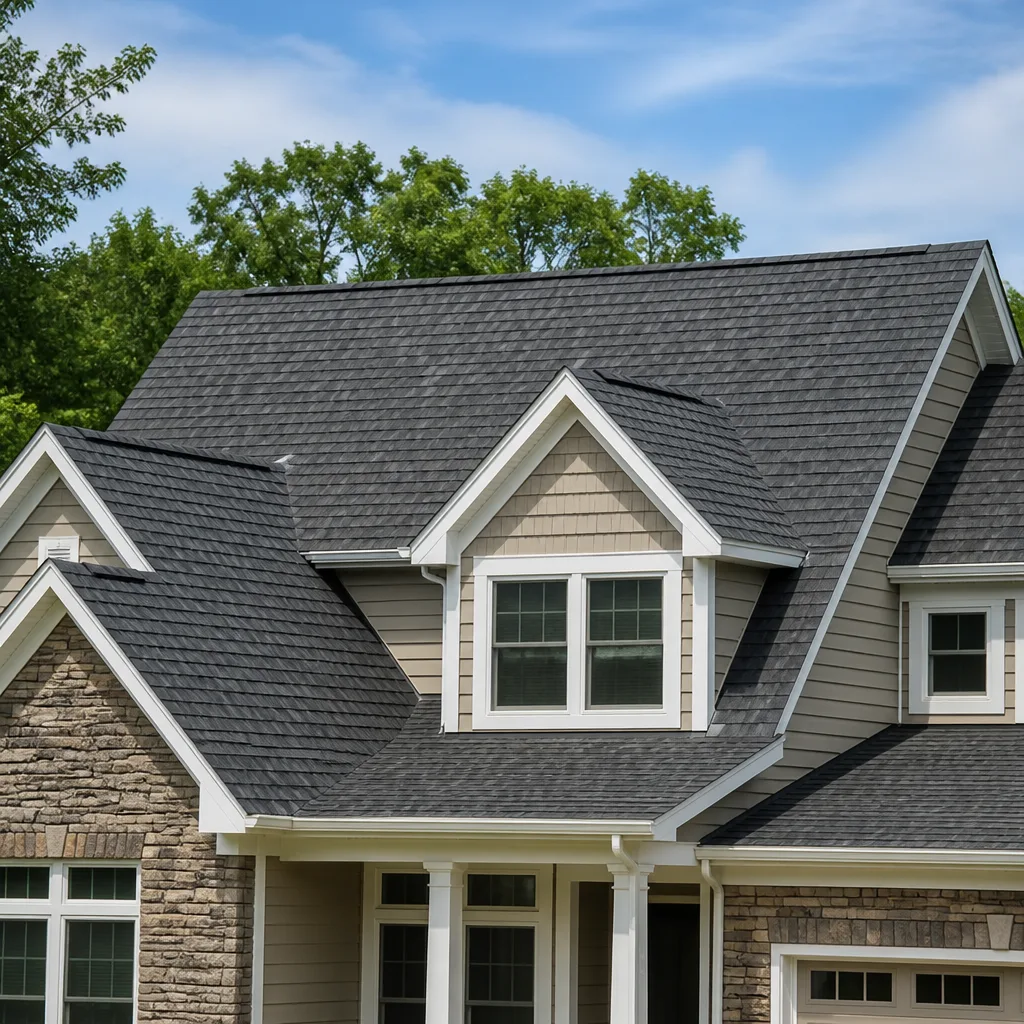 Architectural shingles
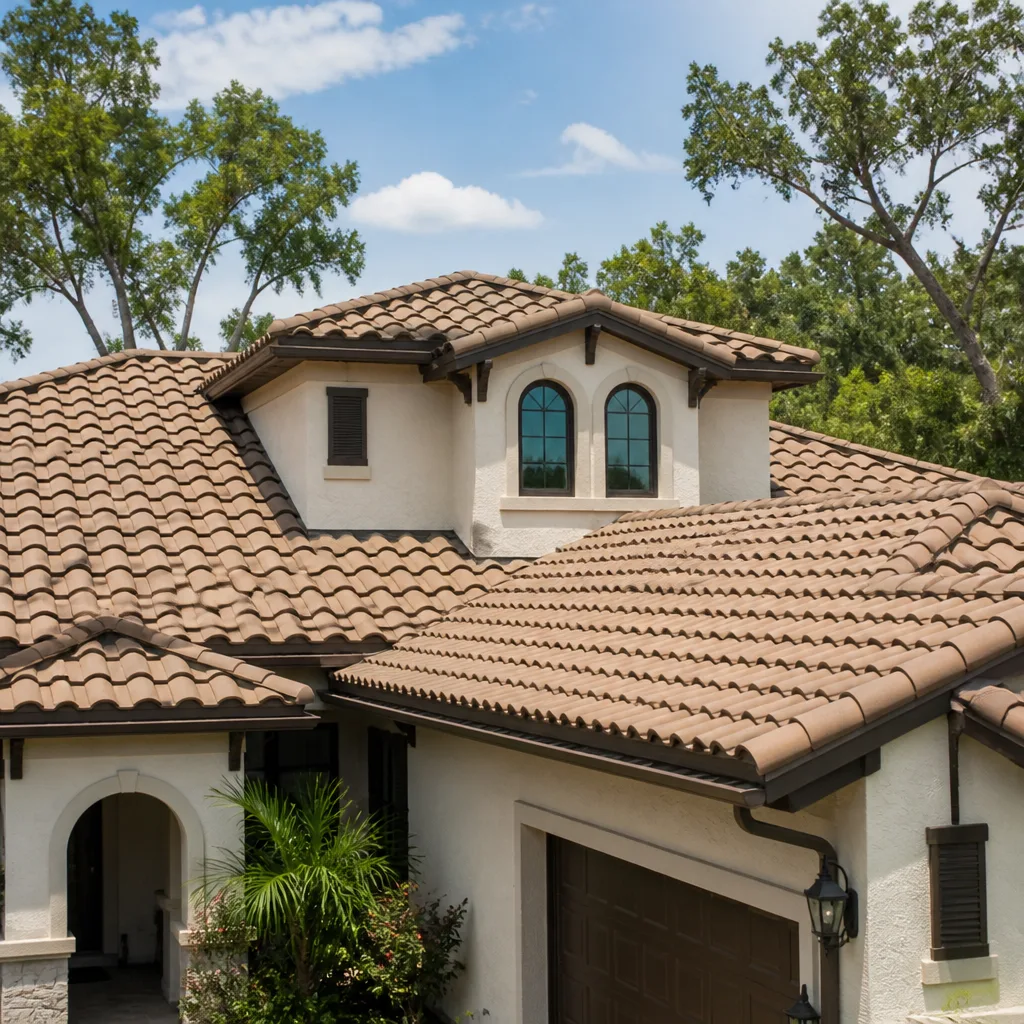 Tile roofing
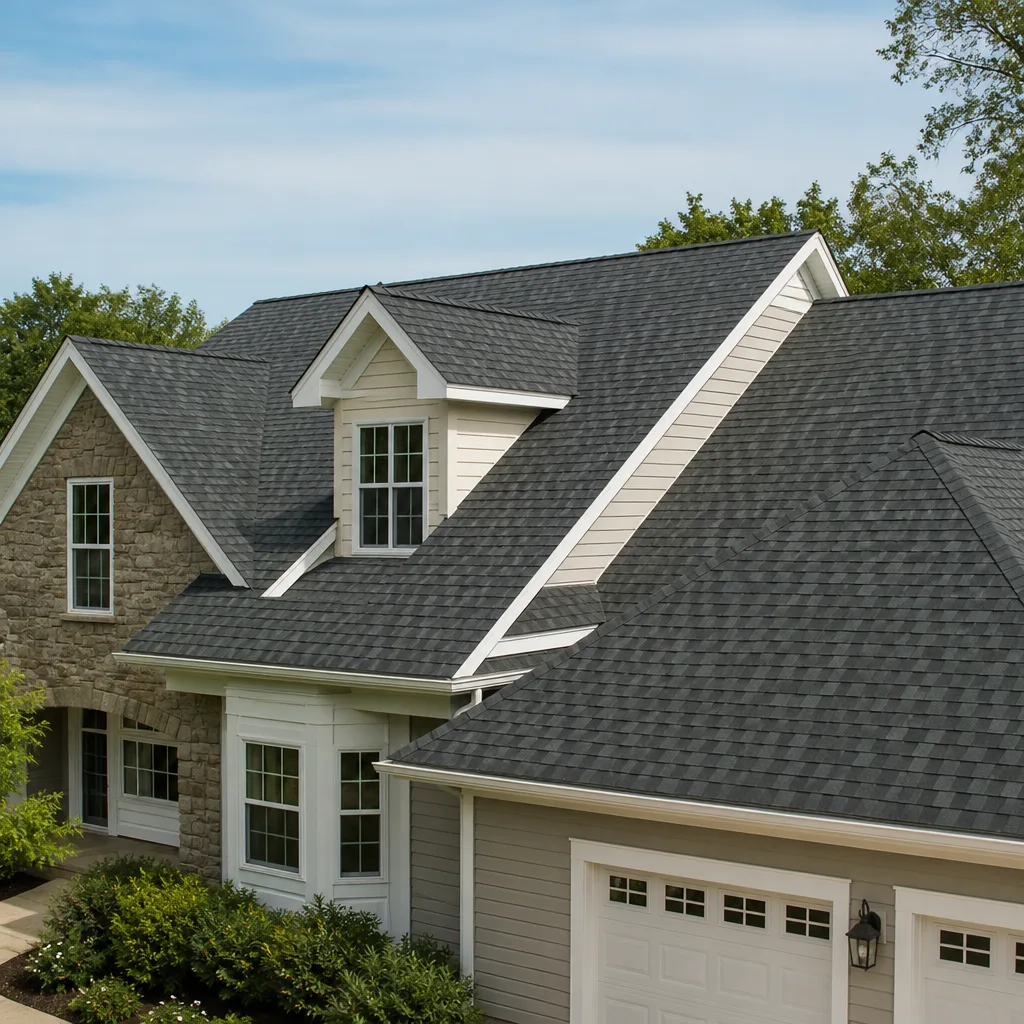 GAF
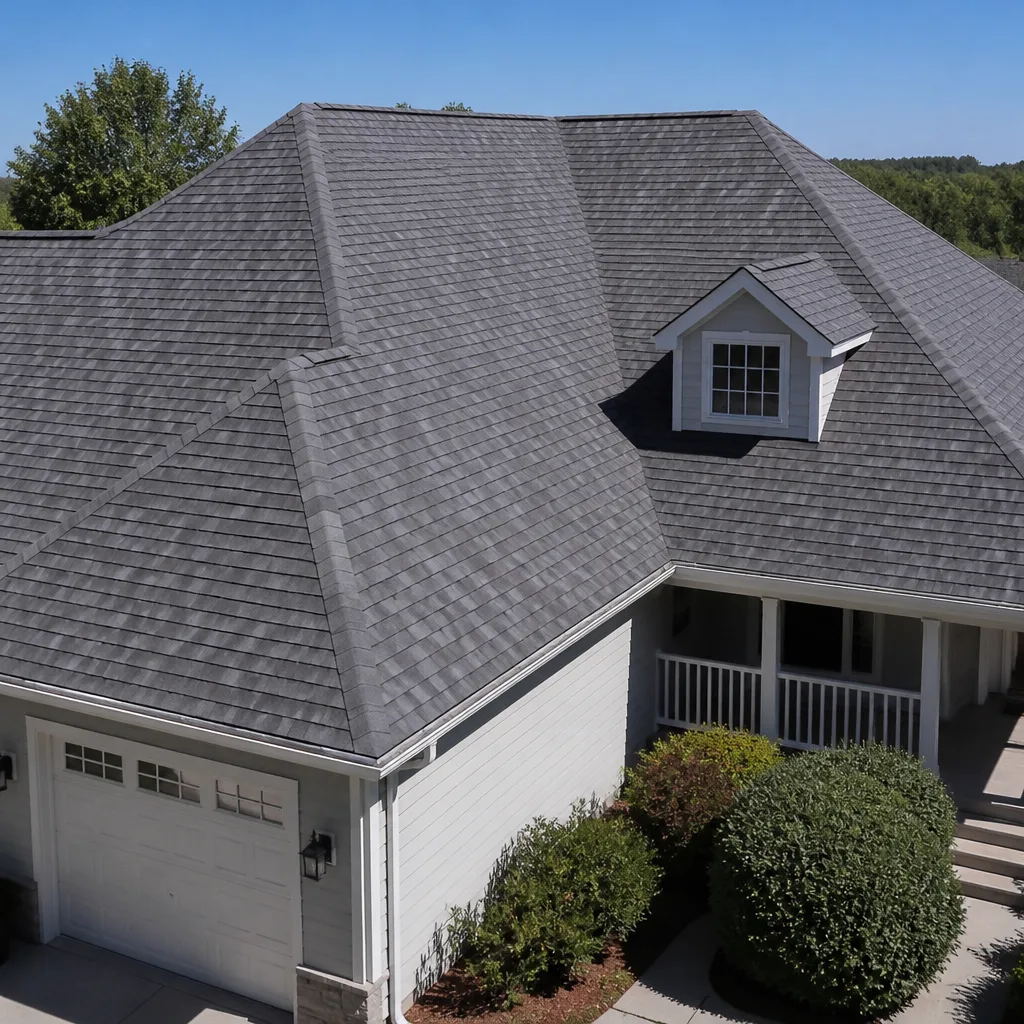 Owens Corning
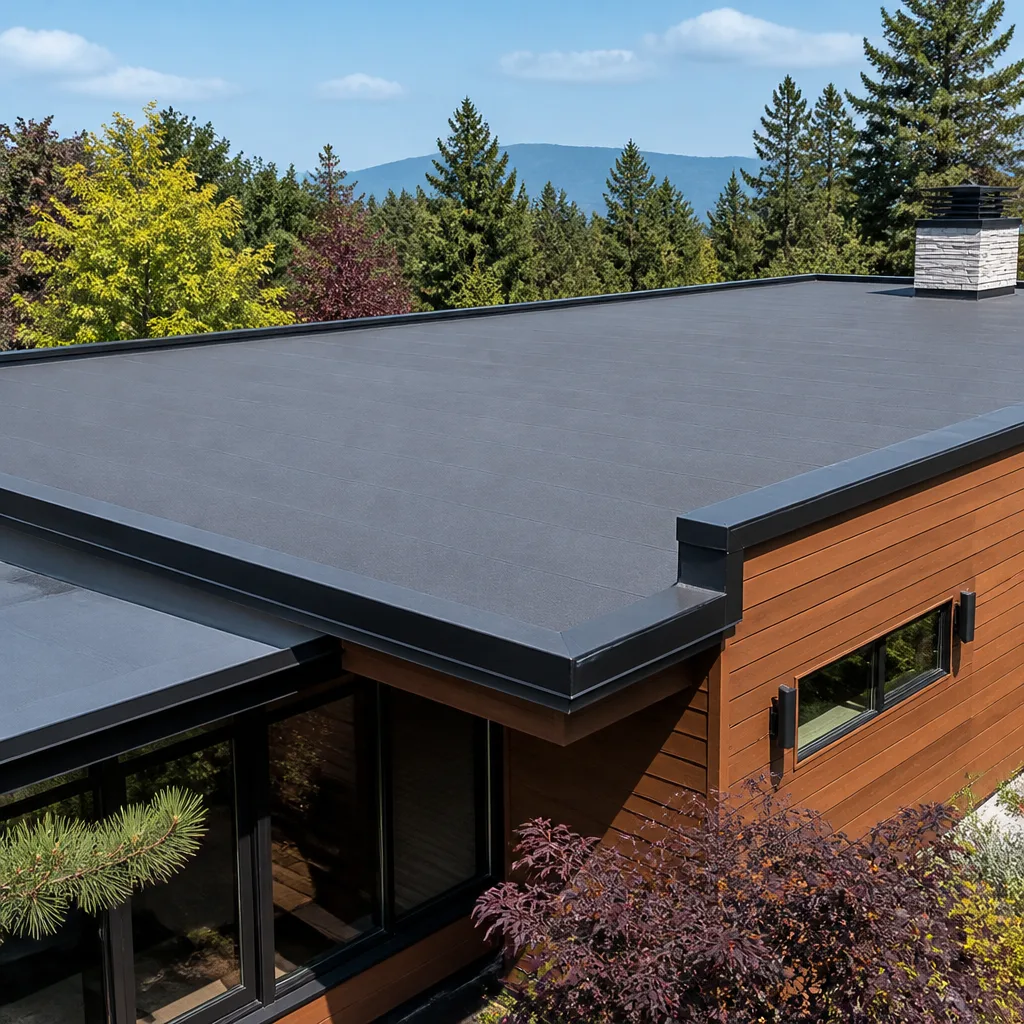 Flat & low-slope
Free roof inspection with deck photos before we talk money - GAF and Owens Corning certified installation
Roofing Permits, Codes & Inspections in CA: What You Need to Know
Here’s a fact most Tustin homeowners don’t learn until it costs them money: California lets every city add stricter rules on top of the state building code. A re-roof that sails through inspection in one Orange County city can fail in Tustin for a requirement the contractor never mentioned. This guide covers exactly which projects trigger permits, the Title 24 cool-roof rules that apply in our climate zone, what inspectors actually check, and what unpermitted work does to your home’s resale value. For Roofing Warning Signs: A Tustin Homeowner’s Reference Guide, see our companion post.
Styles & brands we work with
Quick Answer
Most full roof replacements and any structural changes to your roof in California require a building permit from your local jurisdiction. In Tustin, re-roofing permits are issued by the City of Tustin Building Division, and the project must comply with both the California Building Code and California’s Title 24 energy standards, including cool-roof reflectance requirements. Our Seasonal Roofing Care for Tustin: Year-Round Homeowner’s Guide explains how these standards shift with the seasons. Repairs that are limited in scope and don’t involve structural work or changing more than a set percentage of the roof surface can often proceed as repair work without a full permit.
Table of Contents
- Which Projects Require a Permit in Tustin
- How Title 24 Cool-Roof Rules Apply to Orange County Re-Roofs
- What California Roofing Inspections Check at Rough and Final Stages
- The Disclosure Obligation for Unpermitted Roof Work at Home Sale
- Fire Hazard Severity Zones and Class A Material Requirements
- What a Tustin Roofing Permit Actually Costs
- Common Mistakes to Avoid
- When to Call a Professional
- Frequently Asked Questions
- The Bottom Line
Which Projects Require a Permit in Tustin
The line between a repair and a permitted re-roof is one of the most misrepresented details in residential roofing. The California Building Code gives local jurisdictions the authority to define what constitutes a re-roof, and the City of Tustin follows the Orange County standard: any project that changes the roof covering on more than 25% of the roof surface within a 12-month period triggers the full re-roof permit requirement. Before you commit to any roofing work, an independent Roof Inspection in Yorba Linda can help you understand what your project actually involves.
Here’s what actually triggers a full permit in Tustin:
- Full tear-off and replacement – any complete removal of the existing roof covering, regardless of the new material.
- Re-roofs over existing roofing – Tustin allows a second layer of composition shingles in some cases, but it still requires a permit and a structural check on the existing decking.
- Structural changes – dormer additions, roof framing changes, or installing a roof that changes the weight load on the structure. This includes switching from lightweight composition shingles to heavy tile without prior engineering.
- Sheathing replacement – if more than 25% of the roof deck or sheathing is being replaced, the project requires a permit and structural inspection.
- Solar panel attachment – any roof penetrations for solar mounting require structural review, even if the roof itself isn’t being replaced.
What about repairs that stay under the threshold? In Tustin, small isolated repairs that touch less than 25% of the roof surface in a 12-month period don’t require a permit. This includes patching individual leaks, replacing a few broken tiles, sealing flashing around a chimney, or repairing a damaged section of eave. But here’s the catch: the 25% threshold is cumulative across a rolling 12 months. If you have a few small repairs in January, then another in June, then another in October, those add up. A contractor who does “repair” work that actually crosses the line is setting you up for a disclosure problem later. Our position is simple: we inspect before we recommend, and we’ll tell you if your repair is actually a re-roof that belongs under permit.
How Title 24 Cool-Roof Rules Apply to Orange County Re-Roofs
California’s Title 24 Building Energy Efficiency Standards apply to virtually every residential roof replacement in the state. Orange County sits in climate zones 6, 8, and 10, which triggers mandatory cool-roof requirements for most low-slope and steep-slope residential projects. What that means in practical terms: the new roof covering must meet a minimum solar reflectance value, also called the Solar Reflectance Index, or SRI. For steep-slope roofs in Tustin’s climate zone, the requirement is typically an SRI of 16 or higher for composition shingles. For low-slope roofs, the requirement is higher.
This is where product selection gets practical. The shingle manufacturers whose products we work with include CertainTeed, Owens Corning, IKO, and Atlas. Each of them makes shingles that meet or exceed the Title 24 cool-roof minimums, but they reach those numbers in different ways. CertainTeed offers a line of cool-roof shingles that use special granule coatings to reflect heat. Owens Corning has a similar approach with their Duration Cool series. IKO’s cool shingles and Atlas’s Pinnacle series both carry separate cool-roof SKUs. What matters to you is that a compliant roof doesn’t force you toward any one manufacturer, and it doesn’t typically require moving to a premium product line. For a Roof Replacement in Yorba Linda, verifying the SRI of your selected shingle color is part of the process. Yes, shingle color matters: lighter colors naturally reflect more solar radiation, which is one reason so many Tustin homes have lighter-colored roofs than homes in other states.
If your project includes a roof that doesn’t meet the SRI requirement, the alternative is to demonstrate compliance through other energy-efficiency measures that offset the difference. But for most Tustin homeowners, simply choosing a compliant shingle is the more straightforward and less expensive path. For repairs that aren’t full re-roofs, Title 24 compliance is not typically triggered. But if you’re uncertain whether your repair crosses the re-roof threshold, that uncertainty is exactly why we inspect before we recommend. We don’t want you paying for code compliance you don’t need, and we don’t want you skipping it when you do.
What California Roofing Inspections Check at Rough and Final Stages
A California roofing inspection is a specific, two-phase process, and knowing what each phase covers will help you understand what the inspector is looking at and why delays happen. Here’s what happens at each stage.
Stage One: Rough Inspection
- Deck and underlayment check – the inspector verifies that the roof deck is structurally sound, that sheathing thickness and fastener spacing match the approved plans, and that the underlayment is the required type. Tustin follows the Orange County requirement for at least one layer of ASTM-rated underlayment, but the specific type depends on whether the roof is a tile, shingle, or metal roof.
- Flashing verification – before the final covering goes on, the rough inspection confirms that flashing is in place at all penetrations: chimneys, vents, skylights, and vertical wall intersections. Missed or undersized flashing is one of the most consistent red-tag items we see in Tustin.
- Fire rating check – in areas of the city that are within or near a Fire Hazard Severity Zone, the inspector verifies at rough stage that the assembly is being built to the required Class A standard. This is discussed in detail in the fire zone section below.
- Frame and attachment review – if any structural change was part of the permit, the rough inspection includes checking the framing connections, valley framing, and the connection between the roof and the existing walls.
Stage Two: Final Inspection
- Covering verification – the inspector confirms the installed roof covering matches the approved permit documents, including the product type, color, and SRI value where Title 24 compliance applies.
- Nailing and fastening pattern – for shingle roofs, the final includes a spot check that the fastening pattern matches the manufacturer’s requirements and the approved plans. Under-driven or over-driven nails are a common correction item.
- Edge, ridge, and venting review – the inspector checks that drip-edge metal, ridge caps, and ventilation meet code ventilation minimums. In Tustin, the standard requirement is 1 square foot of net free vent area per 150 square feet of attic floor space, or 1 square foot per 300 square feet if the ventilation is balanced between ridge and eave.
- Gutter and drainage check – the final inspection verifies that the roof drains correctly and that gutters and downspouts are in place and functioning.
You can prepare for each stage by understanding what the inspector is looking for. We’ve seen inspections fail for shockingly simple reasons: a missed drip edge, a single section of underlayment that was pulled up during installation and never replaced, a vent pipe that wasn’t flashed. Every one of those costs a day of delay and a reinspection fee. That’s why a roofing-only contractor with disciplined process matters more than a general contractor who handles roofs occasionally. Roofing is all we do, and we’ve built our process around getting the rough and final inspections right the first time.
The Disclosure Obligation for Unpermitted Roof Work at Home Sale
Unpermitted roof work becomes a binding legal and financial issue the day you list your home for sale. In California, the seller’s disclosure form, the Transfer Disclosure Statement, includes a specific question about whether any work was done on the property without a permit. If the answer is yes, the seller must describe the work and disclose when it was done. If the answer is no and the buyer later discovers unpermitted work, the seller has exposure to a lawsuit for nondisclosure.
Here’s what we’re seeing in Orange County transactions this year. Buyers’ agents are increasingly requesting a copy of the property’s permit history from the city as part of the due diligence phase. In Tustin, permit histories are a matter of public record with the Building Division, and any unpermitted roofing work shows up as a gap in the record. A buyer’s agent who sees a roof replacement on the listing, but no corresponding permit in the city record, is going to ask about it. That conversation puts the seller in a difficult position whether they did the work themselves, inherited the problem from a previous owner, or simply trusted a contractor who said a permit wasn’t needed.
The cost of an unpermitted roof at resale typically plays out in one of three ways:
- Price renegotiation – the buyer’s inspection flags the roof, the buyer’s agent pulls the permit record, and the buyer asks for a price reduction equal to the cost of bringing the roof into compliance. In Tustin’s market, that can mean $10,000 to $25,000 depending on the scope of the noncompliance.
- Required retroactive permitting – the city has the authority to require that unpermitted work be brought into compliance, which means exposing the roof for inspection and possibly rebuilding elements that don’t meet code. This is expensive and disruptive.
- Financing contingency failure – an unpermitted structural component can cause an appraisal or lending review to fail, which kills the transaction entirely.
- Trusting a contractor who says “you don’t need a permit for this.” We hear this one constantly in Tustin, and it’s almost always wrong. The contractor is avoiding the inspection, not doing you a favor. If the project crosses the 25% threshold, you need a permit, and the contractor’s claim doesn’t change that.
- Assuming your current roof meets code because it was permitted when it was installed. Building codes change. A roof installed in 1995 under the 1995 code doesn’t meet the 2026 code. That matters when you re-roof, because a re-roof must meet current standards, not the standards that applied when the home was built.
- Not checking your Fire Hazard Severity Zone status before choosing materials. Easy to overlook and expensive to correct. If your property sits in a zone that requires Class A materials, the assembly must meet Class A from the deck up, not just the shingle on top.
- Treating solar reflectivity as an optional upgrade. In Tustin’s climate zone, Title 24 requires the SRI minimums for a full re-roof. Select a roof covering without checking the SRI value, and your building official will flag it. Choose a dark-colored non-cool shingle, and you’ll be swapping it out.
- Skipping the rough inspection because the job is “almost done.” The inspector cannot sign off on a roof assembly they never saw in its roughed-in state. If the rough inspection is missed, you may be required to remove the finished roofing to expose the underlayment and flashing for inspection. That’s a several-thousand-dollar mistake.
- Not pulling the permit history before finishing a home purchase. Buyers in Orange County are increasingly pulling Tustin permit records as part of due diligence, and unpermitted roof work doesn’t stay hidden. If you’re in the process of buying a home, ask for the permit history. The $50 record request is cheap insurance against a $15,000 compliance issue.
- Choosing a roofing contractor based on price alone. The permit-focused contractor who does the job properly will quote a slightly higher number than the one who skips the permit entirely. The price difference is the true cost of compliance, and the unpermitted route always costs more in the end.
The rule of thumb is simple: if the project is a re-roof, it needs a permit, and the permit should be pulled before work starts. The only exception is a small repair that stays under the 25% threshold. But if you’re not certain whether your project crosses that line, get certainty before you commit. We inspect before we recommend because the cost of being wrong about the permit question is far higher than the cost of a permit.
Fire Hazard Severity Zones and Class A Material Requirements
Parts of Tustin and the surrounding Orange County foothills sit within or adjacent to Fire Hazard Severity Zones as mapped by Cal Fire. That designation triggers additional roofing material requirements that the standard building code doesn’t impose. In a Fire Hazard Severity Zone, all new roof coverings must be Class A rated, which is the highest fire-resistance rating available. The requirement applies to re-roofs as well, not just new construction.
What does Class A actually mean? The rating comes from a battery of fire tests that measure how the roof assembly performs when exposed to flame brands at the surface and at the eave. A Class A roof assembly demonstrates the highest resistance to flame spread and most importantly to the penetration of fire into the attic. The rating is classification of the entire assembly, not just the shingle or tile product on top. The underlayment, deck, and installation method all contribute to the Class A rating.
In our experience with Tustin-adjacent properties, the fire zone requirement most often becomes an issue when a homeowner is re-roofing a home that was originally built with a non-Class A material, or when a reclassification has changed the designation for a property that previously wasn’t in a zone. Cal Fire periodically updates its Fire Hazard Severity Zone maps, and the City of Tustin adopts the current maps. A home that wasn’t in a zone five years ago could be in one today. When a property is reclassified, any new roof work must meet the Class A standard even if the home’s original roof doesn’t.
The good news: most modern asphalt shingles, including the products we install from CertainTeed, Owens Corning, IKO, and Atlas, carry Class A fire ratings when installed as a complete assembly with the manufacturer’s recommended components. See Choosing the Right Roofing Brand: A Buyer’s Guide for Tustin for help comparing these options. The important detail is not just the shingle, but the entire system. Seven manufacturers, one standard. We carry the full line of compliant accessories, underlayments, and fasteners for every roofing system we install, so the assembly meets Class A wherever the property is located.
What a Tustin Roofing Permit Actually Costs
The permit itself isn’t the expensive part of a roof project, but it’s useful to understand the full cost picture of a permitted re-roof in Tustin versus an unpermitted one. The City of Tustin’s building permit fee for a residential re-roof typically runs between $250 and $600 depending on the valuation of the project. That fee covers the plan review, the permit issuance, and both inspections. If a permit is pulled after work has already started, expect an additional investigation fee, which most cities, including Tustin, assess at a rate that effectively doubles or triples the original permit cost.
Here’s the larger cost question, though. A permitted re-roof requires the roof assembly to meet current code. For a home built in the 1970s or 1980s, that can mean installing a stronger underlayment, replacing decking that doesn’t meet current fastener requirements, or upgrading to a Title 24 cool-roof shingle that costs a few dollars more per bundle. An unpermitted contractor can skip all that work and quote you a lower number. But you’re not saving money; you’re deferring the cost and moving it to the resale disclosure conversation. The cost of bringing an unpermitted roof into compliance after the fact is always higher than the cost of doing it right the first time.
What does a Roof Repair in Yorba Linda cost versus a full replacement? Repair work that stays under the 25% threshold and doesn’t trigger a permit generally runs from $400 to $1,800 depending on the scope. A full permitted re-roof in Tustin on a typical 2,000-square-foot home runs from $14,000 to $28,000 depending on material choice, pitch, and structural conditions. Material choice drives most of the variance, and that’s where having access to seven manufacturers matters. We don’t need to push you toward the one line we carry, because we carry seven. If a mid-tier CertainTeed or Atlas shingle meets your needs and your budget, that’s what we recommend. If an Owens Corning or IKO product fits your slope and aesthetic better, we recommend that. The right material for your roof, not the right material for our margin.
Common Mistakes to Avoid
When to Call a Professional
If you’re planning a roof replacement in Tustin, or if you’re not sure whether your repair project crosses the re-roof threshold, get a professional assessment before work begins. A licensed contractor who understands the city’s permit process can confirm whether the 25% threshold applies, determine whether your property falls within a Fire Hazard Severity Zone, and verify that your material selection will pass the Title 24 cool-roof requirements. In our experience, Tustin homeowners most often call us when they’ve been told by a different contractor that a permit isn’t needed, and they want an independent assessment before committing. Bellwether Roof Repair offers free estimates in Tustin, and our process starts with an inspection, not a sales pitch. Call (833) 824-0047 to schedule yours.
Frequently Asked Questions
Yes, any full roof replacement in Tustin requires a permit, and any project that changes more than 25% of the roof surface within a 12-month period triggers the full re-roof permit requirement. Small isolated repairs under that threshold can proceed as repair work. If you’re not certain which category your project falls into, call (833) 824-0047 and we’ll assess it honestly.
Title 24 is California’s building energy efficiency standard, and it applies to residential re-roofs in Orange County’s climate zones. For steep-slope roofs, your new roof covering typically needs a Solar Reflectance Index of 16 or higher, which most modern cool-roof shingles from CertainTeed, Owens Corning, IKO, and Atlas meet.
The City of Tustin’s building permit fee for a residential re-roof generally runs between $250 and $600, depending on the project valuation. That covers plan review, the permit itself, and both inspections. If a permit is pulled after work has already started, an additional investigation fee applies, often doubling or tripling the cost.
A Class A roof assembly is a roof that meets the highest fire-resistance rating under the standard fire test protocols. You need one if your property is within or adjacent to a Cal Fire Fire Hazard Severity Zone as adopted by the City of Tustin. Class A is a property of the entire assembly from deck to shingle, not just the visible roof covering.
Yes, in most cases it will. Buyers’ agents in Orange County are increasingly requesting permit histories from the City of Tustin as part of due diligence, and an unpermitted re-roof shows up clearly in the public record. You may also have a legal disclosure obligation under California’s seller disclosure requirements regardless of who actually did the work.
Tustin may allow a second layer of composition shingles over an existing shingle roof, but the project still requires a permit and a structural verification of the existing deck. A second layer also means the inspector certifies the old roof’s condition at the time of the re-roof, which can create a future problem if the original underlayment has unseen damage.
Most straightforward residential re-roof permits in Tustin are issued within a few days to two weeks, depending on city workload and whether any unusual conditions apply. More complex projects, like structural changes or homes with existing unpermitted work, can take longer. The inspection process then runs on its own schedule and is completed at rough and final stages.
The Bottom Line
California’s roofing code landscape is multi-layered: the state building code, Title 24 energy standards, local Tustin amendments, and Cal Fire hazard zone overlays all apply at the same time. The permit threshold for a re-roof in Tustin is 25% of the roof surface within 12 months. Title 24 sets SRI minimums your shingle must meet. Fire zone maps impose Class A assembly requirements on the entire roof system. Unpermitted work doesn’t disappear at resale; it becomes a disclosure problem with real dollars attached. The pattern in all of this: the cheapest quote often carries the most expensive long-term cost. Get the inspection first, make sure the permit is real, and choose a contractor whose entire business is roofing. For a free Tustin roof assessment, call Bellwether Roof Repair at (833) 824-0047.
Written by the team at Bellwether Roof Repair, serving Tustin since 2018. Explore more guides & resources on our blog.
See the difference
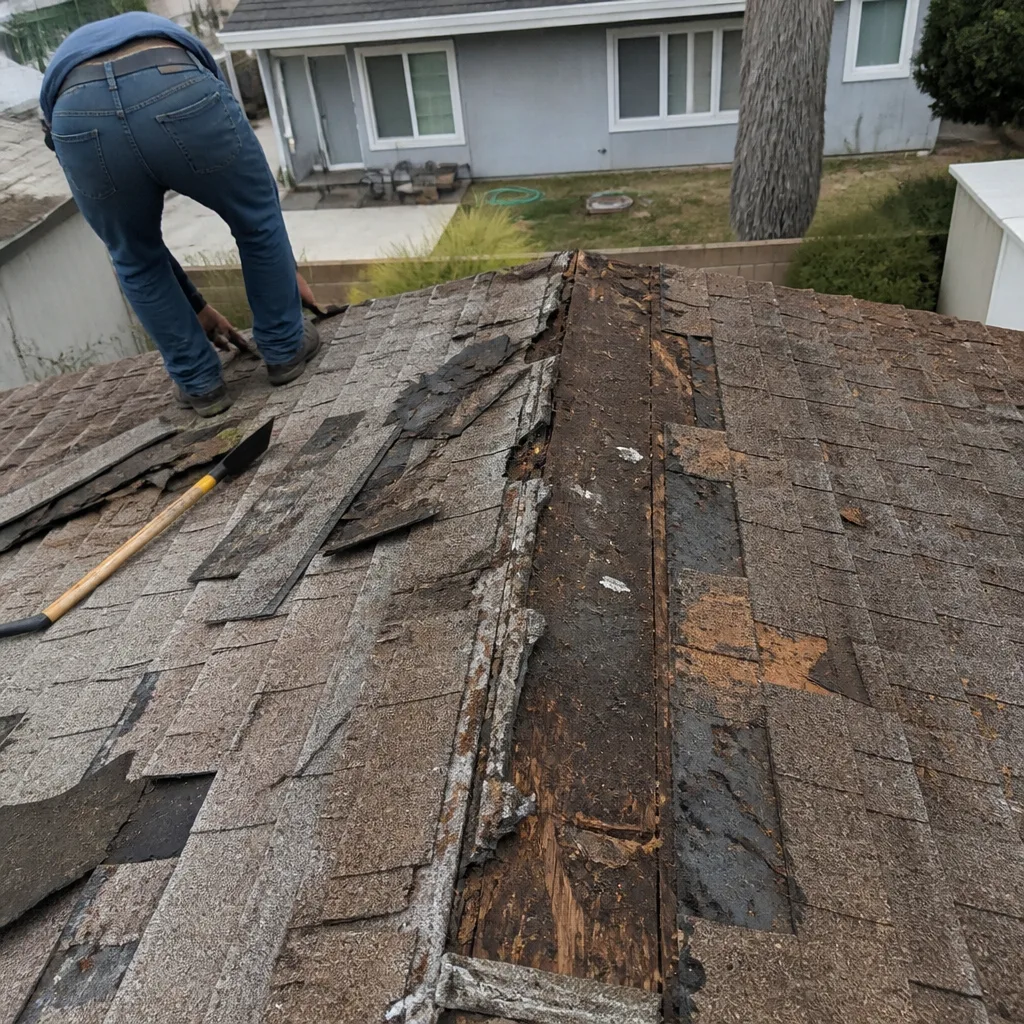 Before
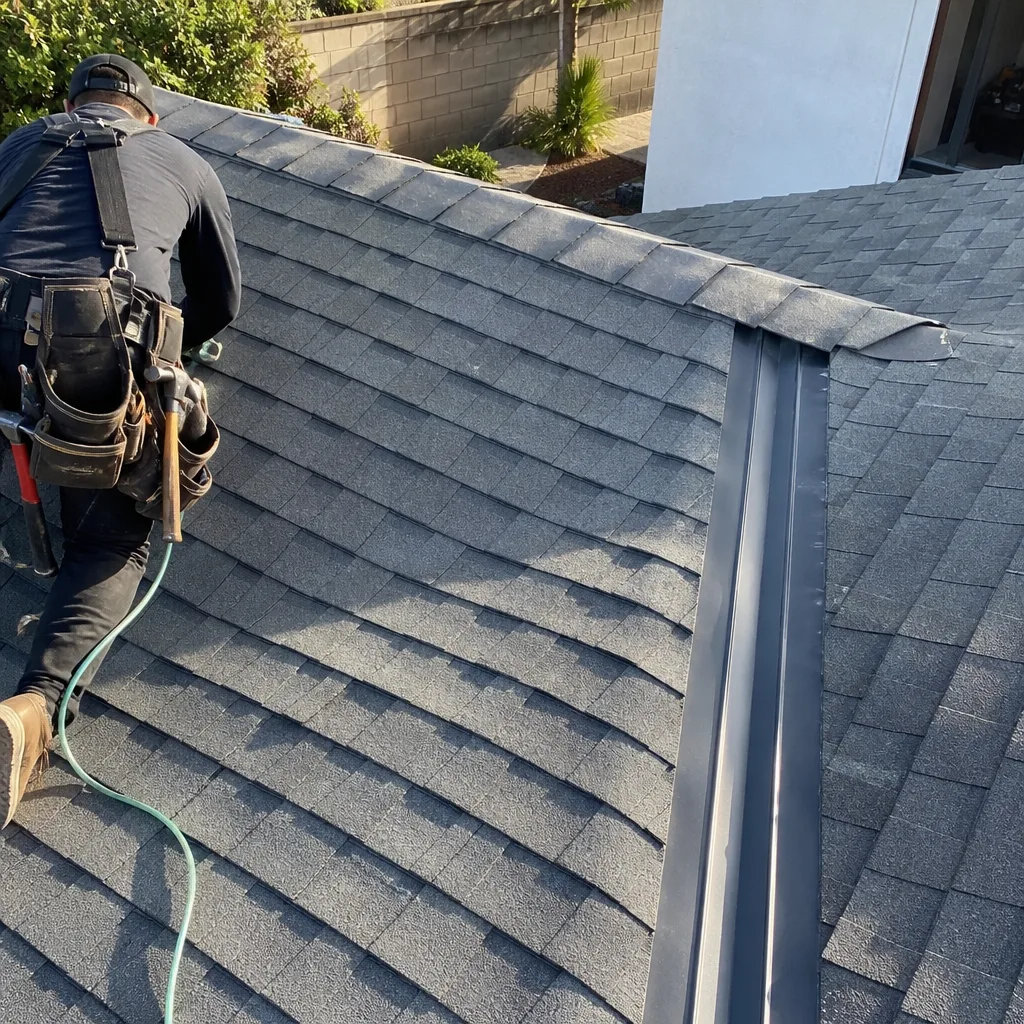 After
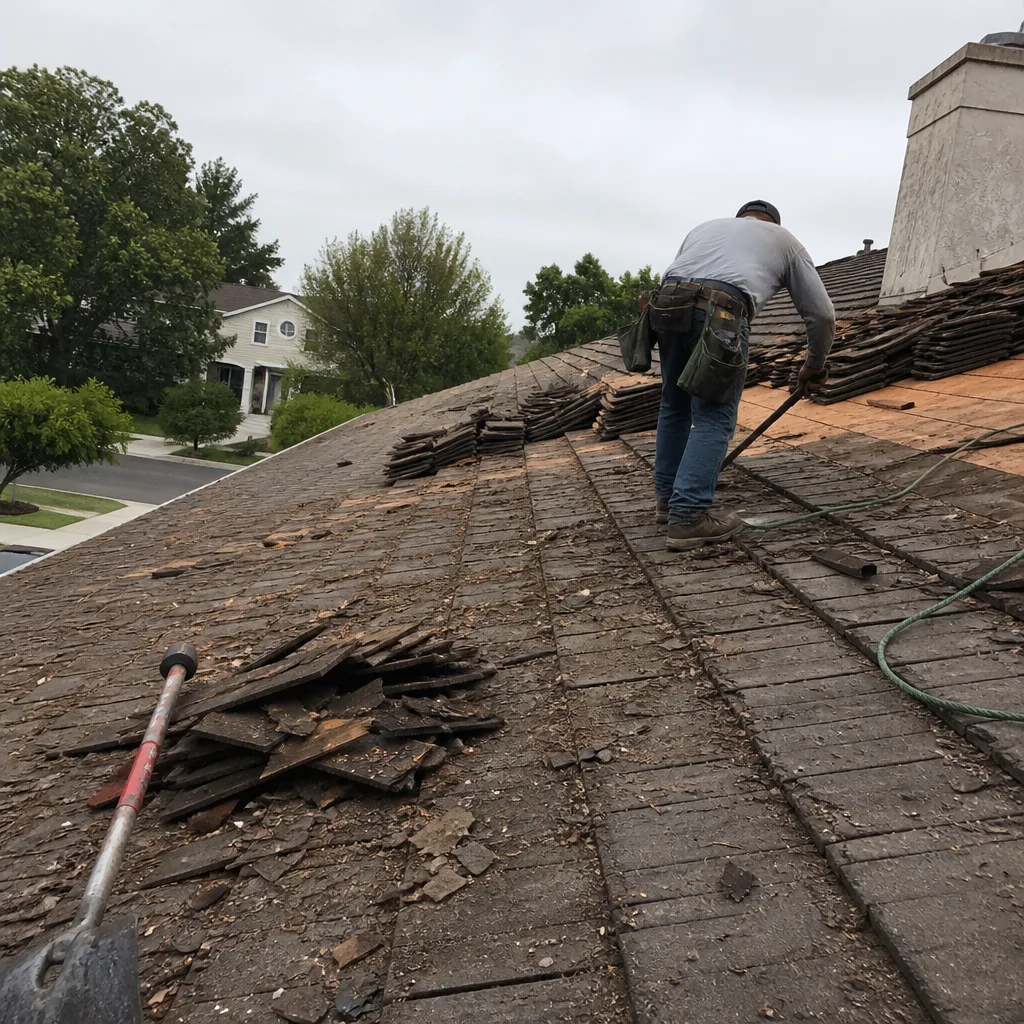 Before
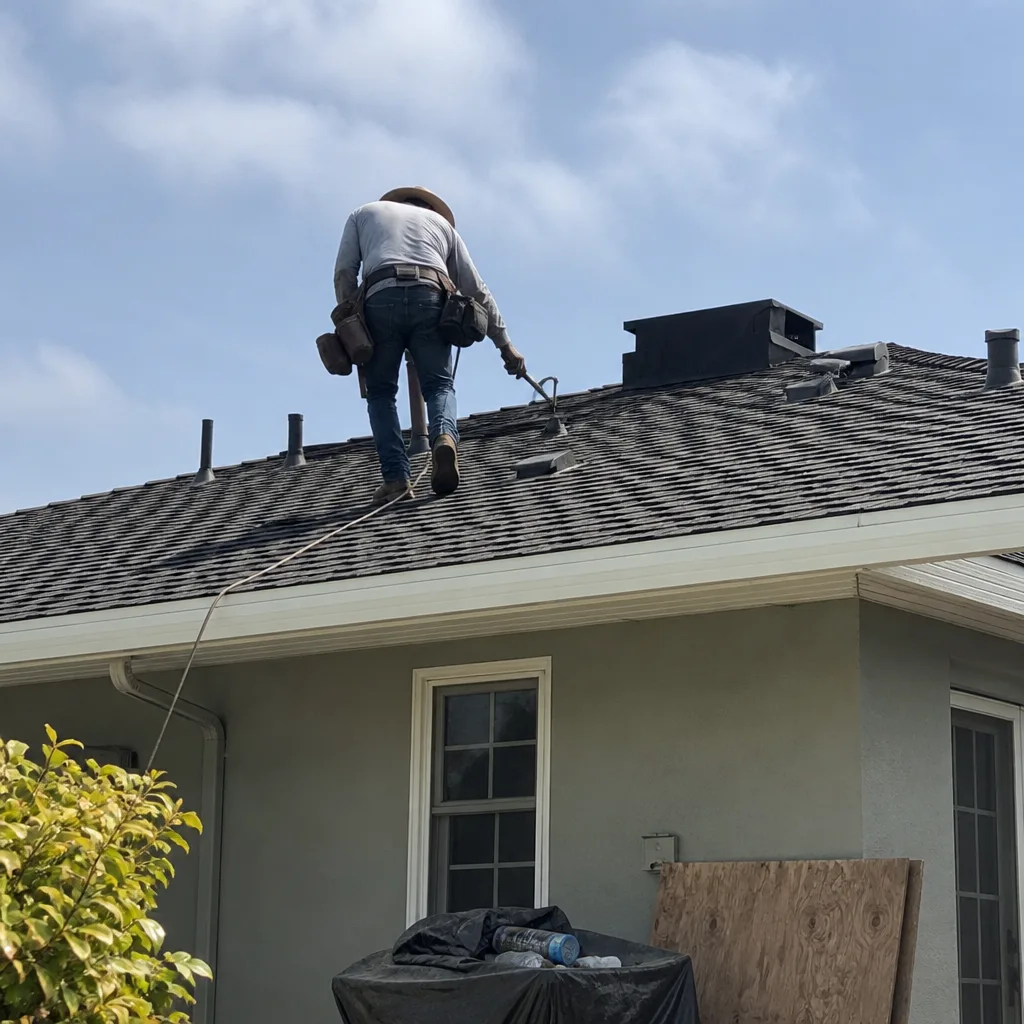 After
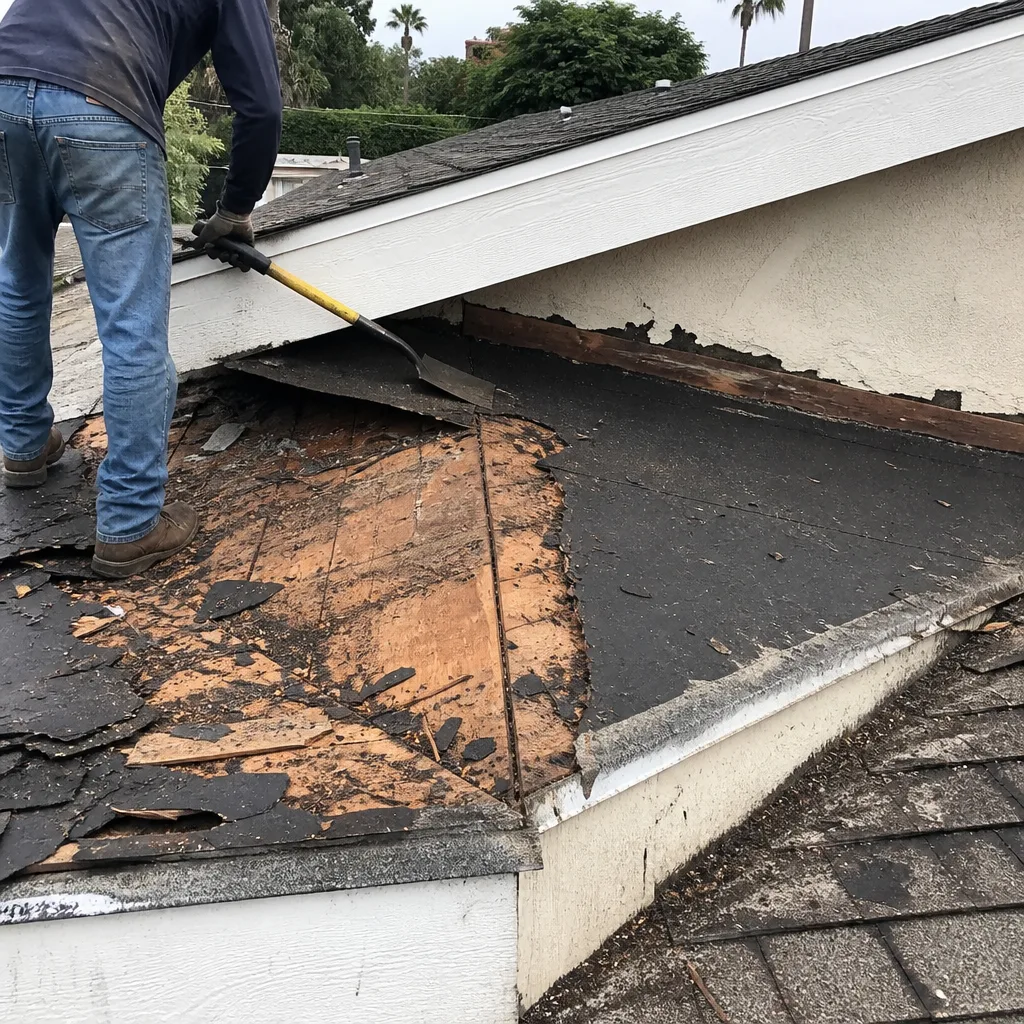 Before
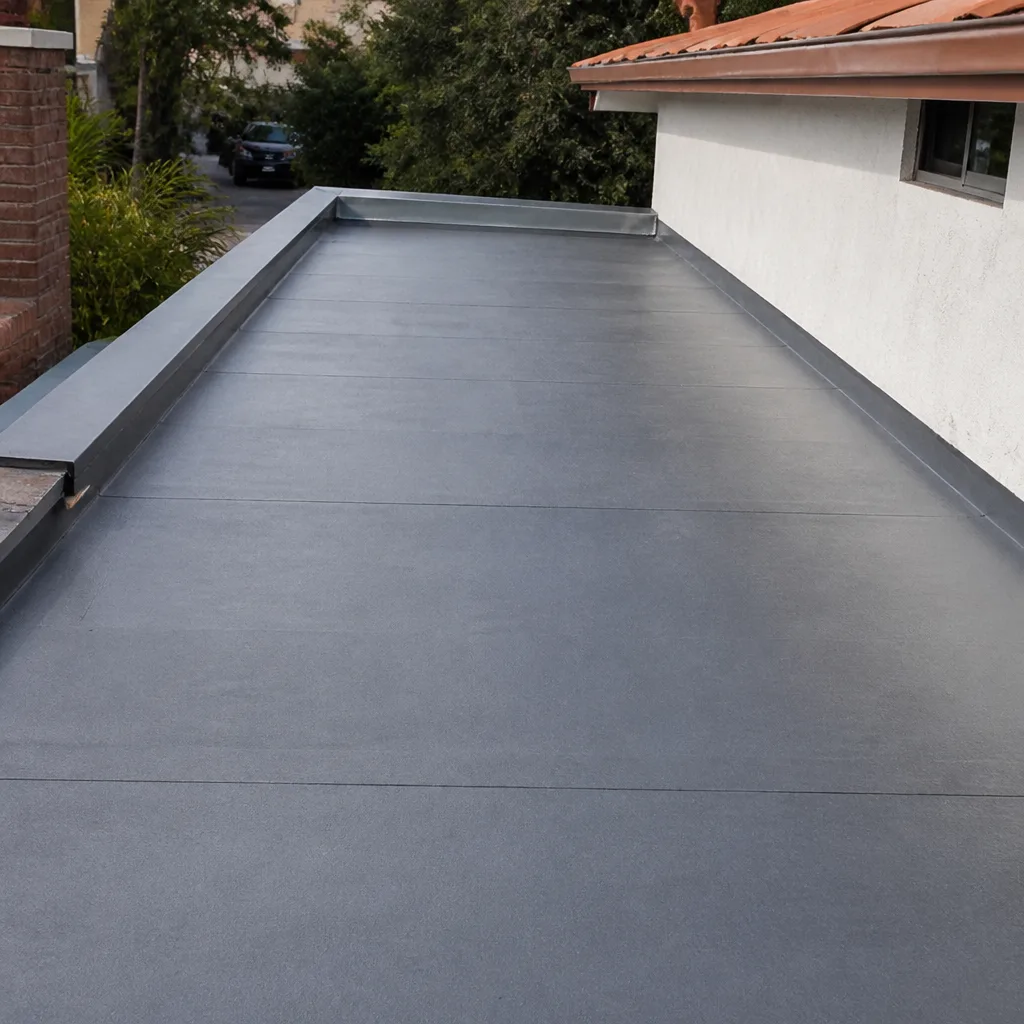 After